Eleven years ago this past Wednesday, I packed up my life in Alabama and moved to Vermont. I had no way of knowing just how much my life would change over the next eleven years. I knew I was beginning a new chapter, but I certainly couldn’t have imagined everything that chapter would contain.
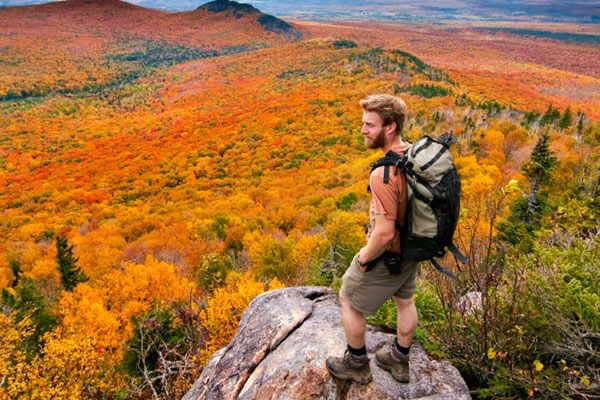
I still remember how Vermont felt when I first arrived. The crisp autumn air, the mountains, the beautiful scenery, and the sense of possibility were almost intoxicating. After spending most of my life in Alabama, where I often felt constrained by other people’s expectations of who I should be, Vermont offered something I hadn’t fully realized I was missing: the freedom to simply be myself.
For the first time in a very long time, I felt like I could breathe.
I haven’t stopped loving Alabama. It will always be part of who I am. My Southern accent certainly hasn’t gone anywhere, and neither have my memories of growing up there. I still love Southern food, Southern hospitality, and many of the traditions that shaped my childhood. In fact, that Southern hospitality I was raised with has become an essential part of how I approach my professional life. I’ve developed a reputation for being welcoming, helpful, and willing to go the extra mile for visitors, students, and colleagues. Making people feel welcome and comfortable comes naturally to me because it’s simply how I was raised. It’s something I’m proud to have carried from Alabama to Vermont.
The two states may seem worlds apart politically and culturally, but they share more than people might think. Both have strong rural traditions, a connection to the land, and communities where people look out for one another. The difference, at least in my experience, has been the freedom I’ve found here to live my life without constantly worrying about whether I’m meeting someone else’s expectations.
Of course, moving to Vermont didn’t magically make everything better. In fact, some of the most difficult years of my life came after I moved here.
Not long after arriving, I lost one of my closest friends. His death devastated me, and the grief sent me into a depression that lasted for years. I had moved to Vermont hoping for a fresh start, only to find myself struggling just to get through each day. There were times when I wondered whether I would ever feel like myself again.
Therapy, unfortunately, didn’t help me the way I had hoped. If anything, it sometimes seemed to make matters worse. What did help was my friendship with Susan. She listened when I needed to talk, offered encouragement when I couldn’t find any for myself, and showed me a kindness and patience that I will never forget. I don’t know what I would have done without her during those years.
Depression also took a tremendous toll on my physical health. I gained a considerable amount of weight. Then came the diagnosis of type 2 diabetes.
I still remember crying when my doctor called to tell me. I was devastated. Diabetes was something I had feared, and hearing that I had developed it felt like one more thing going wrong in a life that already seemed to have more than its share of difficulties.
Looking back, though, that diagnosis became a turning point.
I was fortunate to find a wonderful primary care doctor shortly after moving to Vermont, and he has been with me ever since. He has encouraged me, worked with me through different treatments, and never made me feel as though my health problems defined who I was. With his help, my diabetes gradually came under control. Eventually, I was able to manage it through diet, and my weight began to come down.
The changes didn’t happen overnight. There were setbacks, frustrations, and times when progress seemed painfully slow. Along the way, I was also diagnosed with sleep apnea and began sleeping with a CPAP machine. My migraines, which had sometimes left me in nearly constant and debilitating pain, required their own long journey of finding treatments that worked.
Today, my life looks remarkably different.
I’ve lost a significant amount of weight and gone through more clothing sizes than I care to count. Sometimes I look in the mirror and still have trouble recognizing the person looking back at me. I can wear clothes now that I never would have imagined fitting into a few years ago.
But the most important changes aren’t the ones I can see in the mirror.
My diabetes is well controlled. I no longer need my CPAP. My migraines haven’t disappeared, and I still have some truly miserable ones, but they are no longer the nearly constant presence they once were. I have more energy, I feel better physically, and I can do things that would have been much more difficult just a few years ago.
Not every health problem has improved. The years of excess weight took a serious toll on my liver, and I was eventually diagnosed with cirrhosis. That’s something I’ll have to live with and carefully monitor for the rest of my life. My hope is that, with continued care, the disease will progress slowly enough that a liver transplant will remain a distant possibility rather than an immediate concern.
I’ve learned that improving your health doesn’t necessarily mean undoing every bit of damage that’s already been done. Sometimes it means doing everything you can to make the years ahead better than the ones behind you.
And that’s exactly what I’m trying to do.
Yet, when I think about how much my life has changed since moving to Vermont, my health is only part of the story.
One of the greatest surprises has been my career. When I moved here, I never dreamed that I would eventually have what I consider my dream job. I had always loved history, teaching, and museums, but I never expected to find a position that would allow me to combine all three.
My work has given me opportunities I couldn’t have imagined eleven years ago. I’ve worked with fascinating historical objects, helped preserve people’s stories, developed exhibitions and educational programs, and introduced countless students and visitors to history in ways that go far beyond what they might find in a textbook.
I’ve also had the opportunity to teach, something that has always been close to my heart. There is a special satisfaction in watching students make connections between the past and the present, especially when an object helps them understand something that previously seemed distant or abstract.
Looking back, I realize that my Southern upbringing and my love of history have come together in ways I never anticipated. The hospitality I learned growing up in Alabama has become just as valuable to my work as the historical knowledge I acquired through years of education and teaching. Helping people feel welcome to explore, ask questions, and discover something new is one of the most important things I contribute professionally.
Over the years, my responsibilities have grown, and I’ve found myself taking on new challenges that have pushed me professionally and personally. My current role is one I could never have imagined holding when I first arrived in Vermont. There are days when work is exhausting, frustrating, and overwhelming, but I still consider myself incredibly fortunate to do what I do.
How many people get to say they found a job they never knew they wanted, only to discover it was exactly where they belonged?
I’ve changed in other ways, too. I’ve become more confident, more willing to speak up for myself, and more comfortable in my own skin. I’ve learned that I can be a Southern gentleman, a gay man, a Christian, a historian, and a Vermonter without any of those identities having to cancel out the others. They are all parts of who I am.
My faith has changed over these eleven years as well. Grief challenged it in ways I never expected, and there were times when I questioned things I had believed for most of my life. Yet those struggles also helped me develop a deeper understanding of faith, one rooted less in rules and expectations and more in love, compassion, and acceptance.
I’ve also continued writing this blog, sharing my thoughts, memories, frustrations, hopes, and occasional embarrassments with all of you. In many ways, writing has helped me understand my own journey. Sometimes I don’t realize how much I’ve changed until I look back at something I wrote years ago.
And, of course, I can’t talk about my life in Vermont without mentioning Isabella. That little black cat came into my life in 2016 and has been my constant companion ever since. She has brought me an enormous amount of comfort, affection, and amusement, even if she does occasionally seem to believe that my sole purpose in life is to serve her every whim. She’s been with me through some of my darkest days, and I can’t imagine my life without her.
Not everything about these eleven years has been serious, though.
I still laugh when I remember those first days in Vermont, when I was unpacking boxes and sleeping on an air mattress because my bed hadn’t arrived yet. Apparently, my curiosity about the local gay population was stronger than my desire to finish unpacking, because I opened Grindr to see who was around.
My bed hadn’t arrived, but a man did.
We hooked up, and the amusing thing is that I still see him occasionally, sometimes by chance and sometimes by design. I suppose that’s one way to make yourself feel welcome in a new state. 😂
My romantic life hasn’t exactly turned out the way I hoped it might. I still haven’t found that special someone with whom to share my life. I’d be lying if I said that didn’t sometimes make me sad. But I haven’t given up hope. Eleven years ago, I couldn’t have imagined much of the life I have today, so who’s to say what might happen tomorrow?
I’ve made wonderful friends here, lost some friendships to time and distance, and learned that relationships don’t always remain what we expect them to be. I’ve experienced kindness, disappointment, laughter, loneliness, and moments of unexpected happiness. In other words, I’ve lived.
When I think about the man who arrived in Vermont eleven years ago, I wish I could tell him a few things. I’d tell him that the years ahead wouldn’t always be easy. That he would experience heartbreak and grief, struggle with his health, and sometimes wonder whether he’d made the right decisions.
But I’d also tell him that he would find a career he loved, build a life of his own, discover strengths he didn’t know he possessed, and gradually become more comfortable with the person he had always been.
Most importantly, I’d tell him that he would find a place where he belonged.
Vermont isn’t perfect. No place is. There are things I miss about Alabama, and there are certainly things about Vermont that can drive me crazy. Eleven winters have done little to convince me that bitter cold is one of life’s great pleasures. But somewhere along the way, Vermont stopped being the place I had moved to and became home.
Perhaps that’s the biggest change of all.
Eleven years ago, I came here hoping for a better life. I didn’t find a life without hardship, disappointment, or loss. What I found was the opportunity to build a life that felt more genuinely my own.
And as I look toward the years ahead, I realize that I’m not finished changing, growing, or discovering what life has in store for me.
For the first time in a long time, that thought fills me with more hope than fear.