 |
He Made It So
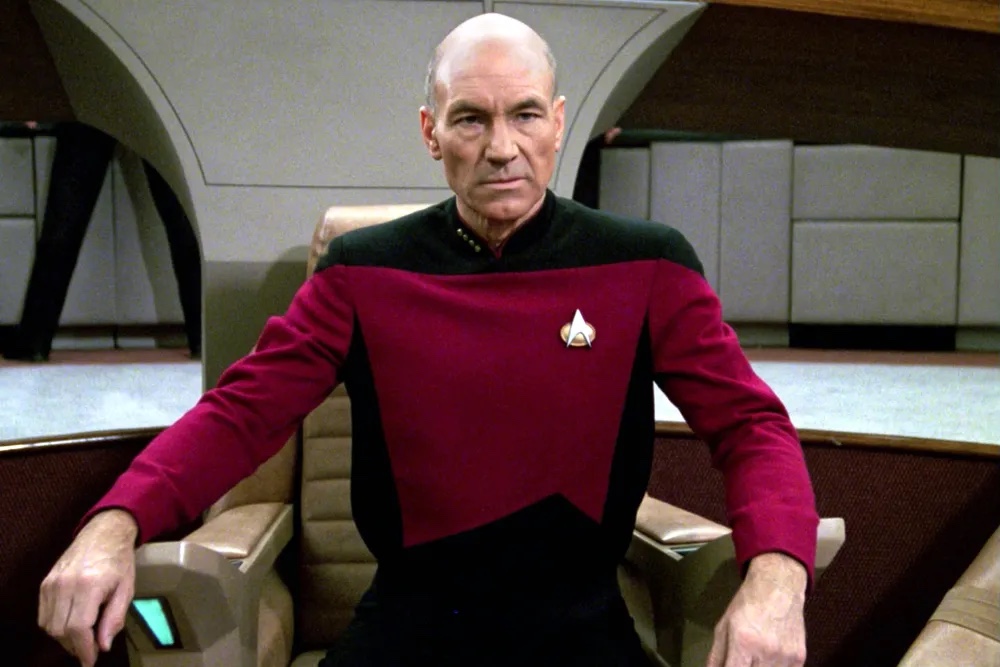
It has been a heartbreaking week for Star Trek fans. On Sunday, we lost Walter Koenig, who played Ensign Pavel Chekov in Star Trek: The Original Series. Then, on Wednesday, Sir Patrick Stewart, the beloved Captain Jean-Luc Picard of Star Trek: The Next Generation, passed away at the age of 86. Koenig was 90, which surprised me because I had never realized that he was only four years older than Stewart. For Trekkies everywhere, losing two members of the Star Trek family in the same week is almost too much to bear.
I have been a Star Trek fan for as long as I can remember. I’ve seen every episode of the original series and The Next Generation, watched every live-action Star Trek series, and seen all the movies. As an aside, I’ve watched Deep Space Nine more times than I can count, and The Next Generation nearly as many. I’ve spent countless hours aboard the various starships named Enterprise, traveled to Deep Space Nine, journeyed through the Delta Quadrant aboard Voyager, and explored strange new worlds alongside generations of Starfleet officers.
When Star Trek: The Next Generation premiered in 1987, Patrick Stewart had the unenviable task of following William Shatner’s James T. Kirk. Kirk was bold, charismatic, impulsive, and sometimes reckless. Picard was something different. He was thoughtful, diplomatic, intellectual, and guided by an unwavering moral compass. Stewart brought his considerable Shakespearean training to the role, giving Picard a dignity and gravitas that made him one of television’s most memorable characters. He could command a starship with a quiet word or deliver a stirring speech about justice and humanity.
Perhaps no moment demonstrated how indispensable Stewart had become to The Next Generation more than the cliffhanger at the end of the third season in 1990. In “The Best of Both Worlds,” Captain Picard had been captured and assimilated by the Borg, becoming Locutus. With the fate of the Federation hanging in the balance, Commander Riker gave Worf the order to fire on the Borg ship, knowing that Picard was aboard. The screen went black, and Star Trek fans collectively held their breath for the entire summer. Stewart was reportedly involved in contract negotiations at the time, and there was genuine uncertainty about whether he would return. Would Picard survive? Would Riker become the Enterprise’s new captain? Thankfully, Stewart returned, because Star Trek needed a captain with his gravitas. The resolution became one of the series’ defining moments, and Stewart’s portrayal of Picard’s trauma and recovery demonstrated just how much depth he could bring to a character who might otherwise have been little more than a commanding presence on the bridge.
But Picard was never simply a stern captain. Stewart gave him humanity, vulnerability, humor, and compassion. He showed us a man who could be strong without being cruel, authoritative without being arrogant, and courageous without being fearless. Picard believed in diplomacy, knowledge, and the fundamental dignity of others. In many ways, he represented the very best of what Star Trek has always aspired to be.
A couple of years ago, I read Stewart’s memoir, Making It So, and came away with an even greater appreciation for the man behind the captain. His journey from a working-class childhood in Yorkshire to the Royal Shakespeare Company, and eventually to the bridge of the Enterprise, was remarkable. His life was not without hardship, and his willingness to discuss those experiences made his accomplishments all the more meaningful. He was a gifted actor whose career extended far beyond Star Trek, including his memorable portrayal of Professor Charles Xavier in the X-Men films, but to me, he will always be Captain Picard.
I was especially grateful that Stewart returned to the role in Star Trek: Picard. While the first two seasons had their moments, the third and final season was something truly special. Bringing together the principal cast of The Next Generation was a wonderful tribute not only to that series but to the entire era of Star Trek that flourished during the 1980s and 1990s. Seeing those familiar faces together again, particularly aboard a lovingly recreated Enterprise-D, felt like coming home. It gave those characters, and the fans who had loved them for decades, a proper farewell. Now, with Stewart’s passing, that final season feels even more poignant. I am grateful we got to see him take command one last time.
Of course, Stewart and Koenig are only the latest members of the Star Trek family we have lost. Jeffrey Hunter, who portrayed Captain Christopher Pike in the original pilot episode, The Cage, died in 1969, just days before the final episode of the original series aired. DeForest Kelley, our beloved Dr. Leonard “Bones” McCoy, died in 1999. James Doohan, who played the irreplaceable Montgomery Scott, passed away in 2005. Majel Barrett-Roddenberry, widow of Star Trek creator Gene Roddenberry, died in 2008. She portrayed Number One, the Enterprise’s first officer in the original pilot, at a time when television executives apparently couldn’t imagine a woman in such a position of command. She later played Nurse Christine Chapel in the original series and the wonderfully flamboyant Lwaxana Troi in The Next Generation and Deep Space Nine. Perhaps most fittingly, she was quite literally the voice of the Enterprise, providing the familiar voice of the ship’s computer across multiple generations of Star Trek. Leonard Nimoy, whose portrayal of Spock helped define Star Trek itself, died in 2015. We lost Anton Yelchin, who played Chekov in the rebooted films, far too young in 2016. Nichelle Nichols, whose groundbreaking portrayal of Lieutenant Uhura helped make Star Trek a symbol of a more inclusive future, died in 2022. Each loss has taken away another piece of the universe we have loved for so long.
Walter Koenig’s passing earlier this week was particularly sad. As Chekov, he brought youthful enthusiasm, humor, and a certain Russian pride to the bridge of the original Enterprise. At a time when the United States and the Soviet Union were bitter Cold War adversaries, the presence of a Russian officer aboard an American-created starship was a powerful statement about the future Gene Roddenberry envisioned. Koenig helped make that vision believable. His death leaves William Shatner and George Takei as the last surviving members of the original series’ principal cast.
What makes these losses so difficult is that Star Trek has never been merely entertainment to its most devoted fans. At its heart, the franchise has always been about hope. It imagines a future in which humanity has overcome many of the prejudices, divisions, and petty conflicts that continue to plague our world. It celebrates curiosity, exploration, friendship, diversity, and the belief that we can become better than we are. Its characters have become familiar companions, and the actors who brought them to life have helped shape how generations of fans think about the world.
Patrick Stewart understood that responsibility. Through Jean-Luc Picard, he gave us a leader who believed that principles mattered, that compassion was not weakness, and that the pursuit of knowledge and understanding was among humanity’s noblest endeavors. He made us believe that such a future was possible.
The actors may leave us, but the worlds they helped create remain. We can still hear Dr. McCoy grumble, watch Scotty perform another engineering miracle, smile at Chekov’s insistence that something was invented in Russia, and listen to Spock remind us of the importance of logic. And whenever we need a reminder of what principled leadership looks like, we can return to the bridge of the Enterprise-D and find Captain Picard sitting in his chair, ready to take us on another adventure.
Sir Patrick Stewart gave us so much more than a memorable television character. He gave us someone to admire, someone to learn from, and someone whose example will continue to inspire us.
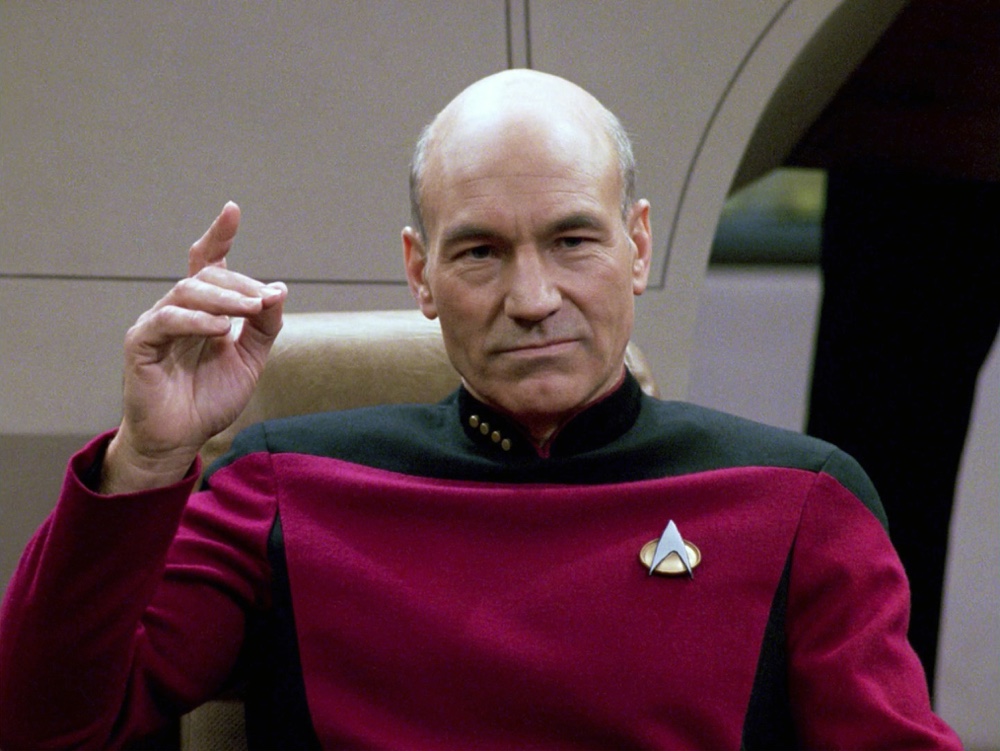 |
He made it so.
Rest in peace, Sir Patrick Stewart and Walter Koenig. Thank you for helping us boldly go where no one has gone before.
No comments:
Post a Comment
Thank you for commenting. I always want to know what you have to say. However, I have a few rules:
1. Always be kind and considerate to others.
2. Do not degrade other people’s way of thinking.
3. I have the right to refuse or remove any comment I deem inappropriate.
4. If you comment on a post that was published over 14 days ago, it will not post immediately. Those comments are set for moderation. If it doesn't break the above rules, it will post.