Showing posts with label History. Show all posts

Tuesday, September 1, 2026

Unknowing

Unknowing

Traditional Bektashi

Unknowing
And knowing nothing of unknowing,
They spread.
Flee.

Unknowing
And knowing nothing of unknowing,
They seek.
Teach them.

Unknowing
And knowing nothing of unknowing,
They sleep.
Wake them.

Knowing,
And knowing unknowing,
The silent few become one with the Core.
Approach.


About the Poem

I came across this poem in a somewhat unusual place. I have been listening to Jason Goodwin’s The Janissary Tree, a historical mystery set in Istanbul in 1836. The novel’s protagonist, Yashim, encounters these words in connection with the Janissaries and the Bektashi dervishes who had long been associated with them. The poem caught my attention immediately, particularly those final words: “Knowing, / And knowing unknowing.”

At first, “knowing unknowing” sounds like a contradiction. How can we know and not know at the same time? Yet perhaps one of the greatest signs of wisdom is knowing the limits of our own knowledge.

The poem seems to describe different kinds of ignorance. There are those who do not know and do not even realize that they do not know. Some confidently spread their ignorance, and the poem tells us to flee from them. Others recognize enough to seek understanding, and we should teach them. Still others remain asleep to what they do not understand, and we should try to wake them.

But the final group is different. They know, yet they also know “unknowing.” They have acquired knowledge without acquiring the arrogance of believing that they can know everything. Instead of speaking loudly and confidently, they are “the silent few.” They recognize that some things remain beyond them.

What fascinates me is how often this same idea appears in very different religious and philosophical traditions.

In Daoism, the Dao De Jing repeatedly warns against mistaking our understanding of reality for reality itself. Its famous opening tells us that the Way that can be completely expressed is not the eternal Way. Chapter 71 makes the connection with Unknowing even clearer: wisdom lies in recognizing what we do not know. The person who does not know but believes that he knows has a far greater problem.

The ancient Greek philosopher Socrates arrived at something similar. The wisdom attributed to him was not that he knew everything, but that he understood the limits of what he knew. Recognizing our ignorance becomes the beginning of wisdom rather than its opposite.

Christianity has its own tradition of unknowing. In 1 Corinthians 13:12, Paul writes, “For now we see through a glass, darkly.” He continues by acknowledging, “now I know in part.” We see only a reflection of the whole. Our knowledge is real, but it is incomplete.

Centuries later, an anonymous Christian mystic would write The Cloud of Unknowing, arguing that God cannot ultimately be grasped by human intellect alone. Faith sometimes requires us to enter the mystery rather than conquer it.

Islam likewise recognizes the limitations of human knowledge. God may know all things, but human beings do not. Even the familiar phrase inshallah—“if God wills”—contains an acknowledgment that we do not know what tomorrow will bring. We can plan, hope, believe, and act while recognizing that the future remains beyond our knowledge.

None of these traditions are saying that knowledge is bad. Neither is Unknowing. Notice that the poem does not praise ignorance. Those who seek should be taught; those who sleep should be awakened. We should learn. We should question. We should seek truth.

But knowledge should bring humility with it.

Perhaps the danger comes when we stop recognizing the distinction between what we know, what we believe, what we think we know, and what remains unknowable. Certainty can be comforting, especially in religion, politics, and our understanding of other people. It is also very easy to mistake certainty for truth.

The wisest person in Unknowing is not the person who loudly announces that he has discovered all the answers. The wisest are “the silent few” who have learned enough to understand how much remains beyond their understanding.

There will always be things we cannot know. We cannot know exactly what tomorrow will bring. We cannot completely know another person’s heart. We cannot fully understand why some things happen to us. And no matter how deeply we believe in God, none of us can comprehend the entirety of the divine.

Perhaps that is not something we need to overcome.

Perhaps true wisdom is not merely knowing.

It is knowing unknowing.

Unknowing is associated with the Bektashi tradition, a Sufi order historically centered in Anatolia and the Balkans. Its author is unknown, and the precise origins of the poem are difficult to establish. The version above appears on Anthony Weir’s website, The Bektashi Order of Dervishes. I have not been able to locate an original Turkish or Ottoman Turkish text from which this English version was translated, so I have attributed it simply as “Traditional Bektashi” rather than assigning it to a particular poet.

The poem’s appearance in The Janissary Tree is particularly appropriate because of the close historical relationship between the Bektashi order and the Ottoman Janissaries.

The Janissaries were the elite infantry corps of the Ottoman Empire and, for centuries, among the most powerful institutions in the empire. Their origins were unusual. Beginning in the fourteenth century, the Ottomans used a system known as the devşirme, or “collection,” through which Christian communities in the Balkans were required to surrender boys to the Ottoman state as a form of tribute. The boys were converted to Islam, educated, and trained for service to the sultan. Some entered the imperial administration, while others became Janissaries.

Technically, the Janissaries were slaves of the sultan, but the word “slave” can be misleading to modern readers. They were not slaves in the sense of plantation or domestic slavery familiar from American history. As members of the sultan’s household, they could receive salaries, enjoy considerable privileges, and rise to positions of wealth, status, and enormous political influence. Their lack of traditional family or tribal loyalties was originally intended to ensure that their loyalty belonged directly to the sultan.

Over the centuries, however, the Janissaries evolved from an elite military corps into a powerful political force capable of making and unmaking sultans. They also developed a particularly close spiritual association with the Bektashi order of dervishes. When Sultan Mahmud II violently abolished the Janissaries in 1826, an event known as the Auspicious Incident, he subsequently suppressed the Bektashis as well, closing many of their lodges and driving adherents underground. Since The Janissary Tree takes place only ten years later, that history hangs heavily over the story.

The poem itself reflects a central concern of mystical traditions: the difference between possessing knowledge and understanding the limits of knowledge. Its progression leads from ignorance without awareness, through seeking and awakening, and finally to “knowing unknowing”—a state in which knowledge is accompanied by humility before what cannot be fully understood.


About the Bektashi Tradition

The Bektashi order is a Sufi mystical tradition traditionally associated with HacΔ± Bektaş Veli, a thirteenth-century holy man from Anatolia. Over the centuries, Bektashism developed a distinctive religious tradition incorporating Sufi mysticism alongside elements associated with Shi’a Islam and particular reverence for Ali and the Twelve Imams.

Bektashi spirituality has often emphasized an inward search for divine truth rather than relying solely upon outward religious observance. This sometimes placed Bektashis at odds with the more orthodox Sunni religious establishment of the Ottoman Empire.

Their close association with the Janissaries made that tension political as well as religious. When Sultan Mahmud II destroyed the Janissary corps in 1826, the Bektashis lost their powerful protectors and were themselves subjected to official suppression. Nevertheless, the tradition survived, particularly in Albania and elsewhere in the Balkans.

That history adds another dimension to Unknowing. Religious institutions can sometimes be very certain about what they know. Mystics, by contrast, have often reminded us that approaching God can mean confronting something far greater than the human mind can fully understand.

And perhaps that is why the poem’s final instruction is not learn, teach, or even know.

It is simply:

Approach.

Wednesday, August 5, 2026

National Underwear Day

Today is National Underwear Day, and after writing last week’s post, First Crushes in Plain Sight, I realized there was another chapter to that story.

For many gay men of my generation, underwear wasn’t just something we wore. It was one of the first ways we noticed the male body, even if we didn’t yet understand why we were looking. Department store catalogs, magazine advertisements, and those cardboard underwear packages all offered perfectly acceptable reasons to admire handsome men. Eventually, though, we grew up, started buying our own underwear, and discovered that what we wore could say something about who we were—or at least who we wanted to be.

When I was a kid in the 1980s, briefs ruled. Hanes, Fruit of the Loom, and Jockey were what almost every boy wore. If you were in elementary school, you probably also had a pair of Underoos featuring your favorite superhero. There was something magical about putting on Superman or Batman before heading off to school.

That changed surprisingly quickly.

By the time I reached high school in the early 1990s, briefs had practically disappeared from the boys’ locker room. Everyone seemed to wear either boxer shorts or the then-new boxer briefs. Wearing briefs wasn’t just considered old-fashioned—it was often dismissed as “gay.” Looking back, it’s ironic considering how popular briefs have become again, especially within the gay community.

As gay culture developed its own fashion trends, underwear became something entirely different. It wasn’t simply about comfort anymore. It became another way to express personality, confidence, and sometimes a sense of humor.

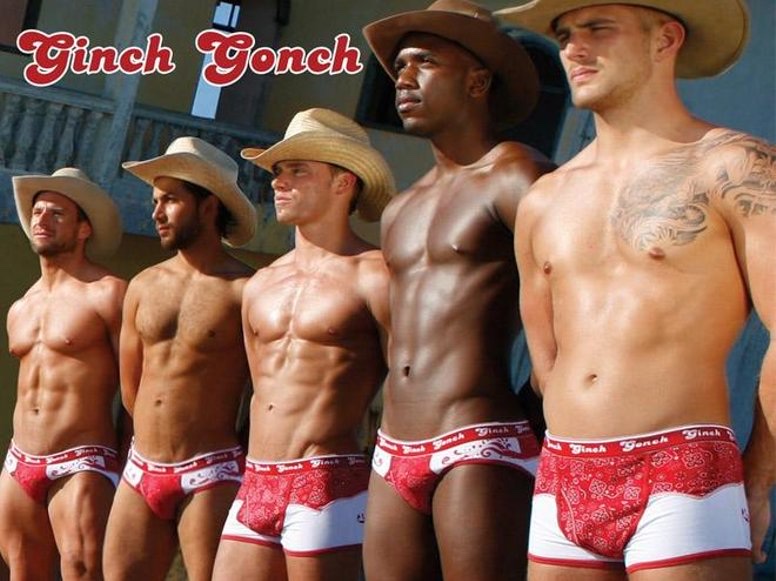
One company that deserves special recognition is Ginch Gonch. Long before novelty underwear became commonplace, Ginch Gonch embraced bright colors, cartoon-inspired graphics, and playful designs that felt like Underoos for grown men. They proved men’s underwear didn’t have to be plain, and they helped pave the way for many of the brands that followed.

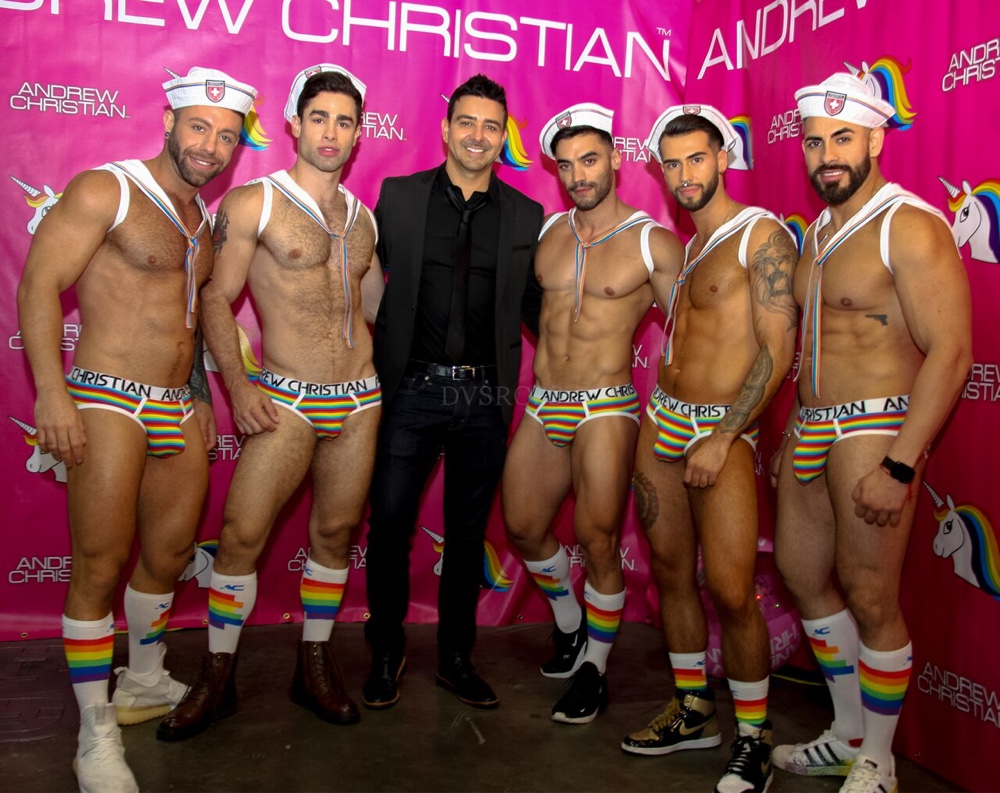
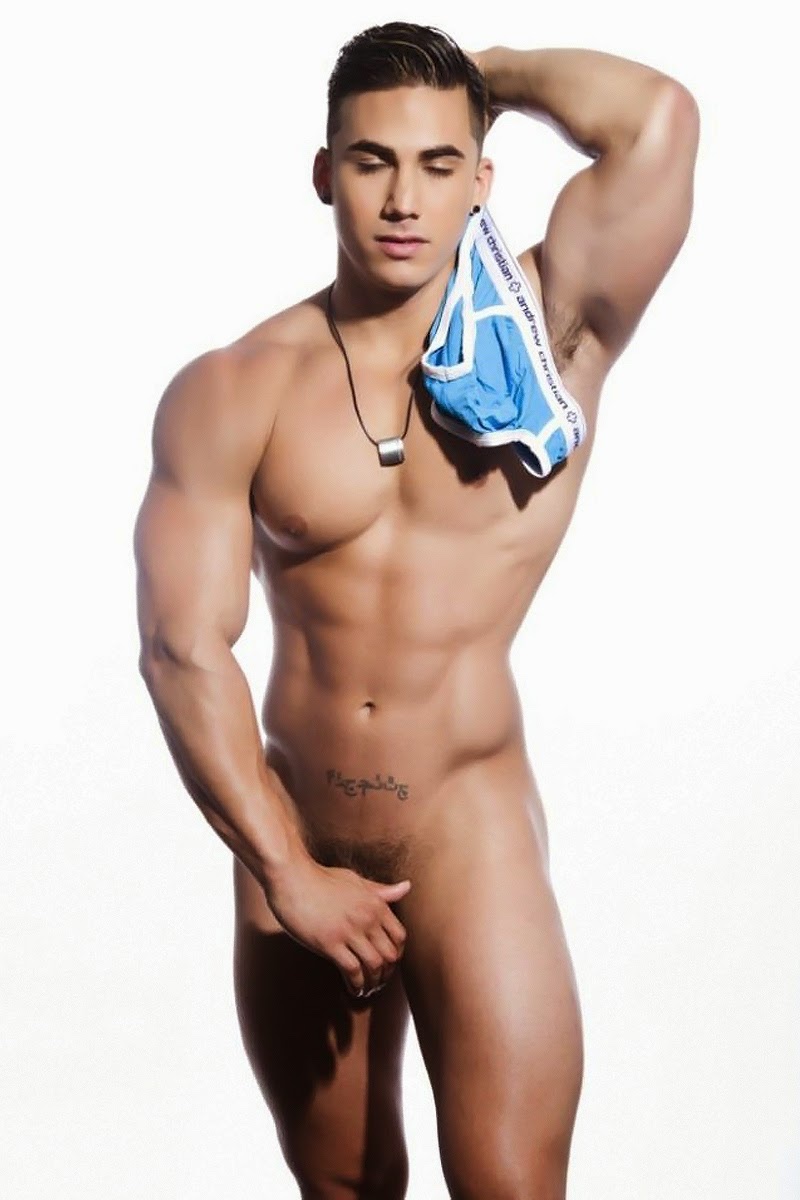
No discussion would be complete without Andrew Christian. For nearly three decades, Andrew Christian defined gay underwear marketing. The company’s colorful designs, playful advertising, and signature pouch technology influenced countless competitors. Although Andrew Christian recently retired and closed the brand, its impact on gay fashion is hard to overstate. In many ways, it marks the end of one of the most influential chapters in gay men’s underwear.


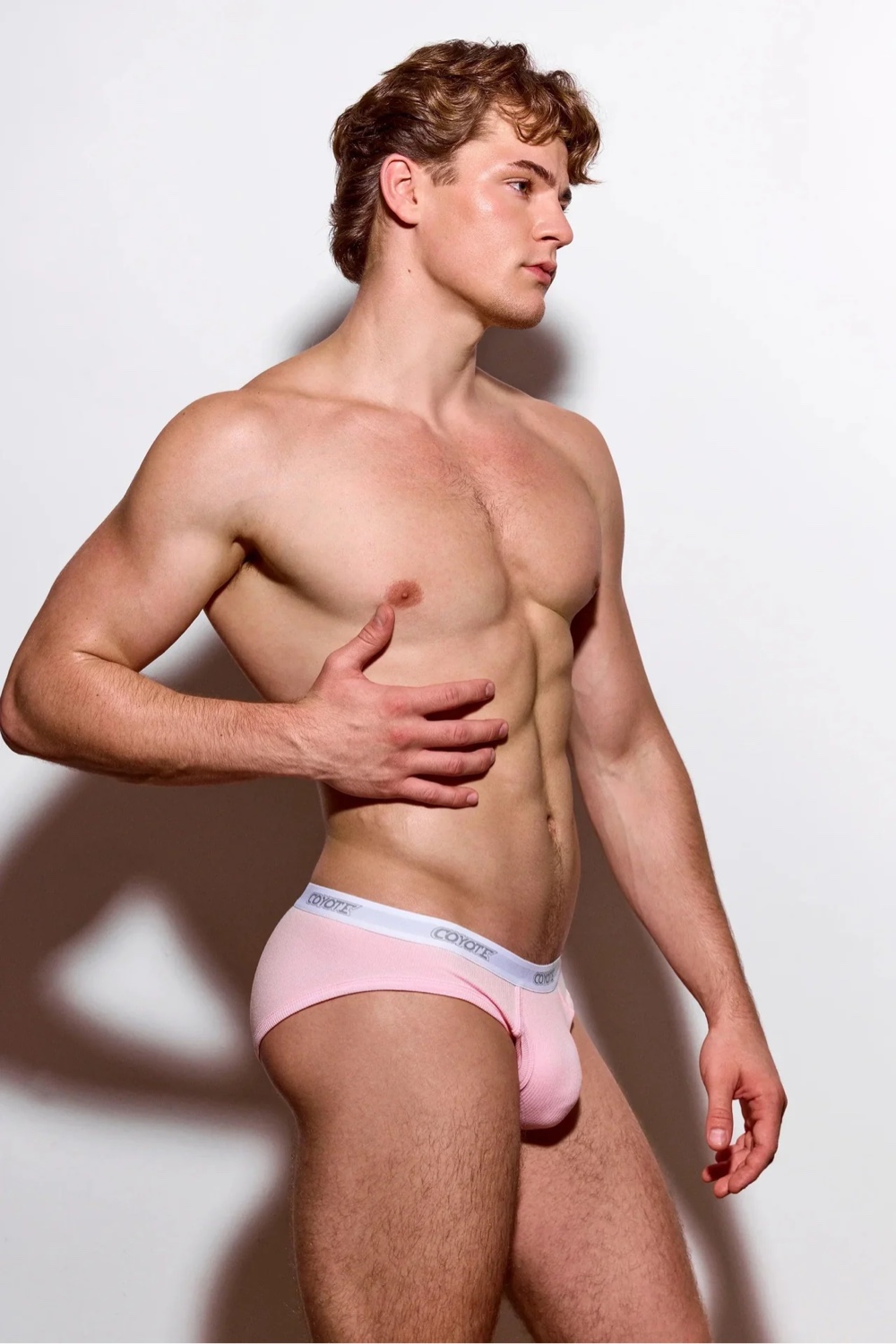
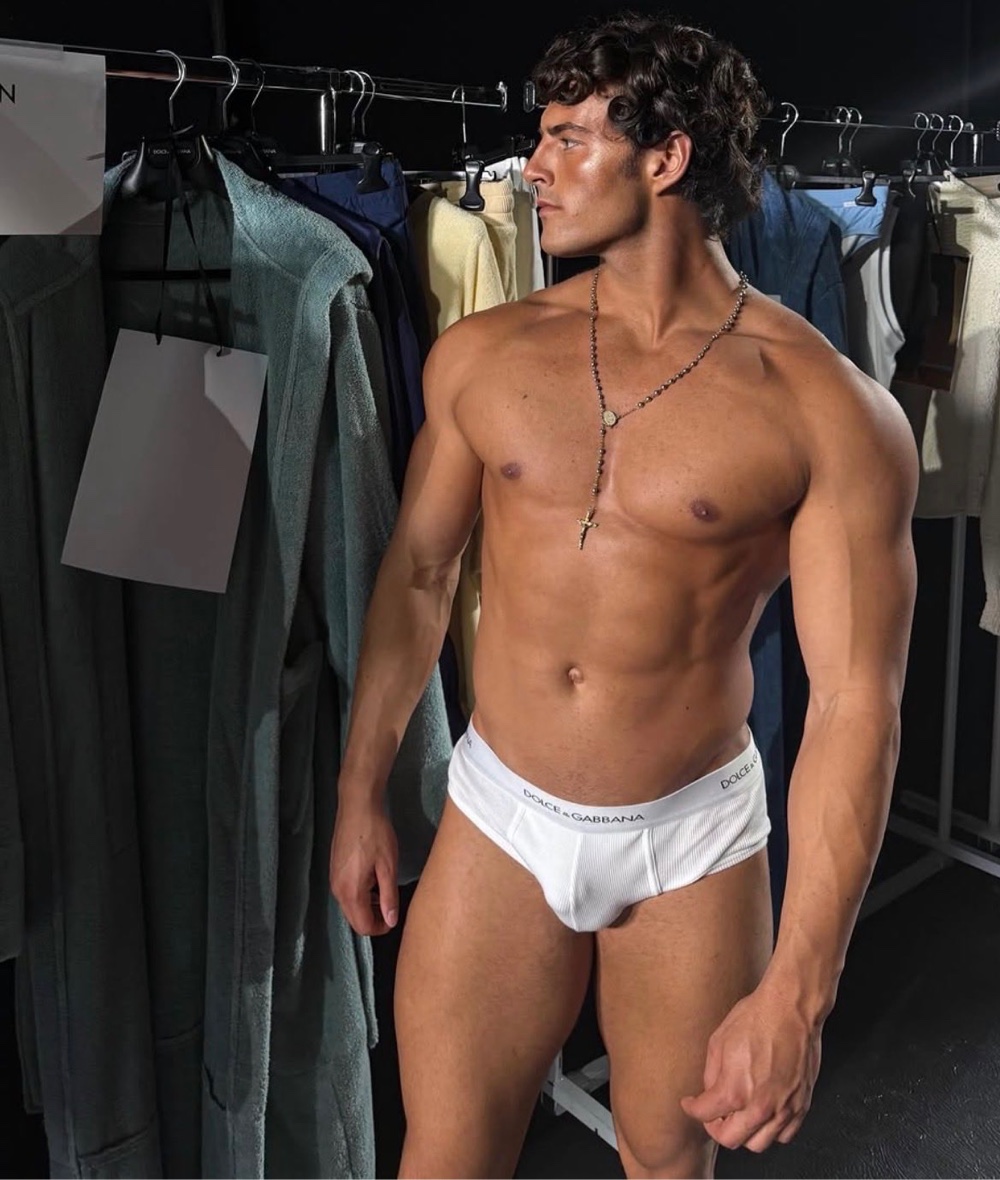
Another thing that changed the industry was the use of gay adult film stars as underwear models. I can’t remember whether Andrew Christian or Ginch Gonch embraced the idea first—Topher DiMaggio became one of Andrew Christian’s most recognizable faces, while Benjamin Bradley was synonymous with Ginch Gonch for many years—but once the trend caught on, it spread quickly. Today, it’s common for underwear companies to feature well-known gay models, adult film stars, and social media personalities in their advertising. Coyote Jocks, for example, has featured Oliver Marks in campaigns. It makes sense from a marketing standpoint. These are men who already have devoted followings, and they bring a level of confidence and authenticity that resonates with many gay consumers.

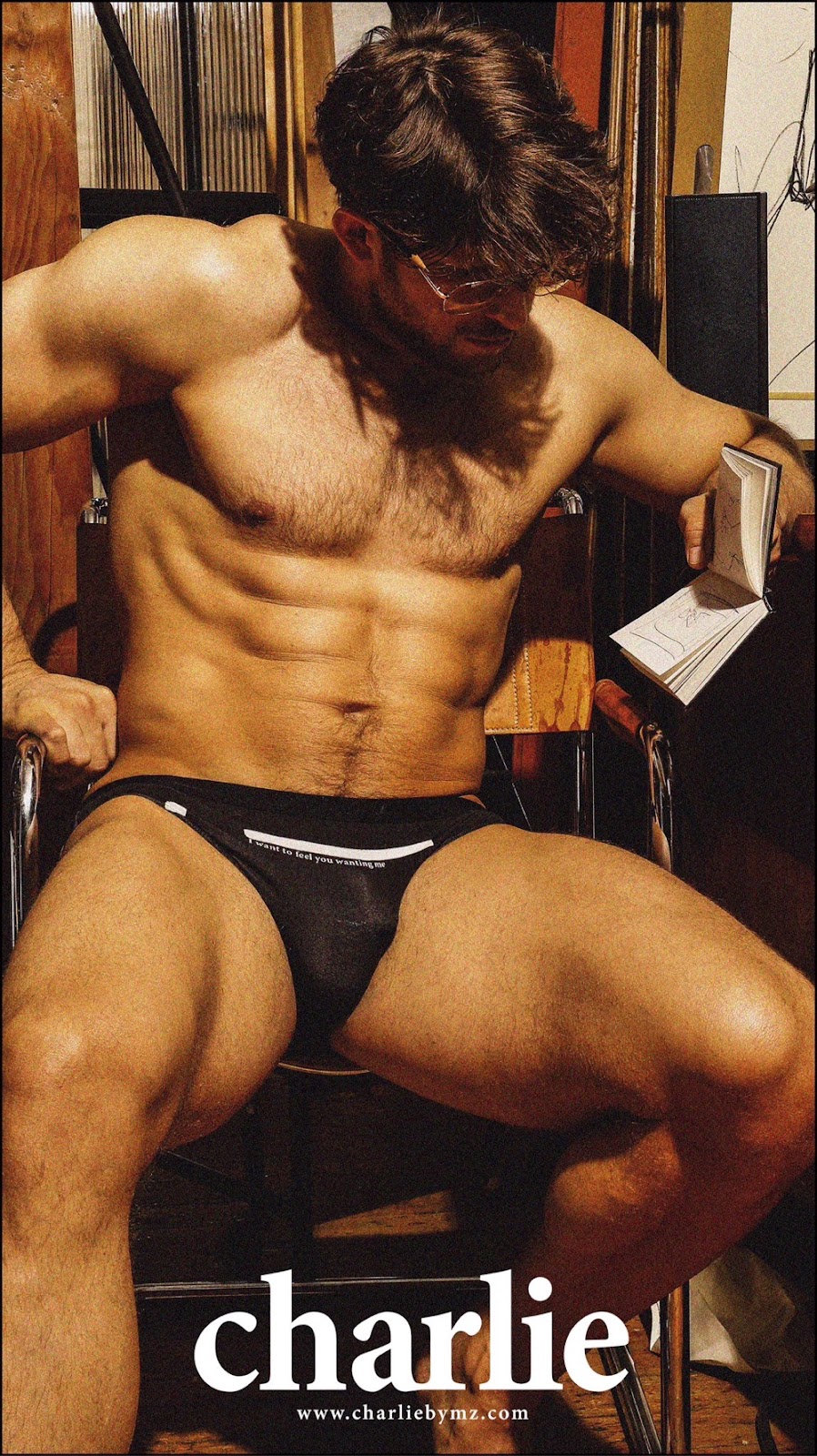
Other companies soon found devoted followings. Brands like 2(X)IST and C-IN2 helped bridge the gap between department store underwear and underwear designed specifically with gay men in mind. Today, companies such as Charlie by Matthew Zink, CellBlock 13, Nasty Pig, PUMP!, Cocksox, 2EROS, Rufskin, Coyote Jocks, Bang, Hung, and Papi each serve their own corner of the market, whether that’s athletic, luxury, fetish, nightlife, or simply fashion-forward basics.

Designer labels have also played an enormous role. Calvin Klein, in particular, transformed men’s underwear advertising into something aspirational. Those iconic campaigns made underwear sexy in a way it had never been before. Emporio Armani, Hugo Boss, and Diesel continued that tradition, making underwear something worth showing off instead of hiding beneath your clothes.

Ironically, the brands many of us grew up wearing have found a second life in certain gay communities. Hanes, Fruit of the Loom, and especially classic Jockey briefs have become favorites within some nostalgia and underwear fetish circles. What was once considered ordinary—or even embarrassingly plain—has become appealing precisely because of its simplicity and familiarity. Sometimes yesterday’s basics become today’s fetish.

Then there are the styles themselves. Today, briefs have enjoyed a remarkable comeback, especially within the gay community. Boxer briefs remain an everyday favorite for many men, while trunks offer a shorter, more modern silhouette. Boxer shorts still have their loyal fans, even if they’re not nearly as common as they once were. Bikini briefs, jockstraps, and thongs each have their own devoted audiences, and today there’s far less concern about whether one style is somehow “more masculine” than another.

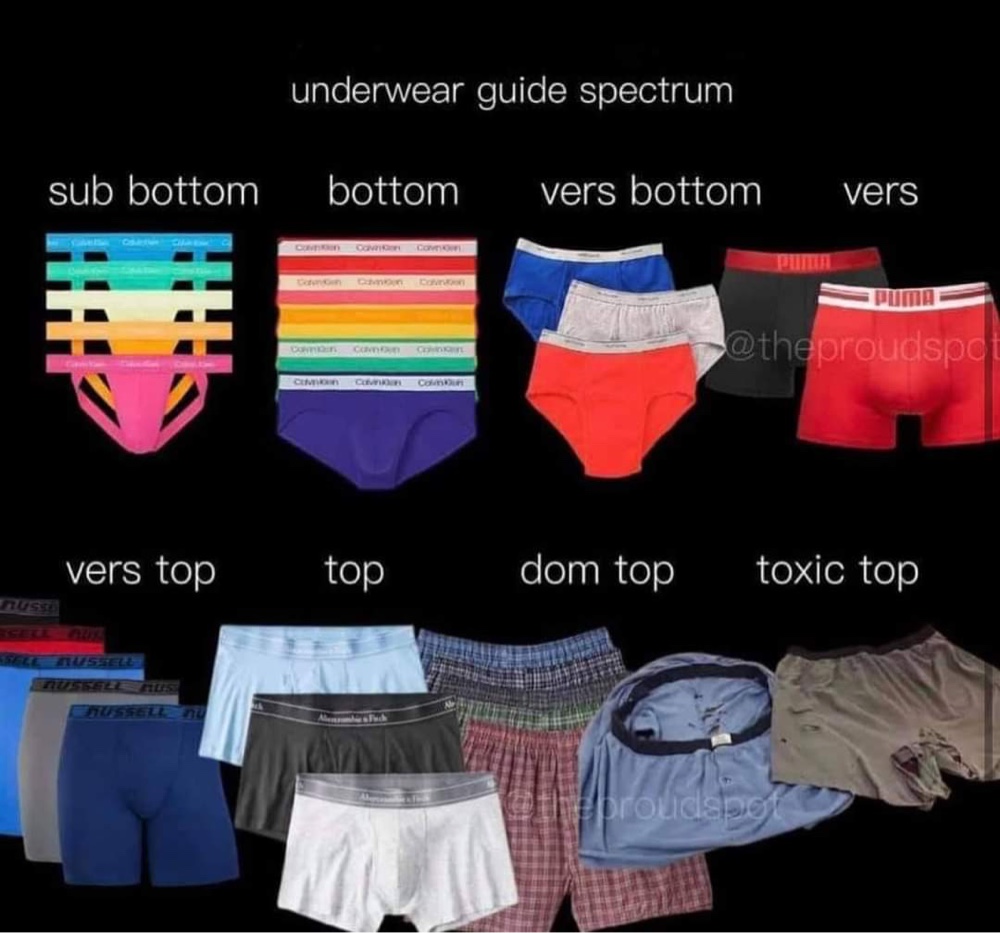
Of course, if you’ve spent any time on gay social media, you’ve probably encountered one of the countless “gay underwear spectrum” memes that supposedly explain your preferred position based entirely on what’s in your underwear drawer. I’ve included one of my favorites below.

They’re completely ridiculous.

That’s also what makes them so funny.

I know tops who wear briefs, bottoms who swear by boxer briefs, versatile guys who collect jockstraps, and plenty of men whose favorite underwear is simply whatever happened to be on sale at Costco. Like most stereotypes, the memes are funny because they exaggerate tiny grains of truth into something absurd.

Looking back, it’s amazing how much underwear has changed during my lifetime. What was once a purely practical purchase has become fashion, self-expression, nostalgia, and, for many gay men, a celebration of the male body. It has also become another way for gay men to recognize ourselves in advertising. Where department store catalogs once gave us anonymous models to admire, today’s underwear campaigns often feature men many of us already know—from fitness influencers to adult film stars to social media personalities. That’s a remarkable evolution in just a few decades.

So, in honor of National Underwear Day, pull on your favorite pair of underwear and celebrate the day—whether it’s a classic pair of white briefs, comfortable boxer briefs, colorful trunks, a favorite jockstrap, or anything in between. After all, confidence is always in style.

I can’t resist asking: What’s your favorite style—and has it changed over the years? Do you have a favorite brand? I’d love to hear your answers in the comments.


Wednesday, July 29, 2026

First Crushes in Plain Sight

For those of us who grew up before the internet, shopping catalogs were about much more than shopping.

The Sears and Roebuck catalog and the JCPenney catalog arrived at our homes several times a year, filled with everything from tools and appliances to school clothes and Christmas gifts. They were meant to help families decide what to buy.

For some of us, however, they offered something we didn’t fully understand at the time.

The men’s underwear section.

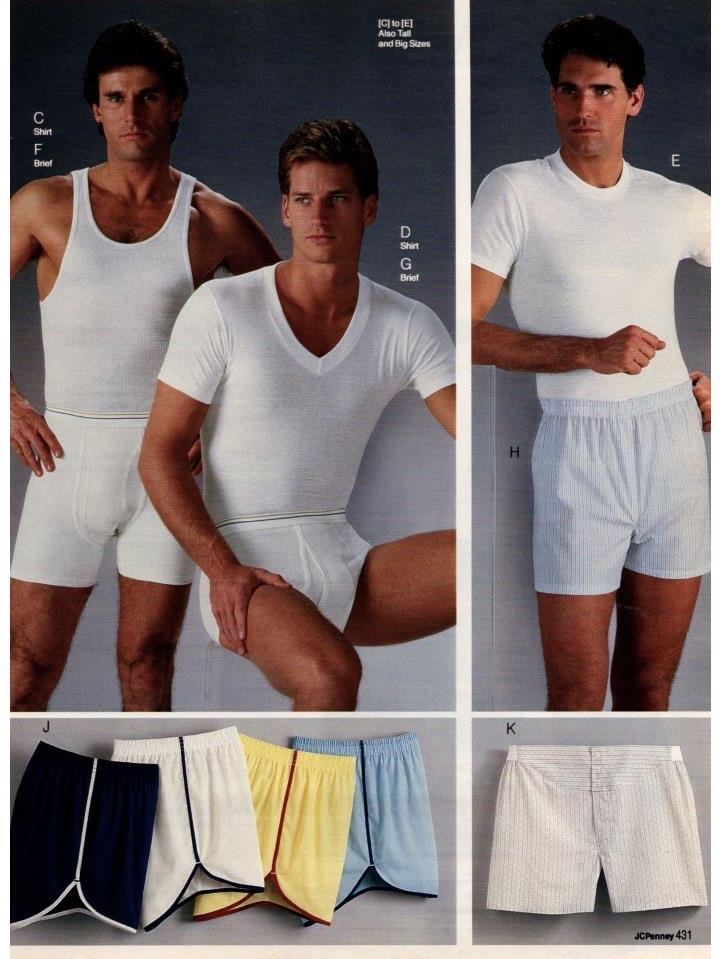
I suspect I’m far from the only gay man who spent a little longer flipping through those pages than was strictly necessary. There they were: page after page of handsome men modeling briefs, boxers, tank tops, and undershirts. They smiled confidently into the camera, athletic and fit, showing just enough skin to capture a teenage boy’s attention.

At the time, I probably told myself I admired their physiques because I wanted to look like them.

Looking back, I know that wasn’t the whole story.

I wasn’t really interested in whether the underwear was made by Hanes, Jockey, Fruit of the Loom, or BVD.

1986 JCPenney Spring Summer Catalog, Page 431

I was interested in the men wearing it.

The experience didn’t end when the catalogs were put away.

Trips to the department store offered another opportunity. Growing up in Alabama, that usually meant Gayfers or Parisians. Walking through the men’s department almost inevitably meant passing the underwear aisle. Boxes lined the shelves with photographs of smiling models wearing the latest briefs or boxer briefs. Hanging displays featured larger promotional photographs, and every brand seemed determined to convince shoppers that buying their underwear was somehow the key to looking like the handsome man on the package.

I never lingered very long.

Rusty Joiner*

I was terrified someone might notice me looking too closely and somehow think I was gay. So my glances were brief—a quick look at one box, then another, before pretending to be interested in something else. Looking back, it’s funny to think I believed anyone was paying that much attention to me, but when you’re a closeted teenager, that’s how fear works.

I almost always shopped with Mama, never with both of my parents. As I got older, she trusted me enough to wander off into the boys’ or men’s department while she shopped elsewhere. Those few minutes alone felt like a small freedom. I could spend just a little more time in the underwear aisle, picking up one package and then another, pretending to compare brands when I was really getting a closer look at the model on the front.

Of course, I couldn’t have explained why.

I wasn’t consciously searching for attractive men.

Or perhaps I was—I just didn’t have the words to admit it, even to myself.

As I got older, the catalogs evolved along with me.

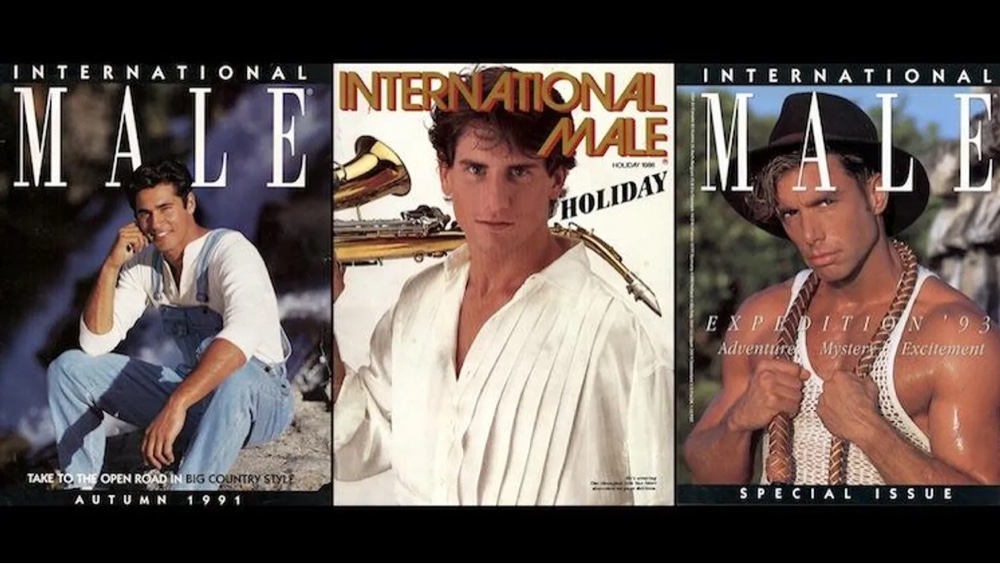
Eventually I discovered International Male.

International Male

Unlike Sears or JCPenney, International Male wasn’t trying to sell everyday basics to the average American family. It specialized in fashion that was bold, stylish, and unapologetically sexy. The models were more glamorous, the photography more dramatic, and the clothing… well, sometimes there wasn’t much of it.

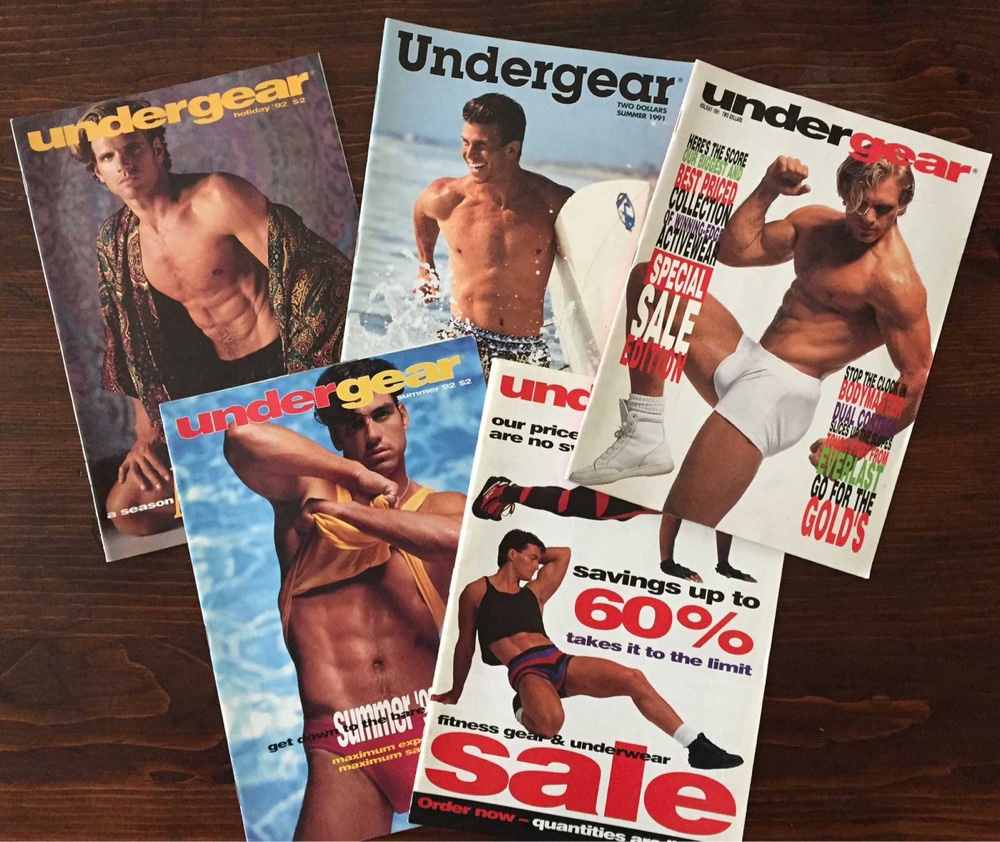
Then came Undergear.

Undergear

Although it marketed underwear, swimwear, athletic clothing, and casual wear, everyone knew the models were just as much a part of the appeal as the products themselves. The photography celebrated the male physique in ways that mainstream department store catalogs rarely did. It still wasn’t pornography, but it certainly wasn’t pretending the models were incidental either.

By the late 1980s and into the 1990s, even mainstream advertising had changed.

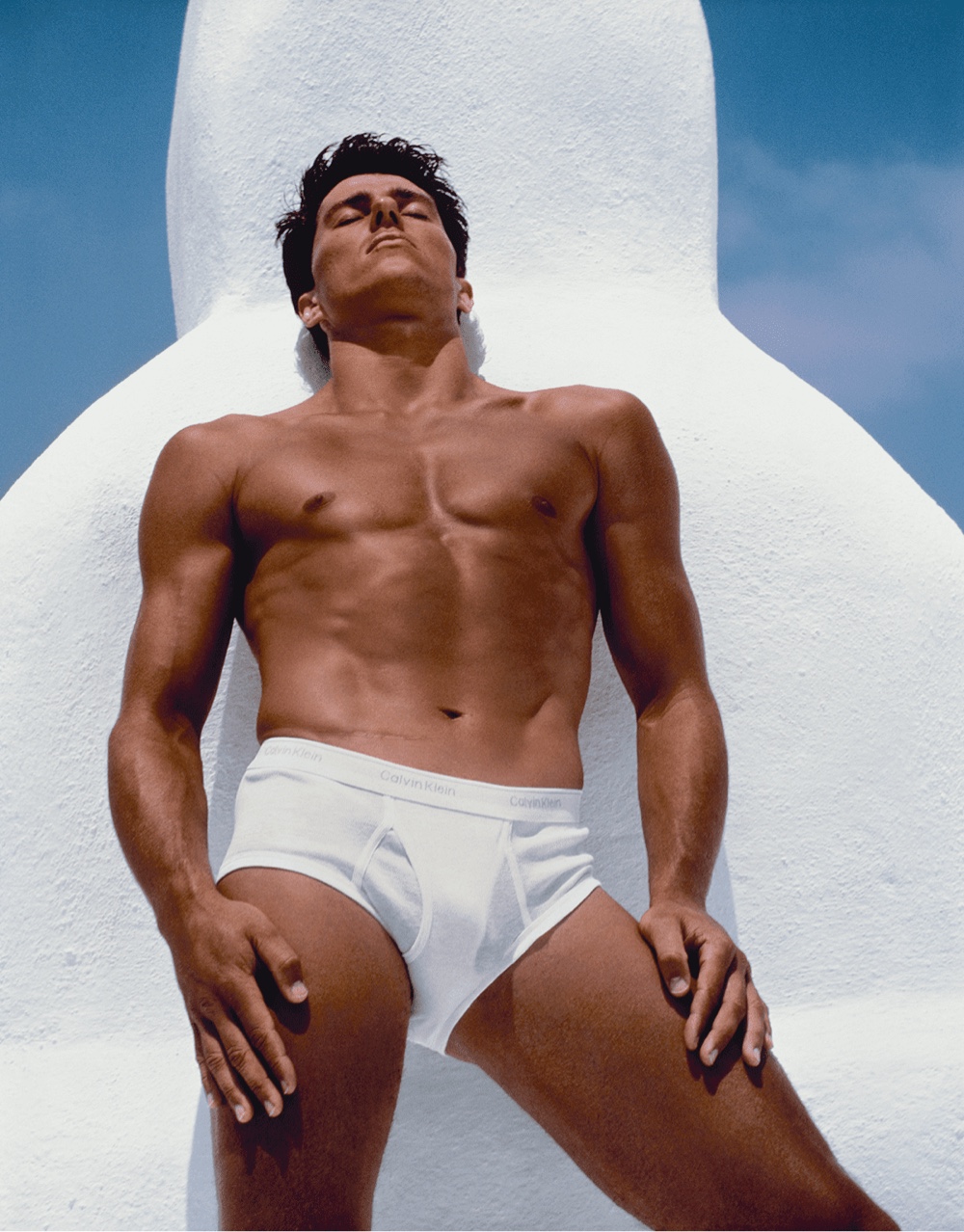
Tom Hintnaus for Calvin Klein

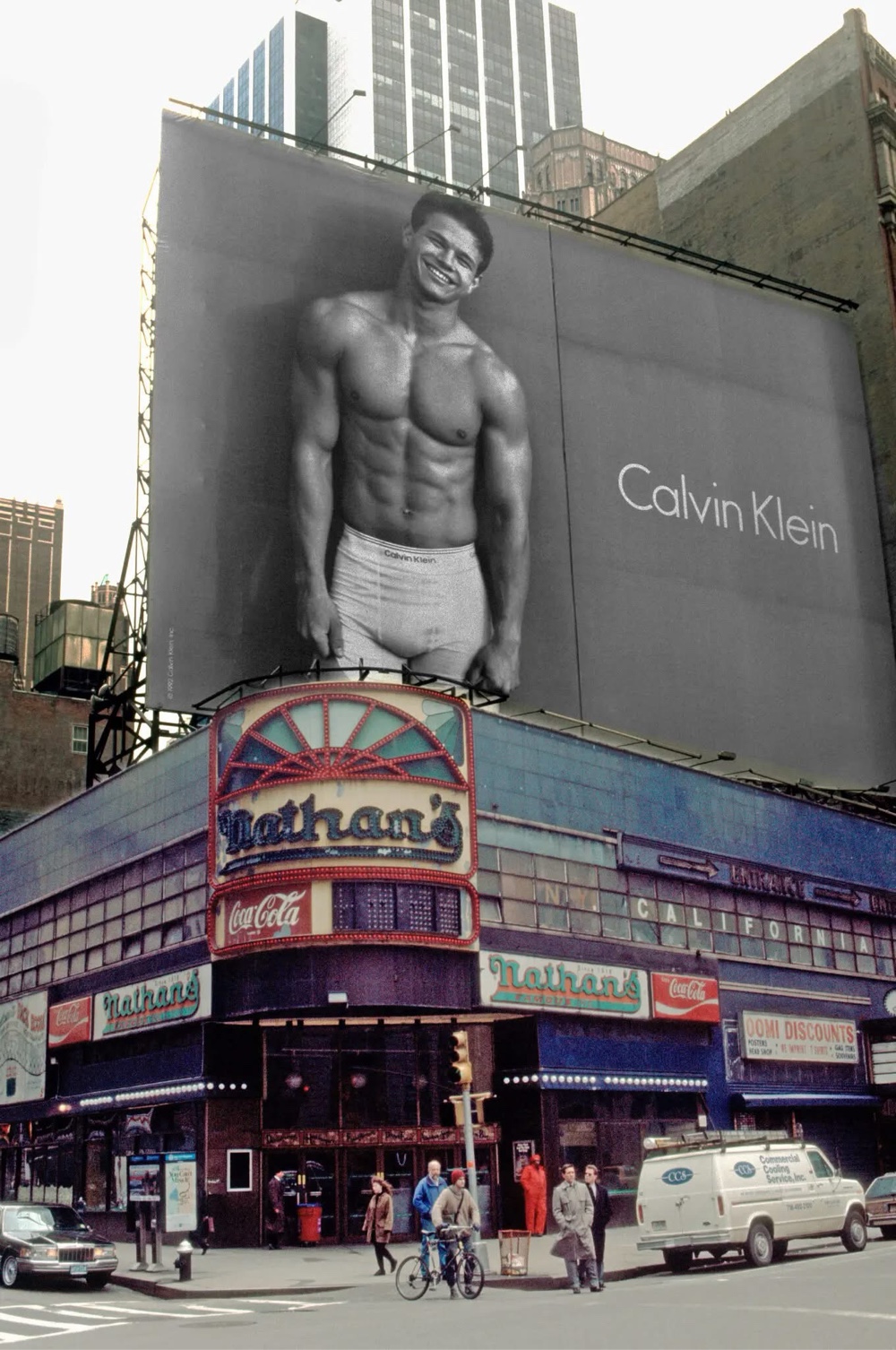
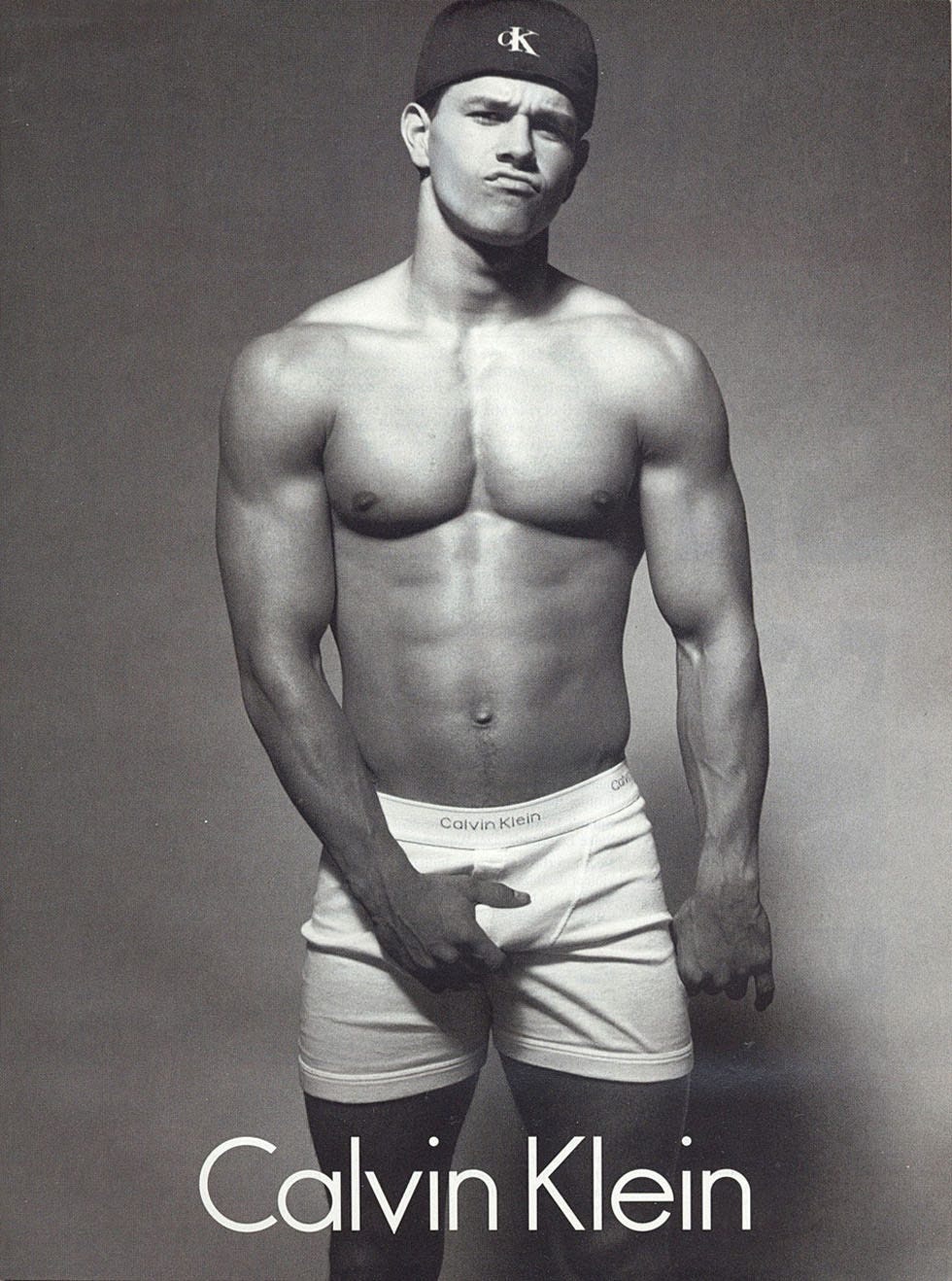
Calvin Klein transformed men’s underwear advertising into something far more than product photography. Athletic young men became the centerpiece of campaigns that celebrated confidence, sexuality, and the male physique. Tom Hintnaus posed atop a rooftop overlooking Santorini, and a few years later Mark Wahlberg’s famous campaigns became nearly impossible to escape. Imagine walking through Times Square and looking up to see a larger-than-life Mark Wahlberg towering above the street in nothing but a pair of Calvin Klein briefs. Underwear advertising had become a cultural phenomenon, and department stores suddenly displayed enormous posters of impossibly fit men, making the underwear aisle even more difficult for a young gay man to walk through without lingering a little longer than he intended.

Marky Mark (Mark Wahlberg) in Times Square

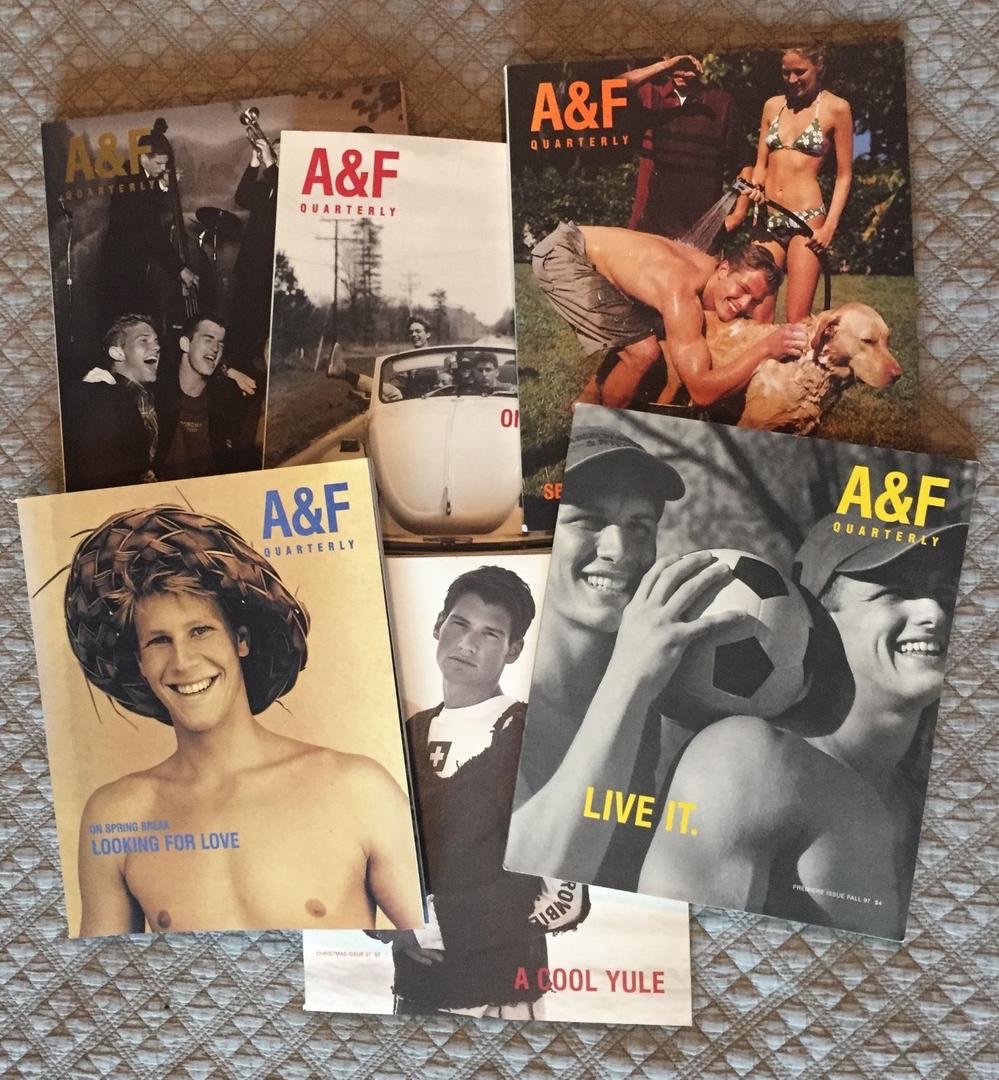
Then there was A&F Quarterly.

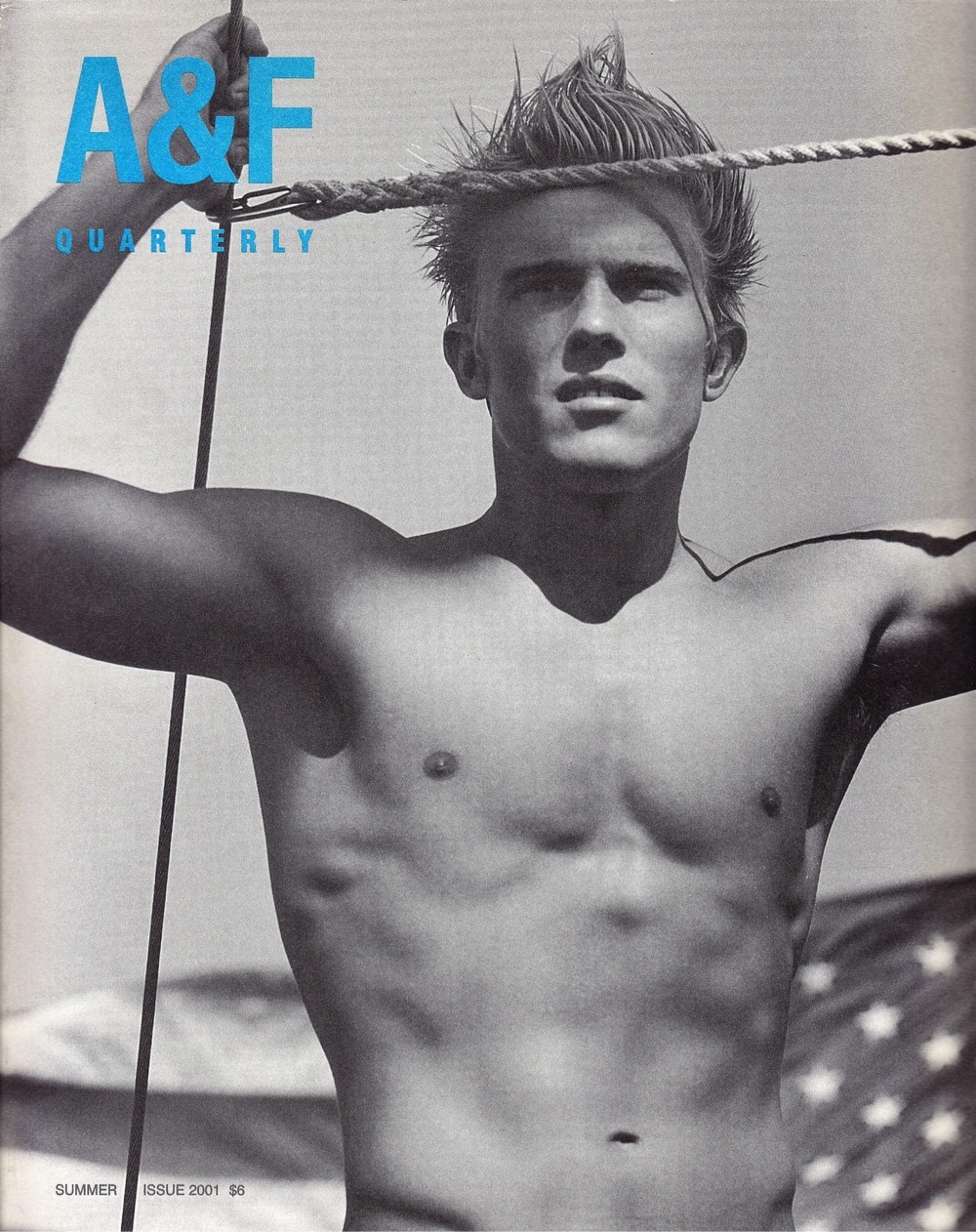
Published by Abercrombie & Fitch beginning in the late 1990s, it hardly resembled a traditional catalog at all. Part fashion magazine, part travel journal, and part photography book, it was filled with Bruce Weber’s evocative images of beautiful young men and women. Officially, it existed to sell clothing. Unofficially, many people looked forward to each new issue as much for the photography as for the merchandise. Like so much of what had come before, it celebrated youthful beauty while carefully remaining on the respectable side of what mainstream retailers considered acceptable.

Looking back, it’s fascinating to see how the presentation of the male body evolved. The wholesome Sears and JCPenney underwear models of my childhood gradually gave way to fashion photography that was increasingly artistic, increasingly sensual, and increasingly aware that beautiful men could sell just about anything. The catalogs evolved, but so did the culture.

A&F Quarterly, “The catalog that launched a thousand modeling careers.”

Today, if a teenager wants to see handsome men in their underwear, he can find thousands of images within seconds on his phone.

My generation had to wait for the mail.

Rusty Joiner for Undergear*

Or hope that Mama needed to stop by Gayfers.

Those catalogs were never intended to become part of anyone’s coming-out story.

Yet I suspect they played that role for far more gay men than anyone ever realized.

Sometimes our first crushes weren’t classmates, movie stars, or musicians.

Sometimes they were the smiling guy modeling briefs on page 487 of the Sears catalog.

And somehow, that was enough to make us turn the page just a little more slowly.

I also can’t help but smile at the irony.

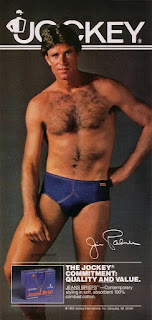
Jim Palmer for Jockey
Does anybody else remember Jim Palmer?

As a teenager, I was convinced that if I looked at those underwear boxes for even a few seconds too long, someone would somehow know my secret. I was so careful to keep my glances brief, convinced that my eyes would betray me.

Today, I’m writing an entire blog post about it.

Maybe that’s the greatest difference of all—not that the catalogs have disappeared, but that I no longer have to pretend I was only looking at the underwear.

Mark Wahlberg’s infamous “Crotch Grab” in a 1992 Calvin Klein advertisement photographed by Herb Ritts

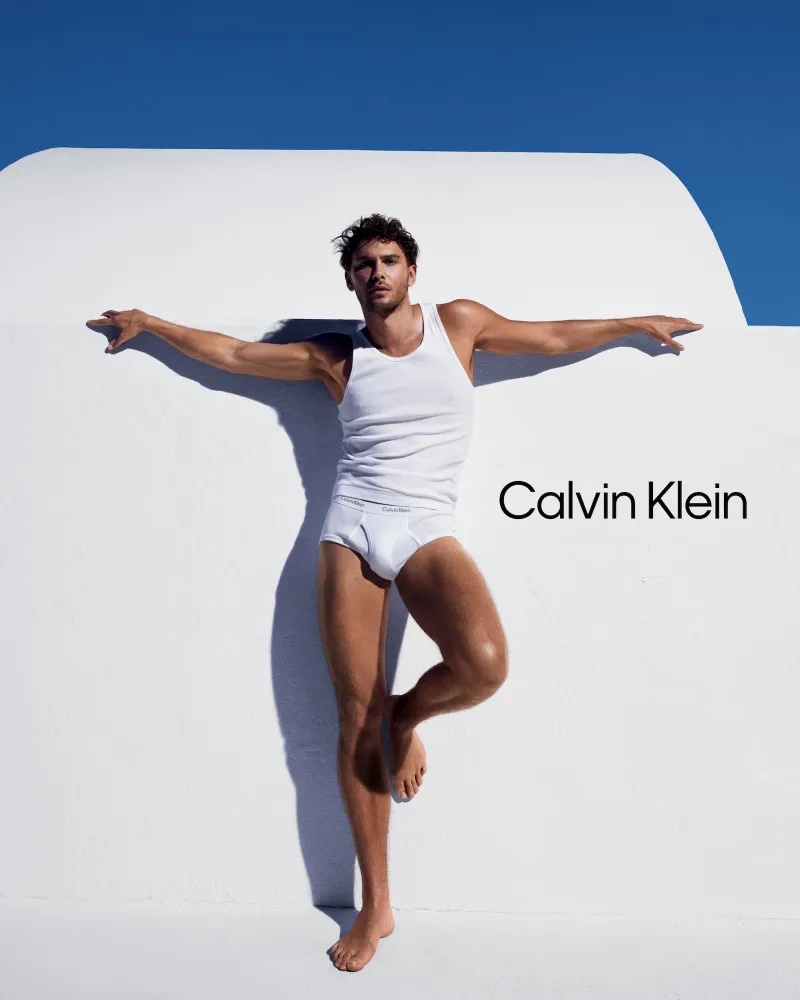
I felt like I should add the bonus picture below, because of all the CK models, Cooper Koch might be my favorite.

Cooper Koch, one of the sexiest men alive (IMO) for Calvin Klein, he’s also an out and proud gay man 


*Rusty Joiner was born in Montgomery, Alabama, and I was obsessed with him for a while.