Tuesday, March 23, 2021

A Prayer in Spring


 A Prayer in Spring

By Robert Frost


Oh, give us pleasure in the flowers to-day;

And give us not to think so far away

As the uncertain harvest; keep us here

All simply in the springing of the year.


Oh, give us pleasure in the orchard white,

Like nothing else by day, like ghosts by night;

And make us happy in the happy bees,

The swarm dilating round the perfect trees.


And make us happy in the darting bird

That suddenly above the bees is heard,

The meteor that thrusts in with needle bill,

And off a blossom in mid air stands still.


For this is love and nothing else is love,

The which it is reserved for God above

To sanctify to what far ends He will,

But which it only needs that we fulfil.


Robert Frost’s “A Prayer in Spring” is a prayer in poetic form giving thanks and gratitude to God for the blessing of spring. The poem shows how spring is an expression of God’s love. The poet reminds us to give a prayer of thanks for receiving the happiness and pleasure that we experience in springtime because we are given spring as a gift from God. We should remember the present beauty and indulgence of spring and not think of the unpredictability of the future because the future is God’s secret. 


The overall theme of “A Prayer in Spring” is an expression of God’s love. Frost wants us to trust in God completely even during spring or times of change. God brings us the beauty of spring, and He has given us everything to reach Him and to ask for His guidance. Frost offers an uncomplicated prayer to God in this poem, focusing on love and gratitude that is traditionally on display during the season of Thanksgiving. As the poet prays to God, he is also inviting his audience to become as delighted in "the springing of the year” as they do in the later harvest which happens in autumn—two seasons away from spring.


Monday, March 22, 2021

Pic of the Day

Mundane Monday


I’m back to going into the museum for part of the week. Mondays are my day to go into the museum each week. If I have a program to do, I go in on that day too, but mostly it’s only on Mondays. Usually, I am at the museum with my boss, and it’s just the two of us. Our schedules are only allowing two employees in the museum on any given day, which means we are most likely the only two people in the museum all day. We aren’t getting any visitors right now because we are only open to students, faculty, and staff.  No one in the three groups seem to want to visit the museum right now. 

Today, I will be the only one in the museum, as my boss has taken a vacation day. I have very little to do. I’ll open the museum at the correct times and lock the doors when I’m supposed to, but I do not expect to see any other people in the museum today. I have a few things to do, but nothing that couldn’t have been done at home. I’ll mostly sit at my computer all day, getting up every so often so I don’t get stiff. It should be a pretty mundane Monday.

Sunday, March 21, 2021

Pic of the Day

Take Back the Conversation


He who does not love does not know God, for God is love.

—1 John 4:8


When I began accepting my sexuality, I did what I think many of those raised in a strict Christian environment did; I read everything I could about homosexuality in the Bible. I soon began to look at the deeper analyses of the original text of the Bible and the context surrounding the texts used to condemn homosexuality. I learned that the New Testament had nothing in it that condemned being gay and that there were many mistranslations of the Bible. As I historian, I began to study the Old Testament passages such as Leviticus 18:22 and Leviticus 20:13. Why were those passages in the Old Testament? Historically, civilizations, such as the Ancient Hebrews who were most concerned about population growth, condemned homosexuality. The laws of Leviticus mainly pertain to issues to promote health and population growth. Per-Christian civilizations, such as Ancient Greece who had a greater acceptance of homosexual practices, did not worry as much about population growth, and often had people to spare and colonized surrounding lands.


I studied all of these issues because I wanted to be able to explain, backward and forward, how I could “justify” being gay with the Bible, especially to my mother. I wanted to be able to answer every question and accusation. I wanted to be confident and secure. I wanted there to be no question in my mind and to be able to erase every question in my mother’s mind. I believed the Bible was my shield, my protection, to be used to defend myself from those like my mother who would use the Bible as a weapon. I wanted to protect myself.


I did not face the real issue (my own acceptance of myself) because I was too worried about what others would think of me. The perception of others caused a great deal of fear, depression, and hiding, and it took me years to change my thinking about that. I let other people lock me in a closet. Eventually, it took moving 1,400 miles from my family to a state where I made friends who accepted me unconditionally, before I could accept myself and stop worrying so much about what others thought. I realized that I shouldn’t have let other people set the rules of my sexuality and life. Not only that, I would never be able to change the minds of people like my mother, even if I possessed the perfect argument. Maybe one day, if I find a partner, my family will change their mind and accept me for the way God created me. But, I doubt it.


I no longer have to ask myself: “How do I explain my faith and my sexuality to people?” “How do I justify being gay?” I was raised in the Church of Christ, a church that believed their way was the ONLY way. All others who were not members of the Church of Christ were destined for Hell. The issue I had with that is I knew people who were very good people, like my maternal grandfather, who was not a member of the Church of Christ but a Baptist. I could never believe that he was going to Hell just because he did not belong to a particular congregation. It was more about if you were a good person, not the church you belonged to. Also, billions of people live on this earth who are not Christian but are good people, and billions have lived through history that never even heard of Christianity. Surely God did not mean that all of them went to Hell. I realized that there isn’t just one way to be a Christian, nor is Christianity the only path to salvation. The Bible does not have a monopoly on morality, and there are many different interpretations of the Bible. Throughout the centuries, in other countries, and in all of the various churches, there is a diversity of beliefs, thoughts, and practices that fall under Christianity's very large banner.


We don’t have to defend ourselves against the hatred of those who pervert the meaning of the Bible. They are making the best argument against their own beliefs when they show their hatred, ignorance, and disgust because at the same time they ignore 1 John 4:8, “He who does not love does not know God, for God is love.” He who does not love does not know God: nine essential words that hold the essence of all the 783,137 that comprise the Bible. We don’t have to allow other people to set the limits of conversation or define acceptable discourse. We can simply walk away when the conversation makes us uncomfortable knowing our righteousness. We can prioritize our emotional and mental health over and above answering every question asked of us. “God is love, and your hate-filled beliefs go against God” is an acceptable answer in my book. It’s all that needs to be said, if you choose to say anything at all.


We also have the option to change the conversation to one about love and acceptance. Instead of letting someone else define how the conversation goes, we can tell them how our faith makes us feel, how it gives us life, and how it changes the way we live. Tell a story of how God has deepened your faith because of being gay. I know I understand my faith a lot more since I began studying the scriptures instead of just listening to a preacher every Sunday. The story of the Bible is our story, too. No one gets to define our faith for us. Our relationship with God is a personal relationship that no one can define for us. Religious leaders want to define that relationship because that gives them power over you and others. They are just men. They don’t have any relationship with God that is more special than your relationship with God.


Most anti-LGBTQ+ religious leaders will likely never understand or change, even if God appeared in a giant glowing light and told them they were wrong. Recently, the Family Research Council, an anti-LGBTQ+ hate group that serves as the lobbying arm of the religious right, describes LGBTQ+ people as “unnatural” and “immoral” in a message to supporters. They reminded recipients at the beginning of the message of a Bible verse that commands followers to kill gay people. David Closson, FRC’s Director of Christian Ethics and Biblical Worldview said, “The apostle Paul explains that humanity has rejected God, exchanging the truth about Him and the things He created for a lie.” Sadly, he is likely never to realize that Paul spoke of people like him who have rejected God’s unconditional love. Groups like the FRC and others like them are likely to ramp up their hateful rhetoric as the Equality Act is discussed more. They will become apoplectic if it passes. However, it’s time we stop allowing these people to control the conversation. It’s time we start telling our own stories in our own way.


We have to quit separating ourselves from religion and instead change the conversation. We have to oppose their hate-filled use of Christianity with the truth of God’s love. It is the only way we can take back the conversation. The religious right has strayed so far from God’s message that we cannot create the world Jesus was brought to this earth to save until we take back the conversation. 

Saturday, March 20, 2021

Pic of the Day


Moment of Zen: Cuddling


This is what I miss most about having a boyfriend: laying in bed in each other arms. Besides a hug, it’s one of the safest and most comforting feelings.


I especially miss it during cold winter nights in Vermont.

Friday, March 19, 2021

Pics of the Day


LGBTQ+ Generational Problems: Millennials (Gen Y), Generation Z, and Generation Alpha

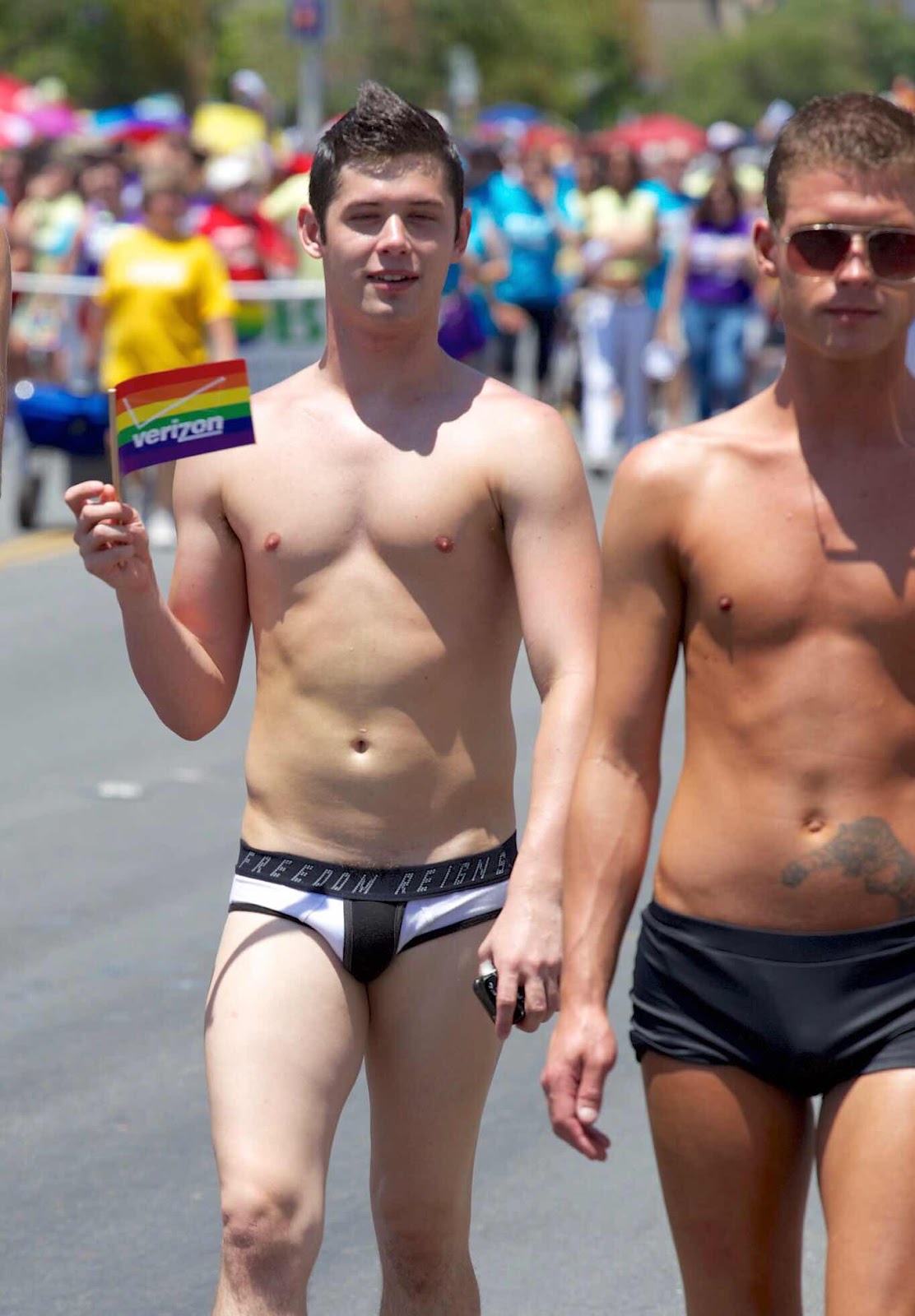
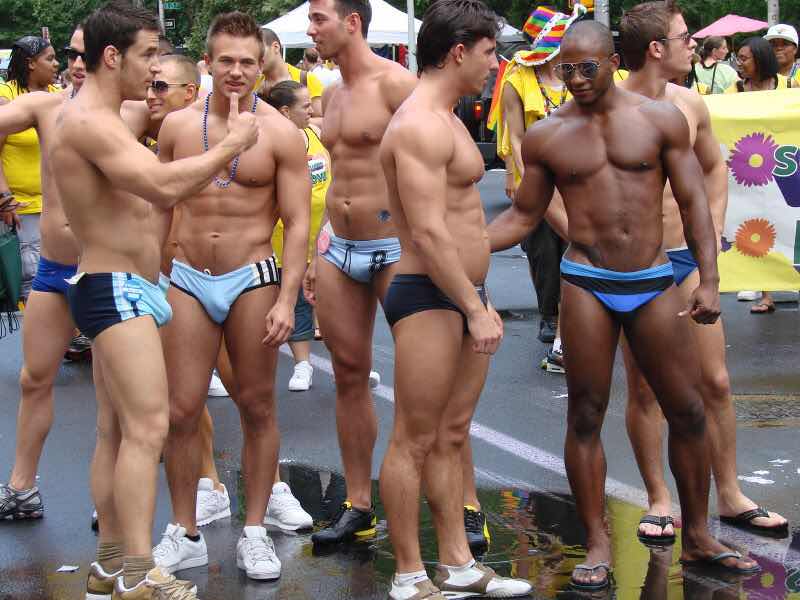
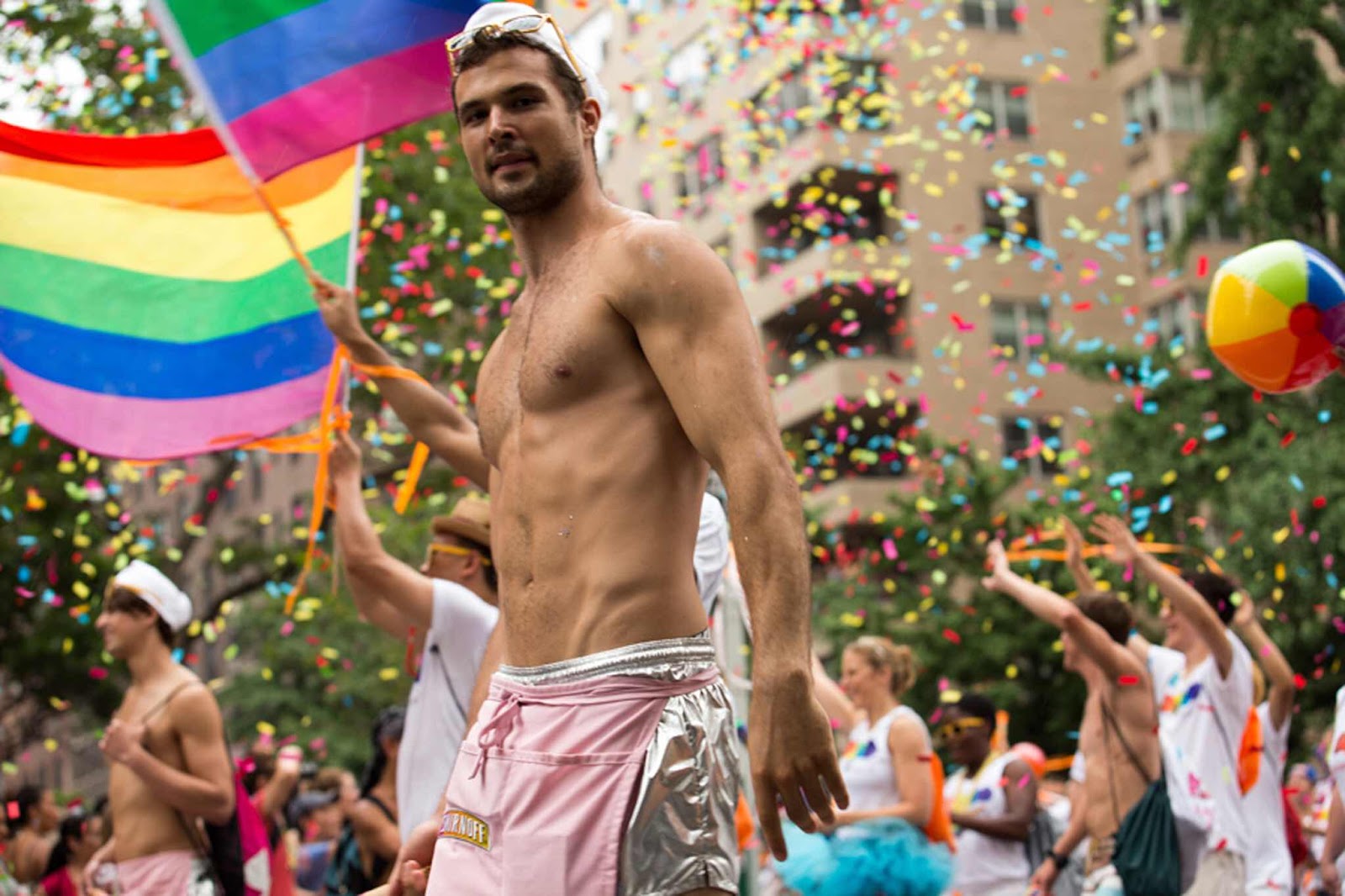
Pride parades celebrate LGBTQ+ self and social acceptance, achievements, legal rights, and pride. Pride celebrations also produce opposition. LGBTQ+ critics complain it exposes the "gay community" to ridicule by emphasizing a hedonistic and non-family friendly image. Conservatives often oppose pride events as being contrary to public morality based on parade displays such as public nudity, BDSM paraphernalia, and other sexualized features.

The United States appeared to be changing, and it looked like equal rights and protections were in the future for Generations Y and Z. However, it would not be easy. In 1993, the Department of Defense issued a directive prohibiting the U.S. Military from barring applicants from service based on their sexual orientation. "Applicants... shall not be asked or required to reveal whether they are homosexual," stated the new policy. But it still forbade applicants from engaging in homosexual acts or making a statement that he or she was homosexual. This policy was known as "Don't Ask, Don't Tell." Then in 1996, Clinton signed the Defense of Marriage Act into law. The law defined marriage as a legal union between one man and one woman and said no state was required to recognize a same-sex marriage from out of state. On November 4, 2008, California voters approved Proposition 8, making same-sex marriage in California illegal. The passing of the ballot garnered national attention from gay-rights supporters across the U.S. Prop 8 inspired the NOH8 campaign, a photo project using celebrities to promote marriage equality. 

As these setbacks eventually have been overturned, Generations Y and Z have grown up in a time of immense change mainly for the better. In December 2010, the U.S. Senate voted to repeal the "Don't Ask, Don't Tell" policy, allowing gays and lesbians to serve openly in the U.S. Military. On June 26, 2015, in a 5-4 decision of Obergefell v. Hodges, the U.S. Supreme Court declared same-sex marriage legal in all 50 states. These new freedoms and equality brought new challenges for the youngest members of the LGBTQ+ community. The “Alphabet Mafia,” so named for all the letters to support the sexual spectrum (LGBTQIA, etc.), has given rise to a backlash from religious conservatives. While more states every year work to pass laws to protect LGBTQ+ people, lesbians, gays, and bisexuals largely have been protected by rulings only from the U.S. Supreme Court. Those rulings are now in jeopardy with the make-up of the current court. The Equality Act passed by the House of Representatives is unlikely to pass the Senate unless changes are made to the filibuster or the filibuster is abolished. Plus, there are bills advancing through state legislatures that target transgender people, limit local protections, and allow the use of religion to discriminate. 


The current anti-transgender bills target transgender and nonbinary people for discrimination by barring or criminalizing healthcare for transgender youth, stopping access to the use of appropriate facilities like restrooms, restricting transgender students’ ability to fully participate in school and sports, allowing religiously-motivated discrimination against trans people, or making it more difficult for trans people to get identification documents with their name and gender. Two of these bills, Alabama's HB-1 and SB-10, companion bills filed by Rep. Wes Allen and Sen. Shay Shelnutt, would criminalize medical professionals who support transgender youths’ identity forcing them to choose between the possibility of government prosecution or adhering to the evidence-based clinical guidelines of their field. These bills would expressly prohibit the use of puberty-blockers and hormone therapies, and require school counselors to report instances of "gender dysphoria." They also ban gender-affirmation surgeries or sex-reassignment surgeries on children although such procedures are not performed on minors. If passed through the House of Representatives and State Senate, these bills would make Alabama the first U.S. state to enact an official transgender medical ban. The ban is one of eight anti-trans pieces of legislation being considered by state legislatures across the country. Medical experts and transgender advocates warn criminalizing transgender medical care could lead to a spike in suicides and mental health problems among trans youth. 


Since the 1970s, when gay rights began to be enacted in some parts of the country, there has been a conservative backlash. It has happened for every minority that has tried to gain equality. The fight is a long way from being over for the LGBTQ+ community just as it continues to be a struggle for racial and ethnic minorities. Until Congress enacts solid protections for LGBTQ+ individuals and the courts back up those protections, conservatives in the U.S. will continue to find new ways to attack our rights. They will continue to use hate and religion to find exemptions even for protections that already have been enacted. In 1988, only 11 percent of Americans supported same-sex marriage. National support for same-sex marriage's legal recognition rose above 50 percent for the first time in 2011. Today, the percentage of Americans who support gay marriage is slightly above 70 percent. I believe the most significant roadblock to LGBTQ+ rights are, and will continue to be, religious exemptions. I think the current Supreme Court will uphold religious exemptions. Until that changes, we will not have equality. The only way to end religious discrimination is for religious organizations with tax-exempt status to lose that status because of their discriminatory practices. 


As I said at the beginning of Wednesday’s post, every LGBTQ+ generation has faced the difficulty of: if my family finds out I am gay, will they reject me? or if I come out, will my family accept me? Sadly, until there is universal acceptance of the diversity of sexuality, this is unlikely to change. In the seven generations since 1900, each generation has faced its own unique problems with some of those being carried over to other generations. It is paramount that the living generations of the LGBTQ+ community have conversations about what is important to younger gay generations versus those who remember the Stonewall riots and lived through the AIDS crisis. Whether perceived or real, differences between generations have existed long before the term “generation gap” became popular in the 1960s. 


Often, each generation has different views on social, political, cultural, and religious issues. LGBTQ+ generations before Millennials were mostly in the closet and afraid of being outed, losing their job and families, possibly their lives. Many of those generations tried to maintain an appearance of “respectability” by being married and having children. In many ways, Generation X was a transition generation between the old and the new. They were the first to experiment with the internet and begin creating a greater LGBTQ+ community. The gay generations since the Millennials can connect no matter where they live. They never knew a time without the internet and have made the most use of technology. They can be more integrated into the mainstream, and they find it easier to be open about their sexuality within society. They have role models and allies that did not exist for older generations. In my opinion, if we recognize our differences, realize what we have in common, understand our past, and embrace our future, we can come together and be a powerful unstoppable force. 


This three-part series of posts is not meant to be an exhaustive look at the problems faced by generations of LGBTQ+ individuals. This final installment is focused on the latest generations growing up in a vastly different world from earlier LGBTQ+ generation, and thus the focus is on how much more still needs to be done.

Thursday, March 18, 2021

Pics of the Day

Today’s “Pics of the Day” are from A&F Quarterly, another iconic fashion catalog of Generation X published from 1997-2003. A&F Quarterly was an American lifestyle periodical by Abercrombie & Fitch, targeted towards the college-aged youth (18-22) and as a promotional vehicle for the A&F brand. Its contents prominently feature photo spreads by Bruce Weber. The Quarterly's inclusion of nudity and sexuality was a controversial topic but like International Male provided an escape for many gay men with its homoerotic images.