Showing posts with label Art. Show all posts

Sunday, April 26, 2026

Greatly Beloved Were You to Me


“When David had finished speaking to Saul, the soul of Jonathan was bound to the soul of David, and Jonathan loved him as his own soul.” 

—1 Samuel 18:1

There are certain images that stay with us—not just as works of art, but as moments of recognition.

For me, David by Michelangelo has always been one of those images.

I still remember the first time I saw him in person in Florence. I had just arrived, and visiting the Galleria dell’Accademia was one of the very first things I did. I walked into that long gallery, and there he was—at the end, illuminated, larger than life. I remember looking up with a kind of awe that felt both artistic and deeply personal. It wasn’t just the mastery of the sculpture—it was presence. Humanity carved into stone.

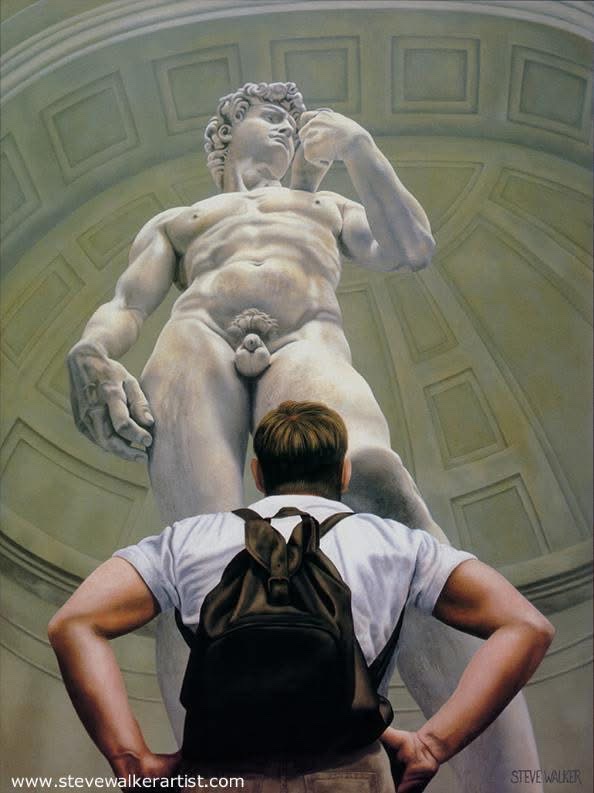
When I first started this blog, I chose David and Me by Steve Walker as my avatar. It reminded me of myself the first time I stood before David—looking up, searching, captivated. Back then, I even physically resembled the figure in Walker’s painting. I’m older now. It has been over twenty years since I last visited Florence, and I’ve changed in ways I could not have imagined then.

But the awe remains.

And because of that fascination with David, I have always found myself drawn not only to the figure in marble, but to the story in scripture—to the love between David and Jonathan.

“Then Jonathan made a covenant with David, because he loved him as his own soul.”—1 Samuel 18:3

From the very beginning, their relationship is described in language that is intimate, binding, and profound. Their souls are knit together. Their love is named openly. A covenant is made—not out of obligation, but out of love.

“Jonathan made David swear again by his love for him; for he loved him as he loved his own life.”—1 Samuel 20:17

This is not casual affection. This is not distant loyalty. This is a love that insists on being spoken, reaffirmed, and held fast even in the face of danger.

“They kissed each other, and wept with each other; David wept the more.”—1 Samuel 20:41

There is tenderness here. Physical closeness. Emotional vulnerability. Grief shared without restraint.

And then, in the end, there is lament.

“I am distressed for you, my brother Jonathan; greatly beloved were you to me; your love to me was wonderful, passing the love of women.”—2 Samuel 1:26

Few passages in scripture speak of love with such intensity. So what are we to make of it? Was this admiration? A deep and abiding friendship?

Was it something like the bond between Achilles and Patroclus, or between Alexander the Great and Hephaestion—relationships that have long existed in that space between friendship and something more?

Or could it have been a love that was intimate in ways the text does not fully define, but does not deny?

The truth is, we will never know with certainty.

But we can pay attention to the language. The Hebrew does not shy away from words of love, of binding, of covenant. It does not diminish their connection. And yet, across centuries, translations and interpretations have often been shaped by the assumptions and discomforts of those doing the translating.

Some render the relationship in ways that feel safer—contained, strictly platonic. Others allow the emotional depth to remain, even if they stop short of naming it outright.

Which raises a different question: not only what was their relationship, but what are we willing to see in it?

For many LGBTQ+ people of faith, this story resonates deeply.

We know what it is to form bonds that others do not understand. We know what it is to love in ways that are questioned, reinterpreted, or denied.We know what it is to hear our stories explained away.

And yet, here in scripture, the love between David and Jonathan is not erased. It is spoken. It is remembered. It is grieved.

I think about that when I think of David—both the young man of scripture and the figure carved in marble.

Strength and beauty, yes. But also vulnerability. Connection. Love that dares to speak its name, even in a world that may not fully understand it.

Maybe we don’t need to resolve the question of what, exactly, David and Jonathan were to each other. Maybe it is enough to let their story remain open—to allow it to hold possibility.

Because for those of us who have been told that our love has no place in sacred story, even the possibility matters.

Even the words themselves are enough:

Greatly beloved were you to me.

Thursday, December 4, 2025

The Rise and Fall of Toronto’s Alexander Wood Statue

Yesterday, while reading, I came across a reference that stopped me in my tracks: gay men in Toronto rubbing the bare butt on a statue for luck. As both a gay man and a museum person, that kind of detail lights up every curiosity circuit in my brain. The scene also reminded me of the old military practice of the “short arm inspection”—the venereal disease check that required soldiers to line up and present themselves for examination. Little moments of sexualized institutional history like that have always existed in the margins, half whispered but universally known.

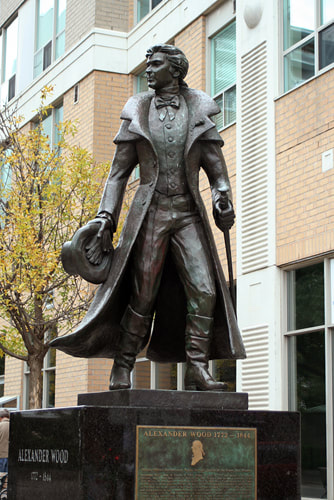
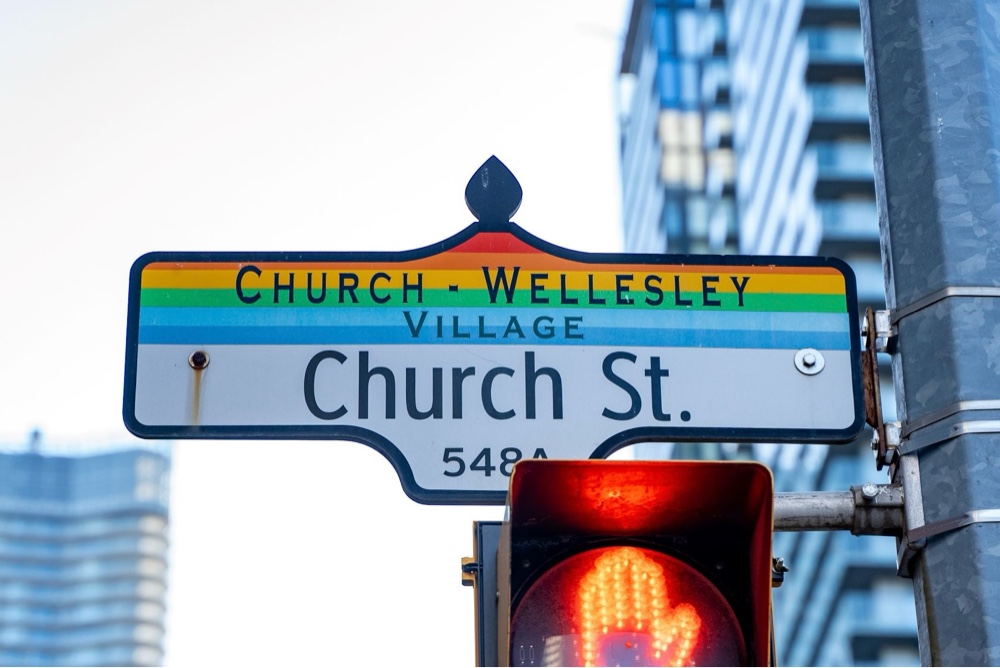
And so it seemed fitting that the statue in question was the Alexander Wood monument that once stood in Toronto’s Church and Wellesley Village—a monument rooted in its own scandal of inspection, accusation, and rumor.

Alexander Wood (1772–1844) was a Scottish merchant and magistrate who became a prominent figure in early Toronto (then York). He served in several civic roles and was involved in shaping the young colony. But today, he’s remembered primarily for a scandal that forever marked his reputation—and later, queer history.

In 1810, a young woman named Miss Bailey claimed she had been sexually assaulted. Her description was vague, but she insisted she could identify the assailant by marks on his genitals.

As a magistrate, Wood investigated the case, questioning several male suspects. Historical accounts state that he personally inspected their genitals to look for corroborating marks.

This highly unusual method sparked gossip and ridicule.

What makes the incident even murkier is that many historians doubt the woman’s existence altogether. Some believe “Magdalena Nagle” may have been invented—either by Wood, his rivals, or the community at large. The absence of solid records fueled speculation in his own time and afterwards.

Regardless, the scandal led to public humiliation and accusations—spoken and unspoken—about Wood’s sexuality. Though never charged with wrongdoing, he fled temporarily to Scotland before quietly returning to his life in Upper Canada.

In 2005, Toronto’s LGBTQ+ community sought to commemorate queer history in public space. Although Wood’s sexual orientation is not documented, many queer historians reclaimed him as a possible queer ancestor—a man punished socially for perceived sexual deviance long before there was a vocabulary to defend himself.

Thus the community commissioned a statue honoring both his life and his place in queer memory.

lThe bronze sculpture, created by Del Newbigging, depicted Wood in early-19th-century attire—not a military uniform, but the formal dress of a gentleman of his era. His pose was confident, with one hand tucked behind him and the other holding a walking stick.

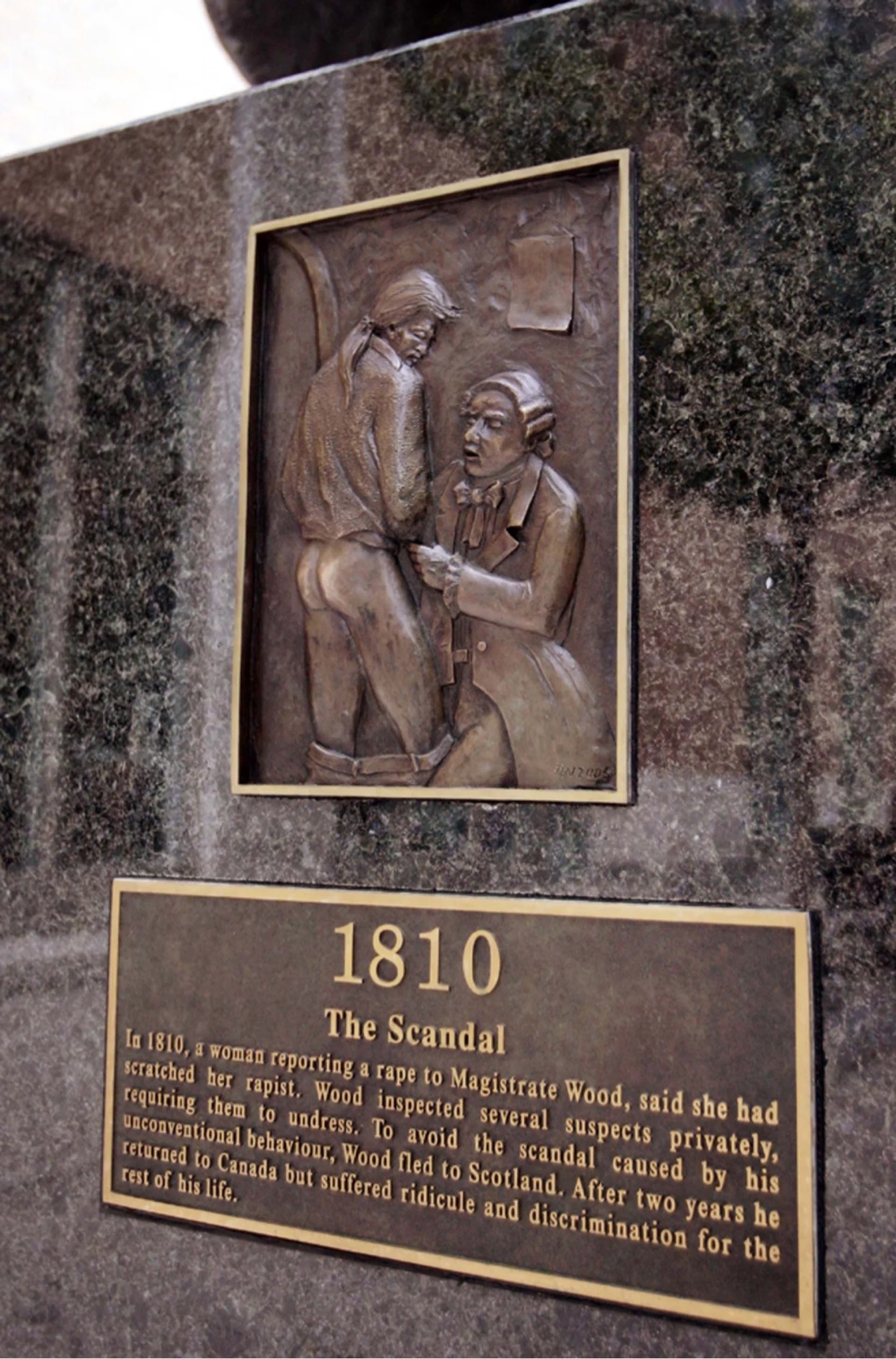
At the base of the statue was a plaque showing an engraved tableau: a young militia soldier with his pants partially lowered, presenting his bare buttocks for Wood’s infamous inspection. That image wasn’t part of the main statue—it was the plaque that made the scandal visually explicit.

And then came the charmingly queer detail: Newbigging openly stated that he modeled the soldier’s butt on the backside of his own partner.

A gift of love, art, and cheeky community pride.

The Village quickly embraced the statue with a sense of humor. Gay men began rubbing the bare butt on the plaque for luck, and as is always the case with bronze, repeated contact polished the metal to a gleaming shine. What started as a joke became a familiar ritual—a flirtatious, communal wink at queer history.


Placed at the entrance of Church and Wellesley, the statue served as a landmark for Toronto’s queer community. It stood in a district deeply associated with LGBTQ+ identity, activism, and resilience, marking the neighborhood with a figure reclaimed from historical shaming.

For many, it symbolized both pride and solidarity—a public monument that didn’t hide the queer interpretation but made it impossible to ignore.

Over time, the statue’s presence became more complicated. Some critiques focused on its campy sexualization or the historical uncertainty of Wood’s queerness. But a more serious criticism emerged:

Alexander Wood served on the Society for Converting and Civilizing the Indians and Propagating the Gospel Among Destitute Settlers in Upper Canada—an organization whose mission and practices were part of the colonial machinery that later contributed to the development of the Indian residential school system in Canada.

For Indigenous activists and allies, Wood’s connection to early assimilationist institutions made him an inappropriate figure for public commemoration. This dimension of his legacy was long overlooked but gained prominence in recent years as Canada confronted the deep harms of residential schools.

The statue thus became not only a queer symbol but also a site of contested memory.

When the site was sold to a condominium developer in 2022, community groups requested that the statue be relocated rather than removed. But issues of ownership, cost, and ongoing controversy complicated the process.

The statue was taken down quietly.

Placed in storage.

And ultimately destroyed—a loss that felt abrupt and painful to those who viewed it as a cornerstone of Village identity.

The Alexander Wood statue existed at the crossroads of queer reclamation, artistic expression, colonial history, and community identity. Its destruction leaves a literal void in the Village streetscape—a reminder that public memory is fragile and often shaped by forces beyond our control.

The polished bronze butt on the plaque may be gone, but the story remains:

of queer history reclaimed, contested, celebrated, and sometimes lost

And maybe that is the nature of queer memory itself—surviving in the stories we continue to tell.


Wednesday, November 12, 2025

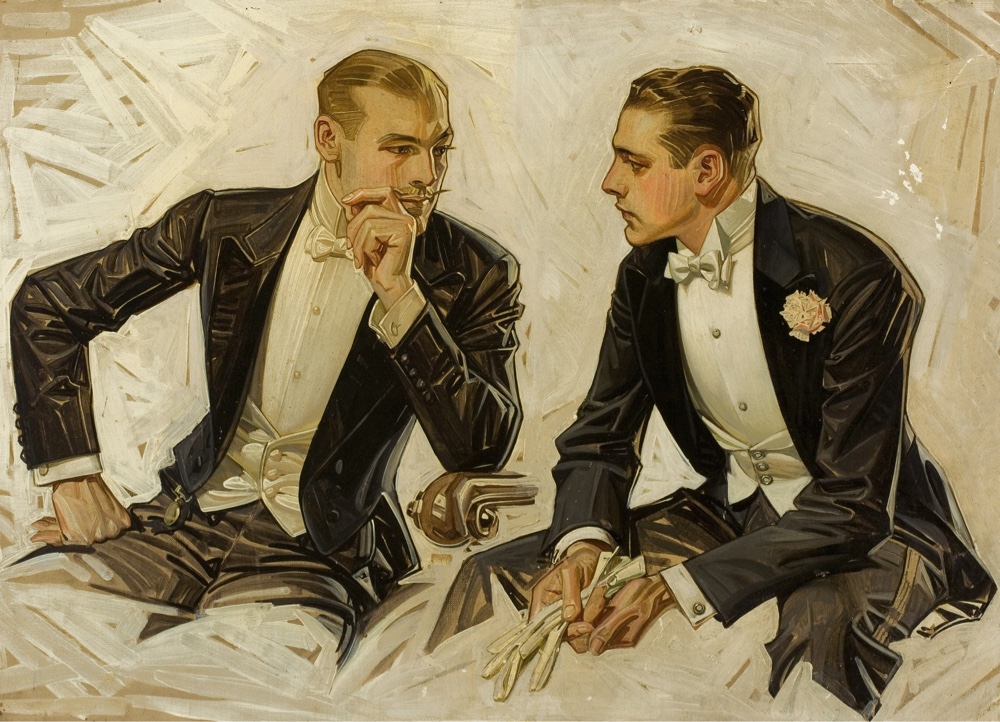
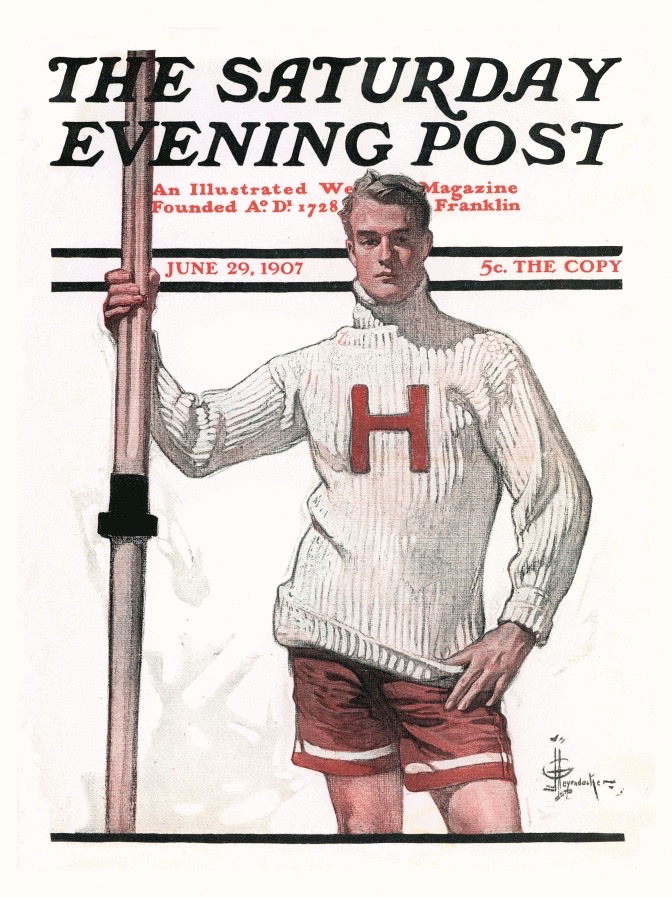
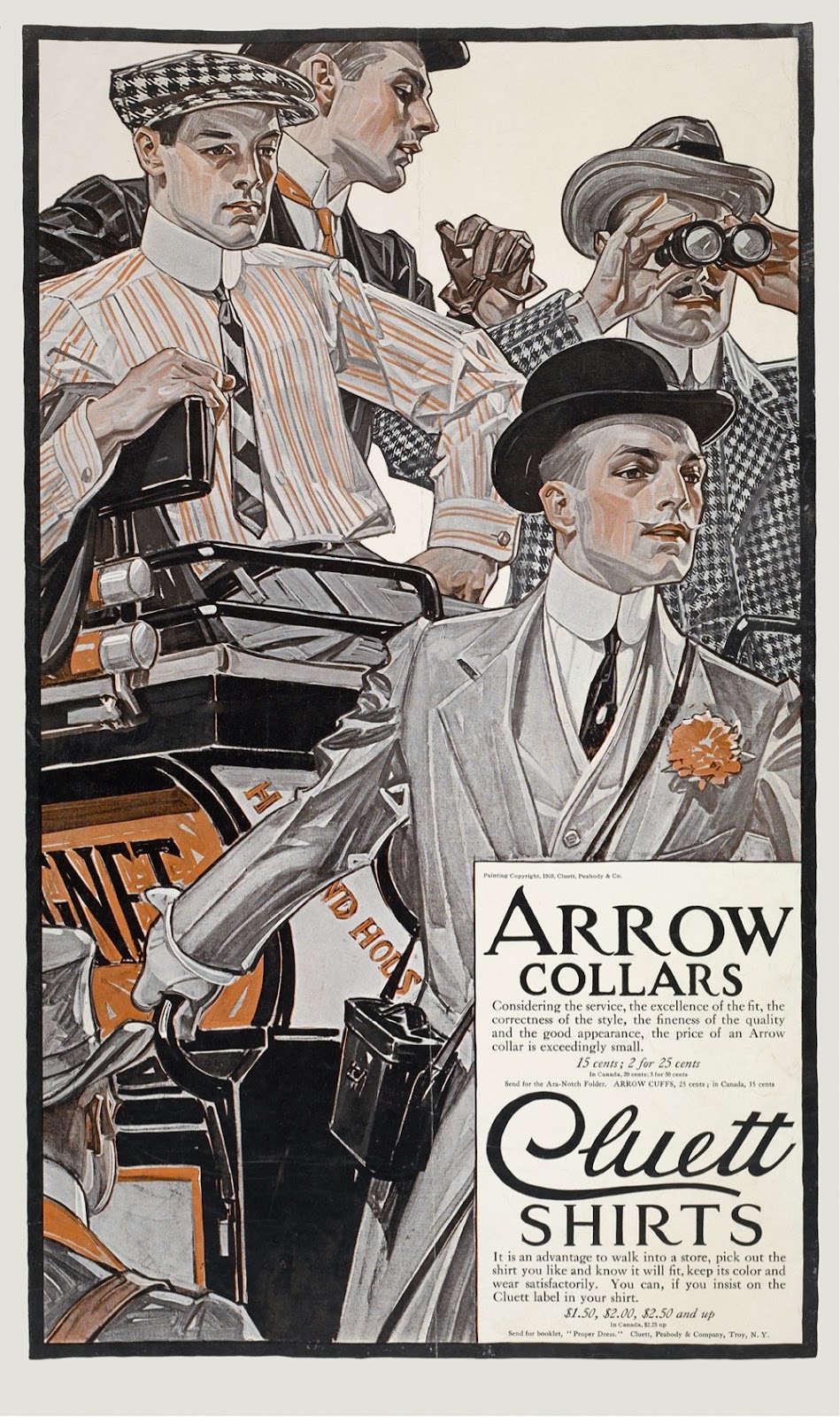
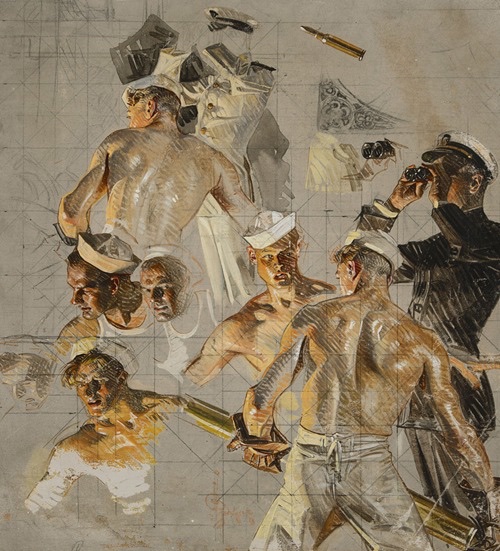
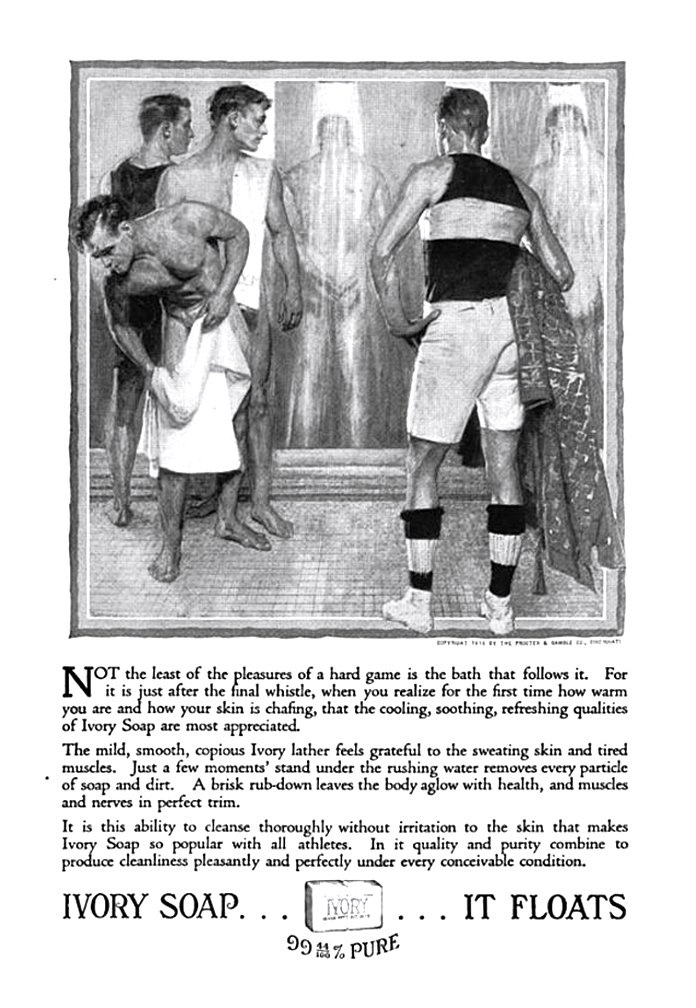
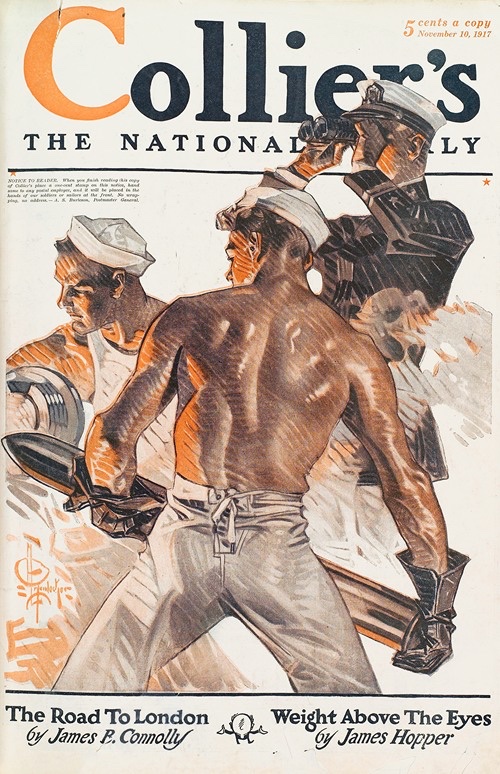
Coded Desire: The Hidden Queer World of J.C. Leyendecker


When we think of early 20th-century American illustration, Norman Rockwell’s name often comes first. But long before Rockwell’s wholesome small-town Americana, there was Joseph Christian Leyendecker—his mentor, idol, and predecessor at The Saturday Evening Post. Leyendecker not only helped shape the golden age of American illustration; he also created some of the most striking, subtly queer imagery ever to appear on mainstream magazine covers in the early 1900s.

Between 1896 and 1950, Leyendecker produced more than 400 magazine covers and countless advertisements for brands like Arrow Collars, Kuppenheimer, and Interwoven Socks. His sharply dressed men, gleaming with confidence and sensuality, set the visual standard for masculine beauty. These “Arrow Collar Men” became the male ideal of their day—elegant, poised, athletic, and perfectly groomed. But beneath their polish lay something quietly radical: Leyendecker’s men gazed at one another—and at us—with desire.

Leyendecker lived most of his adult life with his partner and muse, Charles Beach, who modeled for many of the Arrow Collar ads and became the archetype of masculine allure. Their partnership was both personal and professional, lasting nearly fifty years, and though they lived in an era of rigid moral codes, Leyendecker found ways to encode affection, intimacy, and attraction in his art. The male figures in his paintings—posed with subtle tension, often in pairs—seem to vibrate with a kind of longing rarely seen in commercial art of that time.

His holiday covers for The Saturday Evening Post often featured wholesome domestic scenes, but even there, queer readings emerge: the bachelor trimming his own Christmas tree, the soldier straightening another man’s uniform, or two athletes sharing a private glance. These moments, hidden in plain sight, offered coded expressions of male companionship and tenderness during decades when overt queerness could not be depicted publicly.

After Leyendecker’s death in 1951, much of his reputation was overshadowed by Rockwell, who succeeded him at The Post. Yet in recent years, art historians and LGBTQ+ scholars have reclaimed Leyendecker as one of the most important queer figures in American art. His work reminds us that representation isn’t always loud—it can whisper through brushstrokes, glances, and gestures. In those polished, idealized men, he painted a world where beauty, desire, and love between men could exist—if only in coded form.

Leyendecker’s legacy today is being rediscovered in museum retrospectives and popular culture, from contemporary fashion photography to the animated short Coded: The Hidden Love of J.C. Leyendecker, which explores how he built an entire visual language of queer identity long before such language was socially permissible. His art stands as a testament to resilience and creativity under constraint—a reminder that even in eras of silence, queer artists found ways to make themselves seen.

Thursday, October 30, 2025

St. Sebastian: The Beautiful Martyr

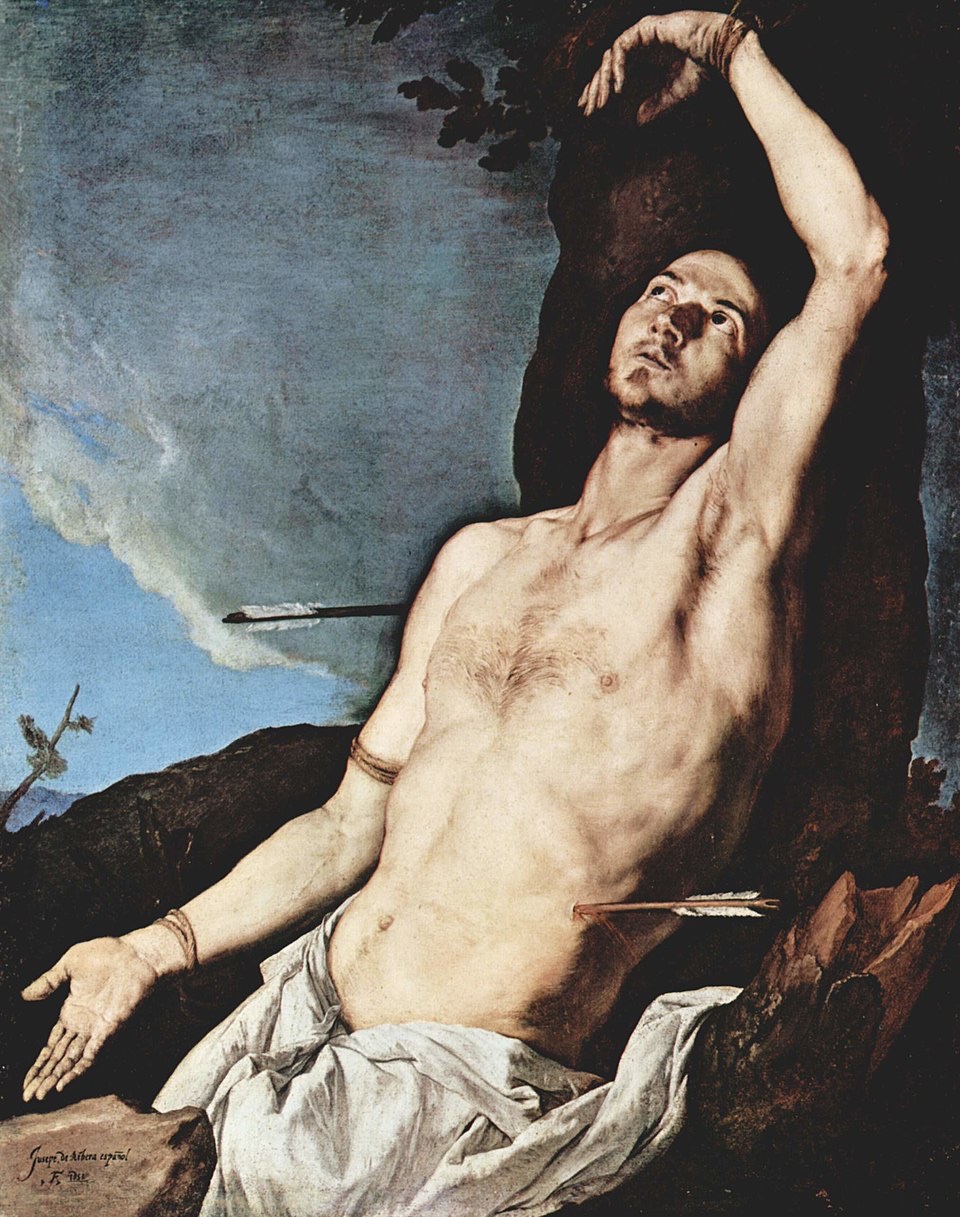
Image: Jusepe de Ribera, St. Sebastian, 1651, Museo del Prado, Madrid — rendered in dramatic chiaroscuro, Ribera’s Sebastian is muscular and mortal, his suffering grounded in flesh rather than idealized beauty.

Few figures in Christian art have captivated artists — and viewers — quite like St. Sebastian. The story is simple enough: a Roman soldier and secret Christian, Sebastian was condemned to death for his faith and tied to a post, shot through with arrows by his fellow soldiers. He miraculously survived, only to be executed later by beating. Yet, through centuries of retelling, the tragedy of his martyrdom has transformed into something far more layered — even sensual.

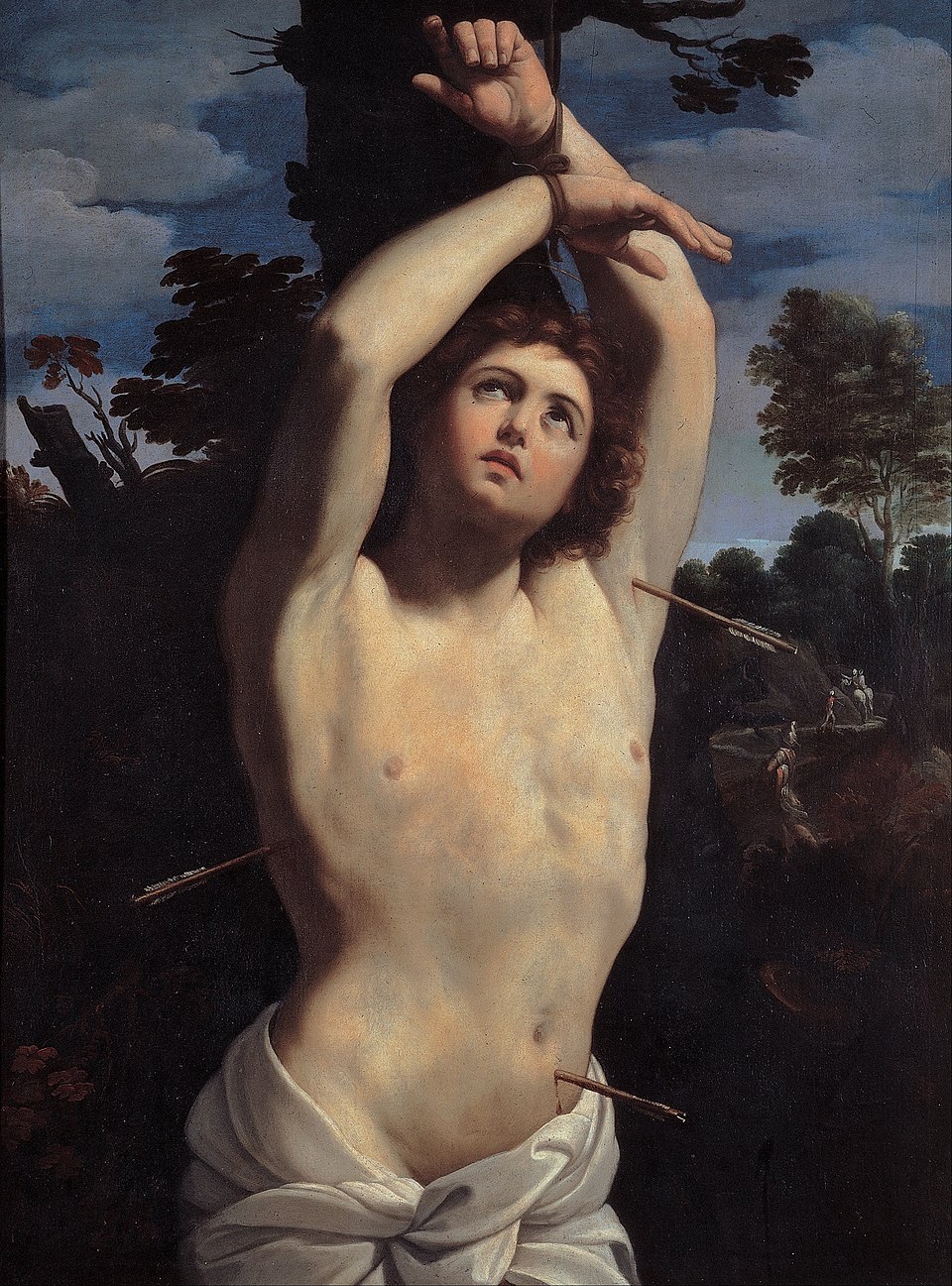
From the Renaissance onward, artists rendered Sebastian’s suffering with remarkable beauty. Painters like Andrea Mantegna, Perugino, and Botticelli turned him into an icon of idealized male youth — strong, nearly nude, his body pierced yet luminous. In later depictions by Guido Reni and El Greco, that same body seems to glow with a kind of erotic spirituality. The saint’s expression — serene, even enraptured — blurs the line between agony and ecstasy.

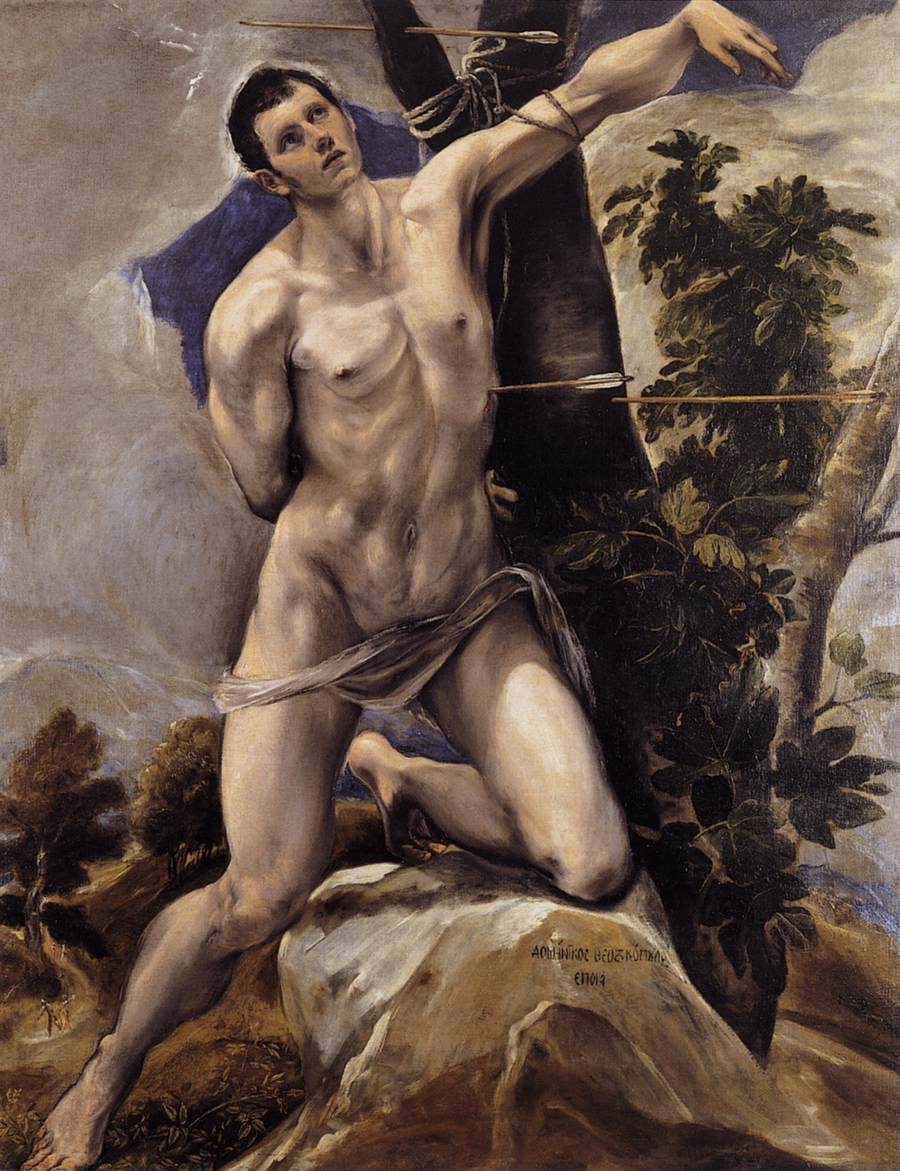
Image: El Greco, St. Sebastian, c. 1577–79, Cathedral of San SebastiΓ‘n, Illescas — the saint’s elongated form and upward gaze merge suffering with divine transcendence.

Image: Guido Reni, St. Sebastian, c. 1615, Palazzo Rosso, Genoa — the most famous of Reni’s versions, his Sebastian glows with serene sensuality.

It’s no wonder that Sebastian became, over time, a queer icon — often called the “gay saint.” His imagery offered something radical: a male body displayed with vulnerability, sensuality, and beauty in a religious context. For centuries when expressions of same-sex desire were forbidden, these paintings became coded images of longing. The male form, sanctified through martyrdom, became a vessel for hidden desire.

Twentieth-century artists and writers reclaimed him openly. Yukio Mishima, Derek Jarman, and photographers like Robert Mapplethorpe saw in Sebastian not just the suffering of faith, but the suffering — and resilience — of queer existence itself. His arrows became metaphors for persecution and for the piercing, transformative power of desire.

Image: Kishin Shinoyama, Yukio Mishima as St. Sebastian, 1968 — the novelist and playwright reimagines the saint’s agony through a homoerotic lens of beauty, discipline, and death.


Image: Robert Mapplethorpe, St. Sebastian, 1979 — a modern photographic interpretation that turns suffering into defiant beauty.


Image: Derek Jarman’s film Sebastiane (1976) — the first feature-length film entirely in Latin, reimagining the saint’s story through an overtly homoerotic lens.

There is, after all, a kind of paradoxical holiness in his image: a man struck down yet made radiant; punished yet beautiful; vulnerable yet defiant. Whether we read him as a symbol of endurance, forbidden beauty, or queer faith, St. Sebastian endures as the saint who invites us to see the divine not in denial of the body, but through it.

About St. Sebastian

Feast Day: January 20

Patron of: Soldiers, athletes, archers, and plague victims

Symbol: Arrows, tied tree or post, youthful male figure

St. Sebastian was a Roman officer in the Praetorian Guard who secretly practiced Christianity. When discovered, he was condemned by Emperor Diocletian to be shot with arrows and left for dead. Nursed back to health by the widow Irene, he later confronted the emperor and was beaten to death for his defiance. His legend spread quickly, and his image became a symbol of endurance, courage, and—through art—a timeless meditation on the beauty and vulnerability of the human form.

Thursday, October 16, 2025

The Divine Cupbearer: Ganymede in Art and Imagination

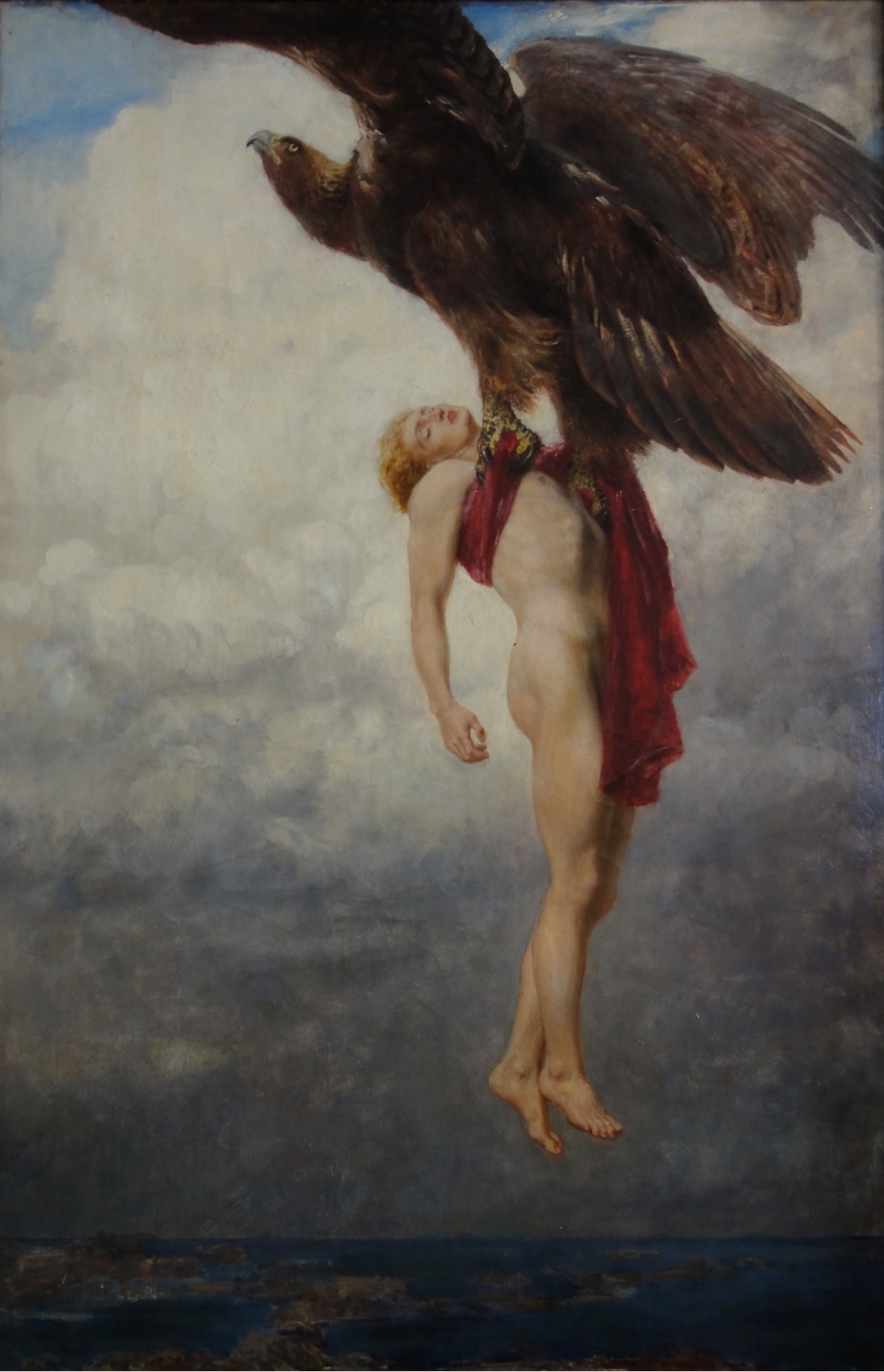
Briton RiviΓ¨re, The Rape of Ganymede, 1879, oil on canvas. Private collection.

In RiviΓ¨re’s Victorian interpretation, the drama of Ganymede’s abduction becomes a study in beauty and terror. The eagle’s powerful wings engulf the golden-haired youth, whose luminous body and upturned gaze capture the tension between divine rapture and human vulnerability.
A shepherd once stood on the green slopes of Mount Ida, watching his father’s flocks beneath the wide Trojan sky. His hair caught the sunlight, and even the wind seemed to linger around him. High above, the king of the gods looked down and was seized by a longing beyond reason. Taking the form of a mighty eagle, Zeus swept from Olympus, his wings darkening the heavens, and carried the youth Ganymede into the clouds. The people of Troy saw only feathers and light—then nothing. In heaven, the boy awoke amid thunder and gold, offered a cup of nectar to his captor, and became the immortal cupbearer of the gods, beloved of Zeus and eternal in beauty.

In Greek mythology, few mortal youths have been as endlessly reimagined as Ganymede, the beautiful Trojan prince who caught the eye of Zeus himself. The story is simple yet potent: Zeus, enraptured by Ganymede’s beauty, descends in the form of an eagle and carries him off to Olympus to serve as the gods’ cupbearer—and, as the myths gently imply, as the god’s divine beloved. It is a tale that has stirred the imagination for centuries: a mortal elevated to immortality, a human boy desired by a god, beauty taken skyward by power. To artists, poets, and later to those who found themselves drawn to same-sex desire, the myth became a mirror—of longing, transcendence, and the perilous allure of beauty.

A Symbol of Divine Desire

In ancient Greece, Ganymede’s story was not viewed as scandalous but rather idealized as the epitome of male beauty and youthful grace. The myth encapsulated a cultural ideal: that beauty—especially youthful male beauty—was divine in itself. Over time, depictions of Ganymede evolved, reflecting changing attitudes toward love, innocence, and power.

Ganymede in Art Through the Ages

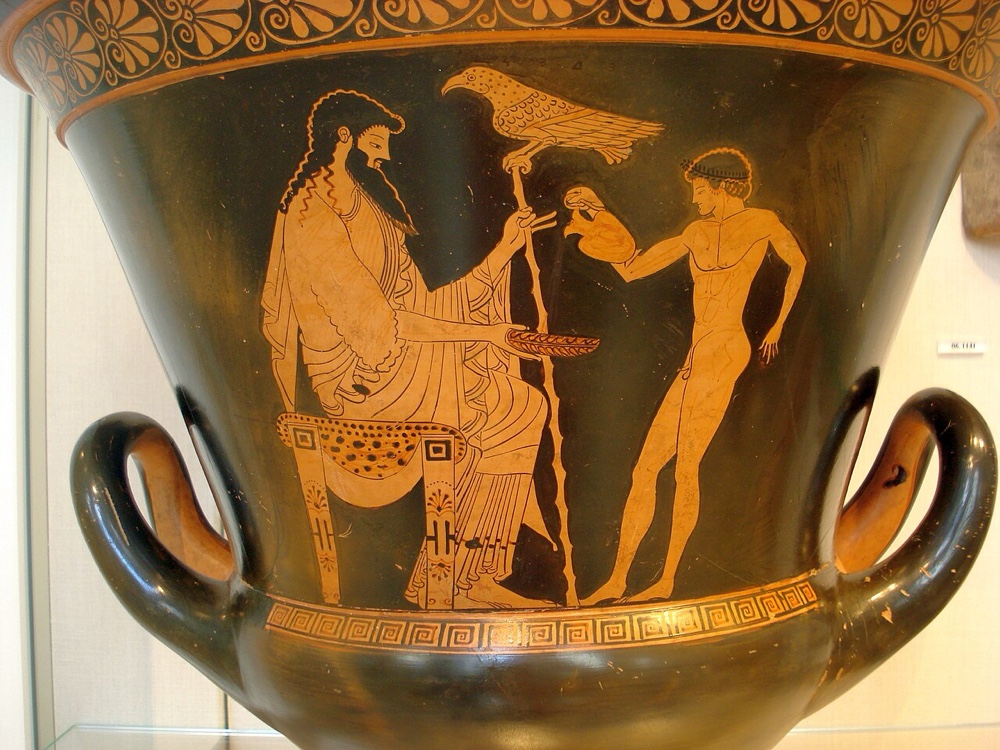
Ganymede pouring Zeus a libation. Attic red figure calyx krater by the Eucharides Painter, c. 490-480 BC. Metropolitan Museum of Art, New York.


The Eucharides Painter’s Ganymede Krater (c. 490–480 BCE)

One of the earliest known depictions of the myth appears on an Attic red-figure calyx krater attributed to the Eucharides Painter, now in the Louvre. The scene shows Zeus, bearded and dignified, reaching toward the beautiful youth, who holds a hoop and a bird—symbols of playfulness and innocence. The moment is not violent but charged with tension: a mortal about to be chosen by a god. Painted during the late Archaic period, when Athenian vase painters often explored themes of beauty and desire between men, it captures the myth’s earliest visual language—not yet abduction, but invitation. This subtle, coded eroticism would echo through centuries of artistic interpretations.

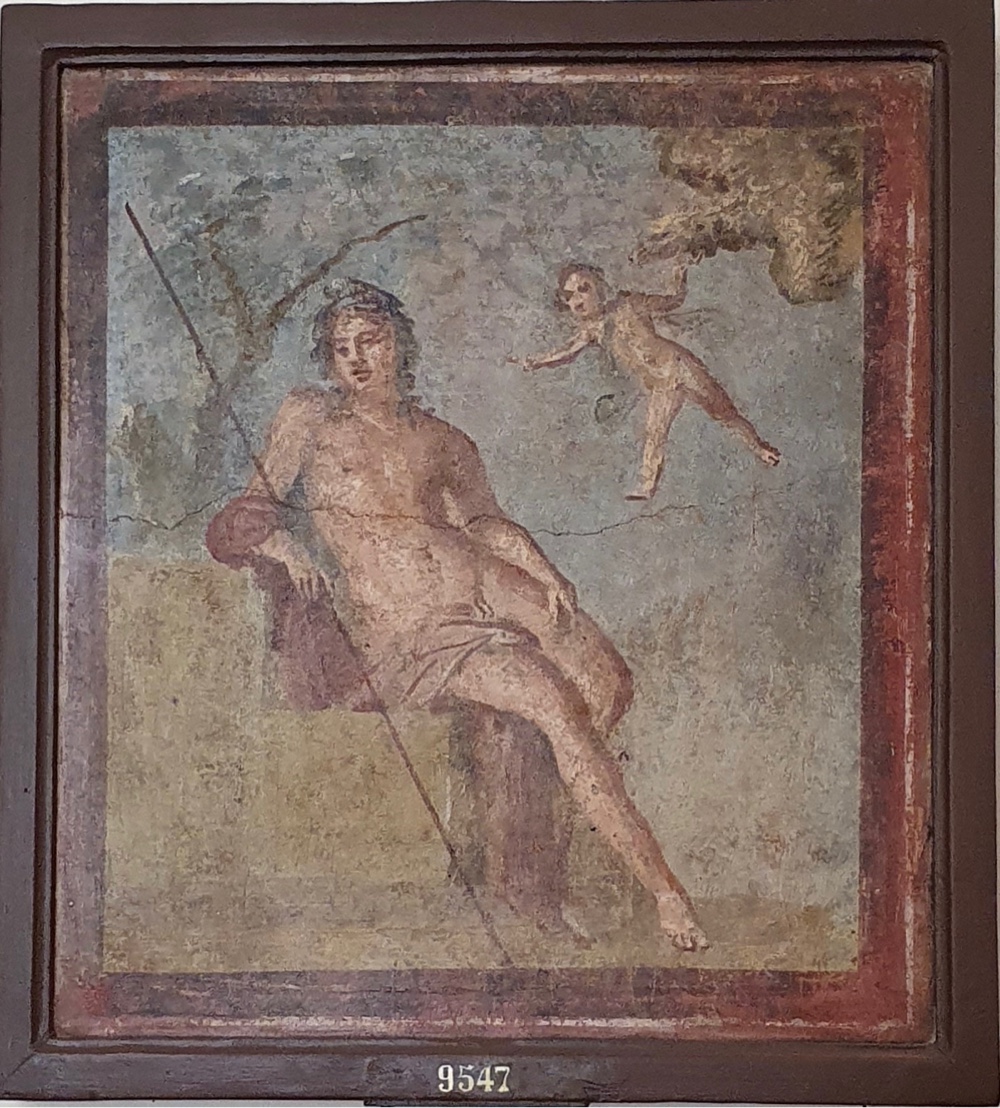
The Abduction of Ganymede, 1st century CE, fresco from Pompeii. Museo Archeologico Nazionale di Napoli.


Roman Frescoes from Pompeii (1st century CE)

Roman artists often delighted in mythic scenes of beauty and motion, and frescoes from Pompeii depict Ganymede as a symbol of youthful perfection. One particularly vivid wall painting shows the eagle swooping in, its talons gently gripping the boy’s thigh—a moment frozen between terror and ecstasy. The ambiguity of consent here fascinated later Renaissance artists, who saw in the myth both danger and divine invitation. 

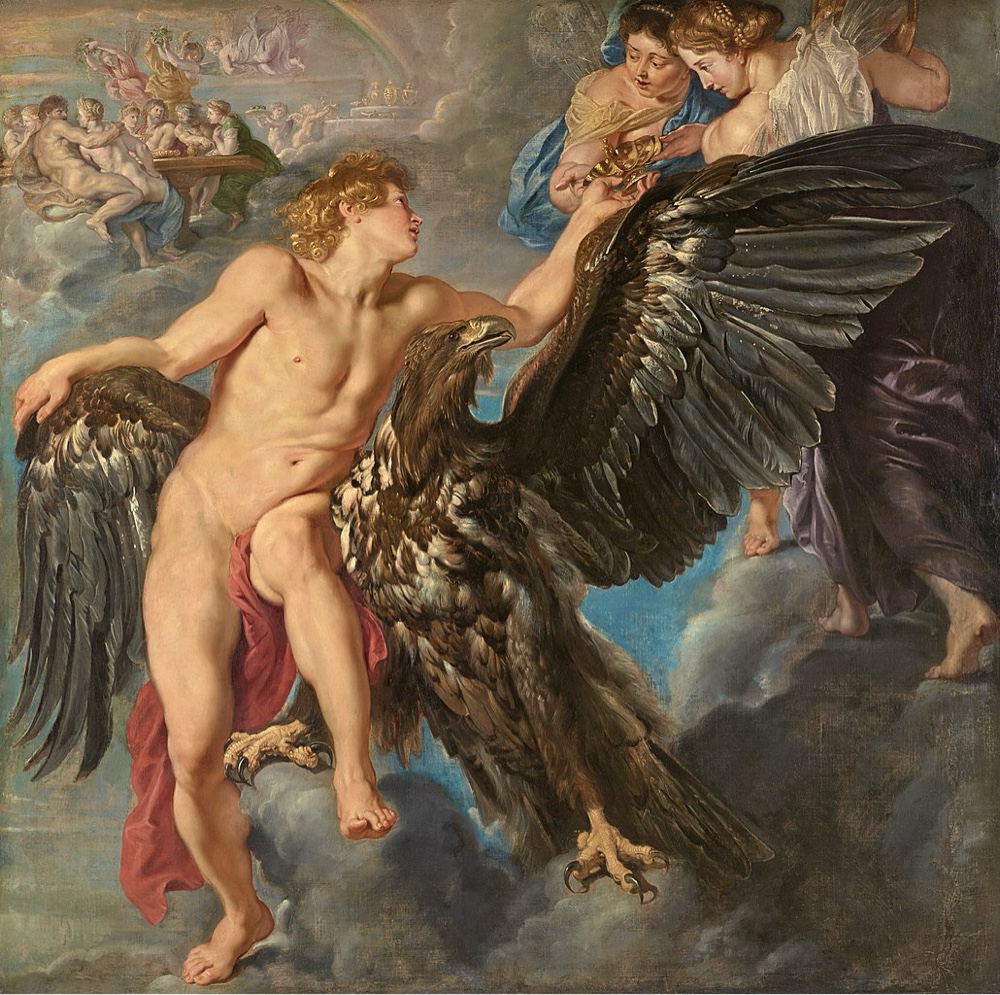
Peter Paul Rubens, The Rape of Ganymede, 1611–1612, oil on panel. Liechtenstein Museum, Vienna.


Rubens’s The Rape of Ganymede (1611–1612)

In Rubens’s dramatic Baroque vision, the story erupts with motion and passion. The muscular eagle bursts upward, wings slicing through the air as Ganymede twists in its grip, his luminous flesh contrasting the dark feathers. Rubens’s title, The Rape of Ganymede, reflects the 17th-century usage of “rape” to mean abduction, yet the erotic charge is unmistakable. His Ganymede is no helpless child but a radiant youth caught between resistance and surrender—a living embodiment of desire wrestled from earth to heaven. The intensity of movement, the clash of power and beauty, make this one of the most sensual and psychologically complex renderings of the myth.

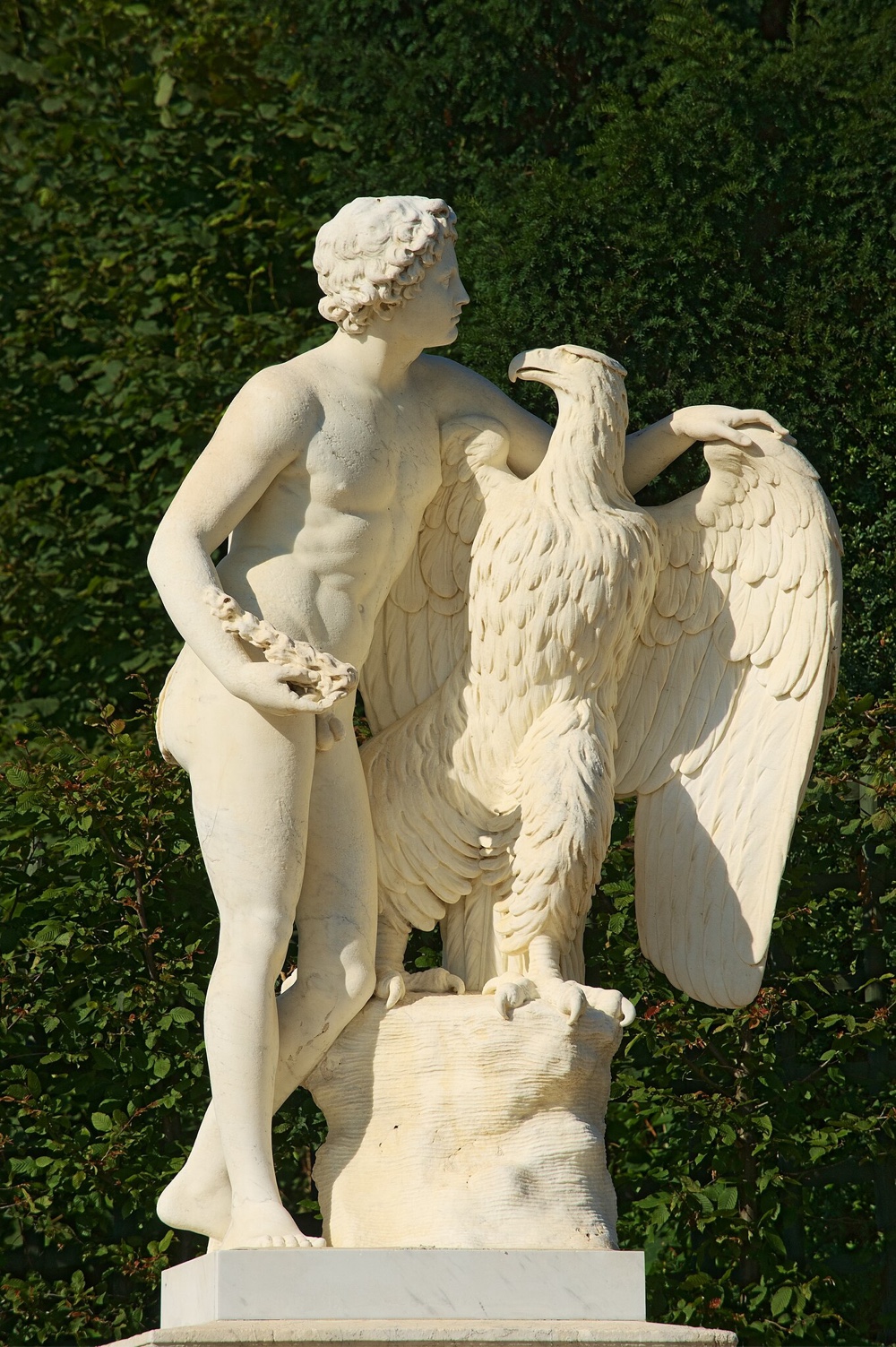
Pierre Laviron, GanymΓ¨de MΓ©dicis, 1684–1685, marble. Gardens of the Palace of Versailles, France MΓ©dicis (1684–1685)


Pierre Laviron, GanymΓ¨de MΓ©dicis, 1684–1685

Laviron’s sculpture, commissioned for the gardens of Versailles, translates the myth into polished elegance. His Ganymede stands poised and composed, offering a cup to the eagle perched beside him. The Baroque drama of Rubens is replaced by serene theatricality: beauty tamed into courtly decorum. Created under the patronage of Louis XIV, who used classical myth to mirror divine kingship, Laviron’s figure hints at the fine line between power’s affection and possession—between being loved by a god and serving one.

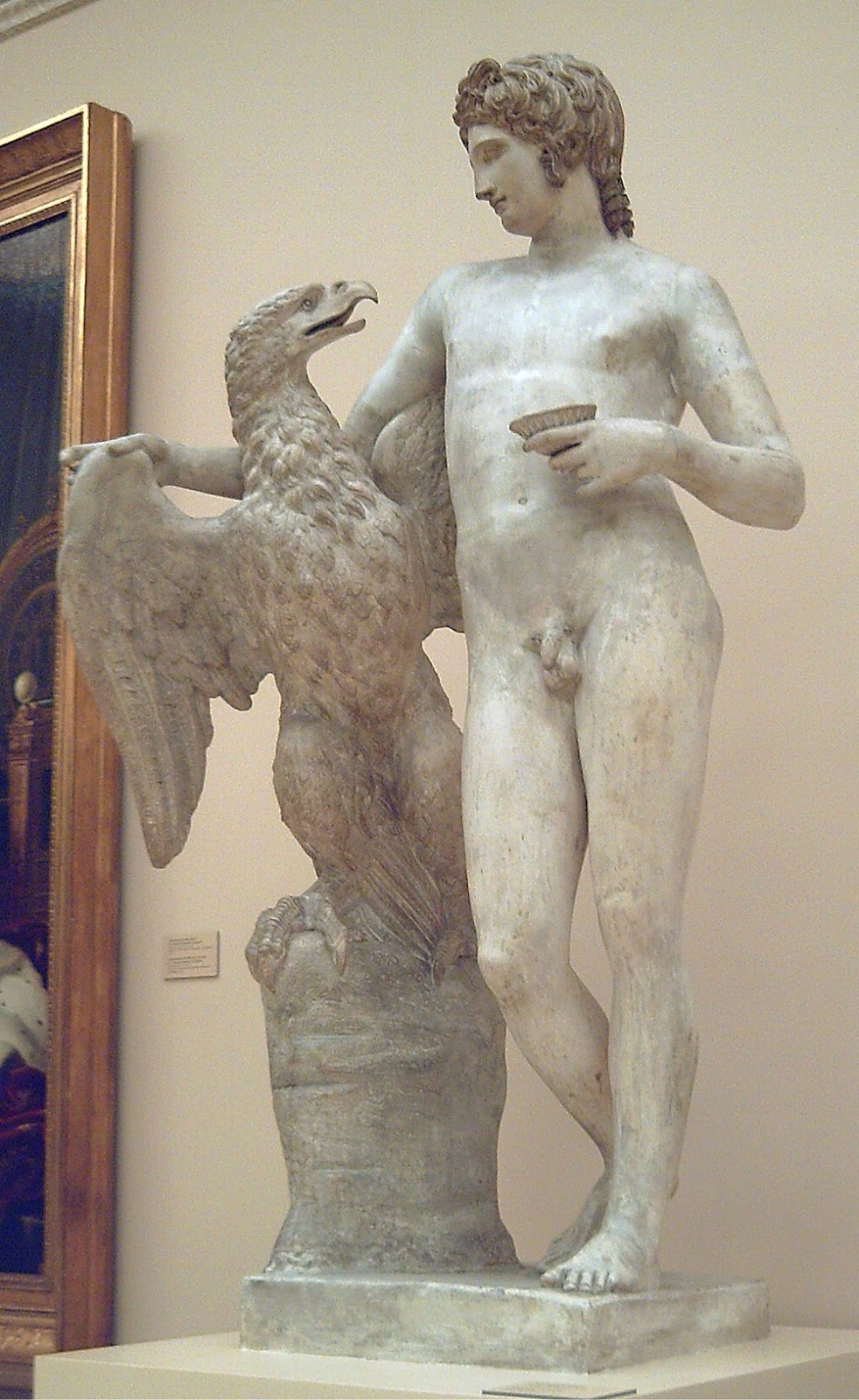
JosΓ© Álvarez Cubero, Ganymede, 1804, marble. Real Academia de Bellas Artes de San Fernando, Madrid.

JosΓ© Álvarez Cubero’s Ganymede (1804)

Cubero’s Neoclassical marble returns Ganymede to the world of ideal form and measured grace. The youth’s body is sculpted with the purity of Greek statuary—calm, proportioned, untouched by struggle. The eagle looks up to him rather than seizing him, reversing the myth’s hierarchy. For Cubero and his Enlightenment contemporaries, Ganymede embodied beauty elevated by virtue rather than consumed by passion. Desire, in this vision, becomes enlightenment itself.

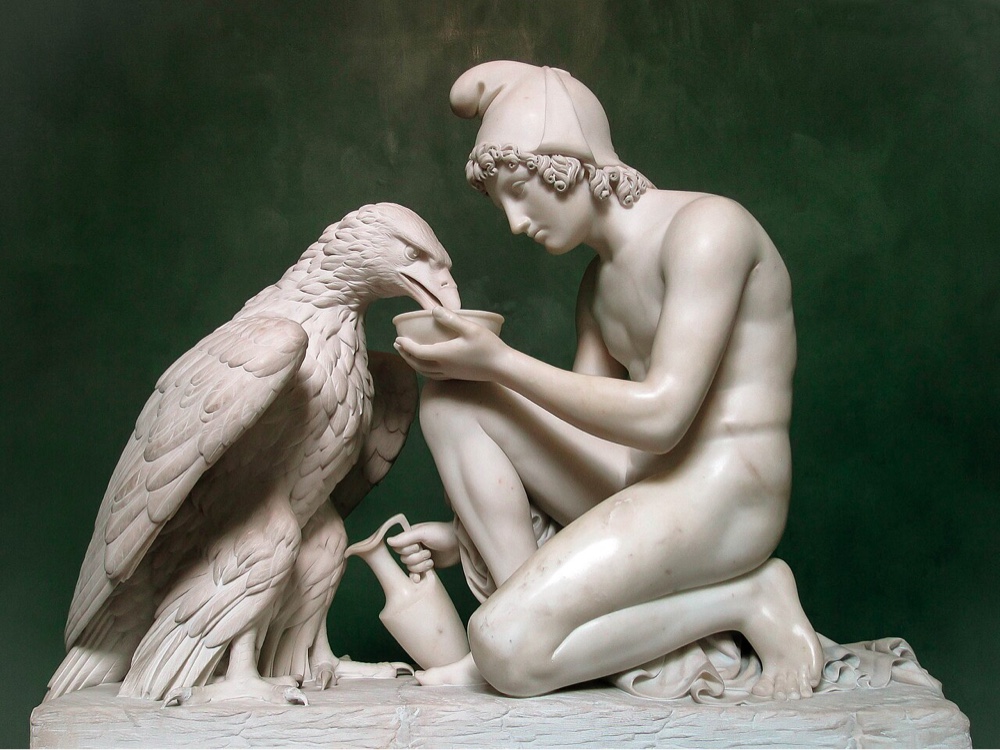
Bertel Thorvaldsen, Ganymede and the Eagle, 1817, marble. Thorvaldsens Museum, Copenhagen.

Bertel Thorvaldsen, Ganymede and the Eagle, 1817

Thorvaldsen refined Neoclassical serenity even further. His marble sculpture shows Ganymede standing calmly beside Zeus’s eagle, cup in hand, offering nectar to the god. Here the boy is no longer abducted but accepted—a symbol of beauty at peace with power, devotion intertwined with dignity. For many in the 19th century, this was a way of transforming homoerotic desire into a language of noble aesthetics.

Hans (Jean) Arp, Ganymede, c. 1950s–60s, bronze (various casts). Private collections and galleries.


Hans (Jean) Arp’s Ganymede (c. 1950s–60s)

By the mid-20th century, Ganymede took flight again—not in flesh, but in form. In Arp’s abstract bronze and marble variations titled Ganymede, the myth dissolves into undulating shapes and organic curves, evoking both ascent and embrace. The human figure is no longer literal; it becomes pure motion, spirit, and metamorphosis. Arp’s biomorphic language connects the myth’s essence—beauty transformed, matter lifted toward divinity—to the modern search for unity between body and soul. In this Ganymede, there is no eagle, no Zeus, only the eternal rise of form seeking the divine.

Why Ganymede Endures

What is it about this myth that has captivated artists for millennia? Perhaps it lies in its paradox. Ganymede is both victim and beloved, mortal and divine, powerless yet exalted. The story dances between danger and desire, and between the human wish to be seen and the peril of being too beautiful to ignore. For queer viewers and artists in particular, Ganymede’s ascension to Olympus can be read as a coded allegory of forbidden love—the notion that same-sex desire, long condemned on earth, might find its rightful place among the heavens. The myth becomes not just about abduction, but about transcendence—an elevation of love beyond human judgment.

In art, Ganymede is never only a youth in the talons of an eagle. He is a symbol of longing, transformation, and divine recognition—the mortal who touched eternity through beauty. Across centuries, artists have reimagined his ascent: from Correggio’s soft luminosity to Rubens’s violent ecstasy, from Thorvaldsen’s calm reverence to Arp’s abstract motion. Each generation has remade Ganymede in its own image—sometimes erotic, sometimes spiritual, always yearning. By the time we reach Arp, the boy has dissolved into pure form, his body transfigured into rhythm and curve. The myth that began with the abduction of a shepherd becomes the eternal story of ascent itself: the soul drawn upward by beauty, still rising, forever beyond reach.


I haven’t added an Isabella Pic of the Week in a while, so here’s one for you: