Showing posts with label Religion. Show all posts

Sunday, August 23, 2026

To Thine Own Self Be True?

“Do not conform to the pattern of this world, but be transformed by the renewing of your mind.”
— Romans 12:2 

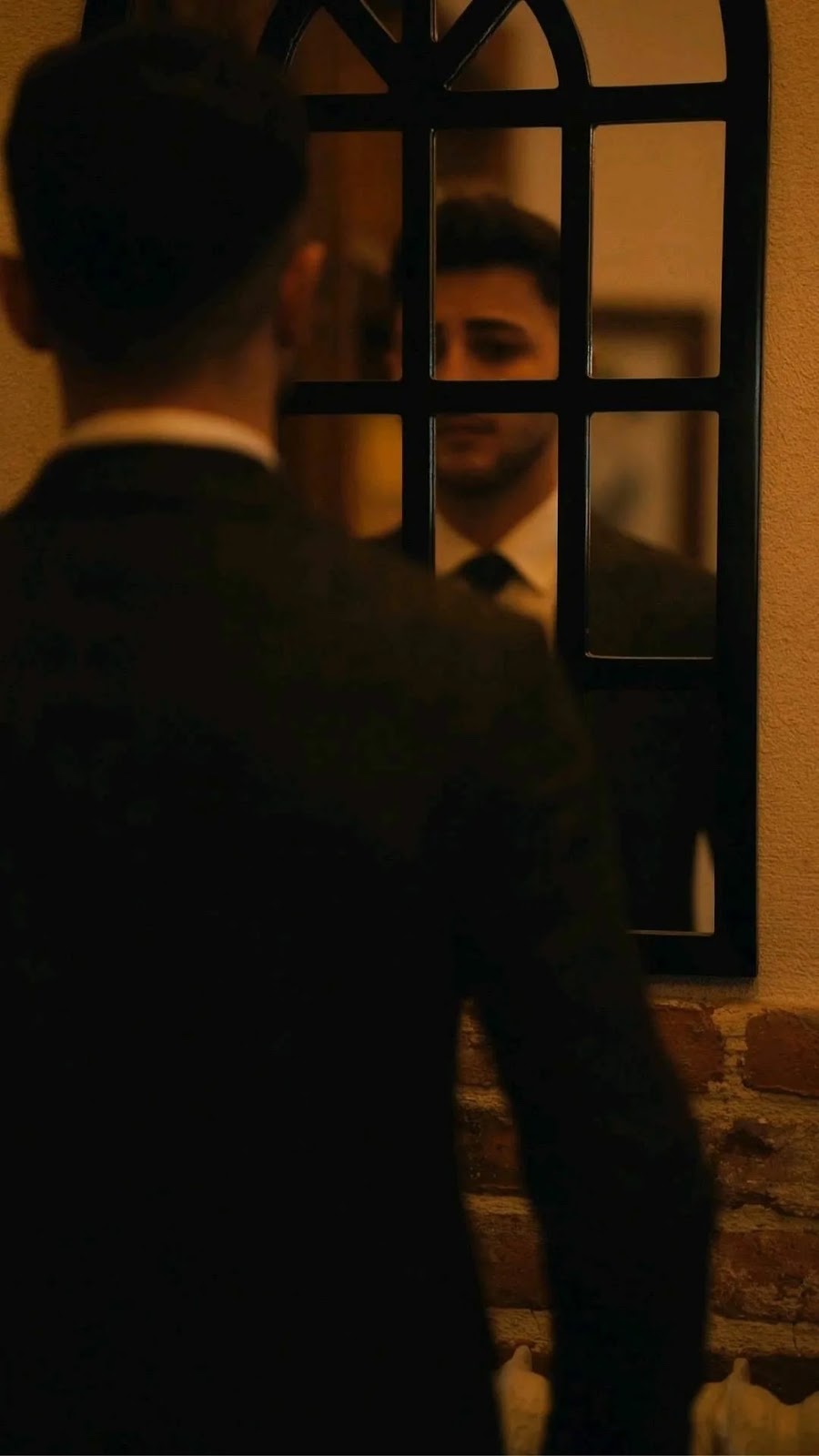
“To thine own self be true.” It sounds biblical. In fact, it is often quoted as though it were a piece of wisdom from Scripture. But the words do not come from the Bible at all. They come from William Shakespeare’s Hamlet. Polonius gives this advice to his son Laertes before he leaves for France: “This above all: to thine own self be true.”

Over the centuries, those words have taken on a life of their own. Today, we often understand them to mean that we should live authentically, refusing to pretend to be someone we are not. There is wisdom in that idea, but there is no exact biblical equivalent to “be true to yourself.” Part of the reason may be that the modern understanding of the phrase can sometimes become whatever feels right to me must be right. Scripture asks something deeper of us. God calls us to integrity, to an honest heart, and to a life lived according to His truth.

That raises an important question: How does God want us to show ourselves to the world?

For LGBTQ+ Christians, that question can be especially complicated. Many of us have been told that faithfulness to God requires hiding an important part of ourselves. We have been encouraged to remain silent, to change the pronouns when talking about someone we love, to avoid mentioning our relationships, or even to construct an entirely different version of ourselves for family, church, work, or community. Sometimes we have been told that this concealment is what God wants from us.

Yet Scripture repeatedly turns our attention away from appearances and toward what is within us. When Samuel was searching for the man God had chosen to be king, God reminded him, “People look at the outward appearance, but the LORD looks at the heart” (1 Samuel 16:7). God already sees us completely. There is no closet door we can close against Him. There is no carefully constructed version of ourselves that can fool God into seeing someone other than who we really are. He sees our sexuality, our fears, our hopes, our desires, our mistakes, our faith, and our capacity to love. Most importantly, He sees our hearts.

That is why Proverbs tells us, “Above all else, guard your heart, for everything you do flows from it” (Proverbs 4:23). Guarding our hearts does not mean hiding them. It means caring for what we allow to shape them. We can spend so much energy worrying about how other people see us that we forget to ask what is happening within us. Are we becoming kinder? More compassionate? More forgiving? More courageous? Are we loving God and loving our neighbors? Are our lives producing the fruits of faith?

Being authentic does not mean that every impulse we have must be followed simply because it comes from within us. Christianity has never taught that. Instead, Paul tells us, “Do not conform to the pattern of this world, but be transformed by the renewing of your mind” (Romans 12:2). Authenticity is not the end of our spiritual journey. It gives us an honest place from which that transformation can begin.

For LGBTQ+ Christians, “do not conform” can have a particularly powerful meaning. The world has plenty of patterns into which it tries to force us. Some tell us what a “real” man or woman should look like. Some tell us whom we are supposed to love. Some tell us that heterosexuality is the only path to a faithful Christian life. Others may tell us that embracing our sexuality requires leaving faith behind altogether.

We do not have to conform to either expectation.

We can be openly gay, lesbian, bisexual, transgender, or queer and still seek to become the person God calls us to be. We can embrace who we are while allowing God to transform how we live. Authenticity and discipleship are not opposites. In fact, we cannot truly offer ourselves to God if the self we offer is merely a disguise created to satisfy someone else’s expectations. God is the only One whose expectations we should ultimately seek to satisfy. The world may impose its own expectations about how we should look, whom we should love, and who we should be, but those earthly expectations cannot compare or compete with what God asks of us. What matters is not whether we fit the image others have created for us, but whether we are faithfully becoming the person God calls us to be.

I often talk about the path God wants me to follow, and I pray that He will keep me on that path. To me, being true to myself also means being true to the person God calls me to be. I do not always know where that path will lead, and I certainly do not always follow it perfectly, but I can continue to seek God’s guidance and trust Him to redirect me when I stray. Being authentic does not mean that I alone decide who I should be; it means bringing my whole, honest self before God and asking Him to guide me toward the life He wants me to live. In that way, being true to myself becomes inseparable from being true to God.

Paul also warns us against measuring ourselves by the lives of others. He writes, “Each one should test their own actions. Then they can take pride in themselves alone, without comparing themselves to someone else, for each one should carry their own load” (Galatians 6:4–5). There will always be people eager to tell us who we ought to be. There will always be someone who thinks we are too gay, not gay enough, too religious, not religious enough, too outspoken, or too quiet. If our identity depends upon satisfying everyone else’s expectations, we will spend our entire lives performing for an audience whose approval constantly changes.

Instead, we should examine our own actions. We should ask whether we are living with honesty and integrity. We should ask whether we are treating others with dignity. We should ask whether our relationships reflect love, faithfulness, kindness, and respect. We should ask whether the person we show to the world and the person God sees in our heart are becoming more and more the same person.

Perhaps that is the Christian version of being true to ourselves.

It isn’t simply, This is who I am, so I can do whatever I want. It is something much richer: This is who I am, and I will bring my whole self before God and allow Him to shape the way I live.

There should be no contradiction between living openly as an LGBTQ+ person and striving to live faithfully as a Christian. We do not have to choose between authenticity and faith. We can acknowledge whom we love. We can refuse to be ashamed of who we are. We can live without pretending. At the same time, like every other Christian, we continue striving to become more loving, compassionate, merciful, humble, and faithful.

The Third Letter of John contains a simple expression of joy that beautifully captures this idea: “I have no greater joy than to hear that my children are walking in the truth” (3 John 1:4). I love that phrase, walking in the truth, because truth is not something we merely acknowledge privately. We walk in it. We carry it into our relationships, our families, our churches, our workplaces, and our communities. Walking in truth means refusing to build our lives around a lie, whether that lie is about who we are or about who God calls us to become.

Shakespeare told us, “To thine own self be true.” Scripture asks us to go further. Be honest about who you are. Guard your heart. Refuse to let the world force you into its molds. Examine your own life rather than comparing it to someone else’s. Remember that God looks beyond appearances and sees your heart.

And then take that honest, authentic self and walk in the truth.

God does not need the person others have told you to be. He wants you—not a disguise, not a performance, not a carefully edited version designed to earn someone else’s approval. Bring your whole self to Him, and let Him continue transforming you into the person He calls you to be.

Sunday, August 16, 2026

Healing for Body and Spirit

“‘But I will restore you to health and heal your wounds,’ declares the Lord.”

—Jeremiah 30:17

Yesterday, I took a bad tumble while hiking, leaving me scraped, bruised, and aching all over this morning. It brought to mind the comfort Scripture offers whenever we are hurting, whether those wounds are physical or emotional.

Some days, we simply do not feel well. Our bodies ache, illness drains our strength, or an injury reminds us that we are more fragile than we would like to admit. At other times, the wounds are hidden—grief, loneliness, disappointment, or the quiet exhaustion of carrying too much for too long.

God cares about all these wounds. Jeremiah’s promise of restoration was originally given to a people who had suffered physically, emotionally, and spiritually. Their healing would not happen all at once, but God had not forgotten them. He was still at work restoring what hardship had broken.

James also reminds us that we do not have to endure suffering entirely alone: “Is anyone among you sick? Let them call the elders of the church to pray over them… And the prayer offered in faith will make the sick person well; the Lord will raise them up” (James 5:14–15). Prayer does not always bring the immediate healing we hope for, but it places us—and those we love—within the compassionate care of God and the supportive embrace of our community.

Whether our pain is physical or emotional, we can turn to God when we feel weak. Healing may come through medicine, rest, time, the kindness of others, or strength enough to face another day. Whatever form it takes, we can trust that God sees every wound, remains beside us in our suffering, and continues the patient work of making us whole.

Sunday, August 9, 2026

There Is Still Room


“Then the master told his servant, ‘Go out to the roads and country lanes and compel them to come in, so that my house will be full.’”

—Luke 14:23

There is something beautiful about a table with room for one more person.

Throughout the Gospels, Jesus repeatedly uses meals to teach us about the kingdom of God. He eats with people others consider sinners. He sits at tables with people respectable society would rather avoid. He feeds crowds who have nothing to offer him in return. Again and again, the table becomes a place where the boundaries separating people begin to disappear.

In Luke 14, Jesus tells the Parable of the Great Banquet. A man prepares a great dinner and invites many guests. When everything is ready, he sends his servant to those who have been invited, saying, “Come, for everything is now ready” (Luke 14:17).

But the invited guests begin making excuses.

One has bought a field and needs to go see it. Another has purchased five yoke of oxen and wants to try them out. Another has just married. One after another, the expected guests decide they have something more important to do.

When the servant returns and reports what has happened, the master does something unexpected. He does not cancel the banquet. He does not sit at an empty table lamenting that the people he originally invited refused to come. Instead, he widens the invitation.

“The owner of the house became angry and ordered his servant, ‘Go out quickly into the streets and alleys of the town and bring in the poor, the crippled, the blind and the lame’” (Luke 14:21).

These were people who could easily find themselves pushed to the margins of society. They were not necessarily the people anyone expected to see occupying places of honor at a great banquet. Yet suddenly they are being sought out and welcomed.

Then comes one of the most beautiful moments in the parable. After the servant does what he has been told, he returns and says, “‘Sir,’ the servant said, ‘what you ordered has been done, but there is still room’” (Luke 14:22).

There is still room.

Those four words offer a powerful message for LGBTQ+ Christians.

Many of us have encountered Christians who seem determined to convince us that there is no room for us. We may have been told that we can be Christian or LGBTQ+, but we cannot be both. Some have been told they may enter the church only if they hide who they are. Others have been welcomed through the doors only to discover that the welcome comes with conditions: you may sit among us, but you cannot marry the person you love; you cannot serve in certain positions; you cannot fully participate in the life of the church unless you become the person we think you should be.

Some LGBTQ+ Christians eventually find affirming congregations where they are welcomed wholeheartedly. Others struggle to find a church where they feel at home. Some remain connected to traditions they love even when parts of those traditions have made them feel unwelcome. Others have walked away from organized religion altogether after being hurt too many times.

But the people guarding the doors do not own the banquet.

God does.

That distinction matters.

The Parable of the Great Banquet is not specifically about LGBTQ+ people, and we should not pretend that it is. Jesus tells the story in a particular setting and for a larger purpose concerning God’s kingdom. Yet its vision of an abundant invitation speaks powerfully to anyone who has been made to wonder whether there is a place for them.

And LGBTQ+ history gives us a powerful example of what it can mean to go toward people whom others have abandoned.

During the darkest years of the AIDS crisis, gay men were dying while much of the world looked away. Some were rejected by their families. Some were shunned by churches that should have offered comfort. Fear and ignorance about HIV meant that there were even people who were afraid to touch those who were sick.

But others came closer.

Gay men cared for their friends, lovers, and partners. Lesbians became caregivers, advocates, and some of the community’s fiercest allies. Nurses and doctors offered compassion when compassion was desperately needed. Clergy, volunteers, friends, and sometimes strangers sat beside hospital beds, brought meals, held hands, embraced bodies others were afraid to touch, and stayed with men who might otherwise have died alone.

When I read the master’s command, “Go out to the roads and country lanes and compel them to come in, so that my house will be full” (Luke 14:23), I think of people like them.

They went toward the people others had abandoned.

They did not ask whether those suffering were respectable enough, righteous enough, or acceptable enough to deserve compassion. They saw someone who needed love, and they went to them.

In doing so, whether they understood their actions in religious terms or not, they demonstrated something profoundly Christlike. They showed what it means to refuse to leave someone outside simply because others have decided that person does not belong.

And perhaps one of the most powerful things they offered was something remarkably simple: human touch.

Throughout his ministry, Jesus touched people others avoided. When a man with leprosy approached Jesus and asked to be made clean, Jesus did not recoil from him. Matthew tells us, “Jesus reached out his hand and touched the man” (Matthew 8:3).

He touched him.

Before the healing is even completed in Matthew’s telling of the story, there is that extraordinary gesture. Jesus reaches toward someone others would have kept at a distance.

During the AIDS crisis, when fear caused so many people to withdraw, the hand that reached across a hospital bed became its own kind of testimony. The embrace offered to a dying man proclaimed something that hatred, fear, and rejection could not erase:

You are not untouchable.

You are not forgotten.

You are not alone.

There is still room for you.

There is another important lesson in the Parable of the Great Banquet. The people who are welcomed are not reluctantly allowed to occupy a few leftover chairs. The master sends his servant looking for them.

“Go out quickly,” he says in verse 21.

Then, when the servant reports that there is still room, the master sends him farther: “Go out to the roads and country lanes.”

The desire of the master is not for an exclusive table occupied only by the right kind of people. His desire is for a full house.

Too often, Christianity has been presented as though God’s table were extremely small. We have constructed fences around it and developed rules determining who is worthy to approach it. Christians have sometimes behaved as though God has entrusted us with a guest list and appointed us to stand at the door checking names.

Jesus gives us a very different picture.

The kingdom of God is a banquet, and God keeps sending the invitation farther outward.

That does not mean that nothing is asked of us. God’s grace calls us toward lives of faith, love, mercy, justice, repentance, and compassion. Jesus never teaches that following him requires nothing from us. But there is an enormous difference between being transformed by God’s love and being told that we must first transform ourselves into someone else’s idea of acceptability before God will love us.

Grace works the other way around.

We come because we have been invited.

We grow because we are loved.

And we learn to love others because we have discovered how extraordinary it is to be welcomed ourselves.

For LGBTQ+ Christians, believing that can sometimes require an act of faith. When enough people have told us that God rejects us, it can become difficult not to hear their voices when we think about God. Human rejection can begin masquerading as divine rejection.

But they are not the same thing.

Jesus tells us about a master who looks at an unfinished banquet and sends his servant farther outward because there are empty places that he wants filled.

Perhaps those of us who know what exclusion feels like are particularly well equipped to understand what that invitation means. We know what it is like to wonder whether there will be a chair for us. We also have examples from our own history of people who refused to leave others outside when the rest of society turned away.

We can follow their example.

We can go toward the person others avoid.

We can sit beside someone who feels alone.

We can offer the hand others are afraid to touch.

We can move over.

We can pull out another chair.

We can welcome the person standing hesitantly at the doorway.

And we can remind someone who has been told otherwise that God’s love is not a scarce resource reserved for a fortunate few.

When someone tells us that people like us do not belong at God’s table, we should remember something important:

It isn’t their table.

The invitation comes from God.

And there is still room.

Sunday, August 2, 2026

Faith Is the Victory

“Now faith is the assurance of things hoped for, the conviction of things not seen.” 

— Hebrews 11:1

There have been seasons in my life when finding a church home has been difficult.

Part of that comes from my background. I was raised in the Churches of Christ, and there is still something deeply moving to me about hearing a congregation lift their voices together without instruments. There is something beautiful about hearing nothing but human voices singing praise to God. Paul’s words have always resonated with me: “singing psalms and hymns and spiritual songs among yourselves, singing and making melody to the Lord in your hearts” (Ephesians 5:19).

At the same time, being an LGBTQ+ Christian can make finding a church complicated. Some of us have been told outright that we don’t belong. Others have quietly walked away after years of hearing that our very existence is incompatible with following Christ. Thankfully, many affirming churches now welcome LGBTQ+ believers with open arms, but not everyone has one nearby.

For me, there is another obstacle as well: anxiety.

I’ve never liked walking into church alone. Even when I know I would likely be welcomed, anxiety whispers that I don’t belong or that everyone is watching me. It’s much the same reason I sometimes struggle to go to the gym without a trainer. Once I’m there, I’m usually fine. It’s getting through the door that’s difficult.

For a long time, I wondered whether these struggles somehow made me less faithful.

Then I realized something important.

My relationship with God has never depended on whether I could walk through the doors of a church building.

Faith is what joins us to God.

The writer of Hebrews tells us that faith is “the assurance of things hoped for, the conviction of things not seen.” Faith is not confined to a sanctuary. It is not dependent on someone else’s approval. It is the confidence that God is present even when circumstances make us feel isolated.

Jesus said, “Whoever comes to me I will never drive away” (John 6:37). The invitation is His, not ours to earn and not anyone else’s to revoke.

That doesn’t mean church isn’t important. Scripture encourages believers “not neglecting to meet together” but to encourage one another (Hebrews 10:24–25). Christian community strengthens us, teaches us, and reminds us that we do not walk this journey alone.

Yet there are seasons when gathering with other believers simply isn’t possible. Sometimes there isn’t an affirming congregation nearby. Sometimes illness, caregiving responsibilities, anxiety, or painful experiences make walking through those doors feel impossible.

Even then, God has not moved away.

Paul reminds us, “For I am convinced that neither death, nor life, nor angels, nor rulers, nor things present, nor things to come… nor anything else in all creation will be able to separate us from the love of God in Christ Jesus our Lord” (Romans 8:38–39).

Not rejection.

Not anxiety.

Not distance.

Not the opinions of others.

Nothing.

Those words always remind me of the old hymn Faith Is the Victory:

Against the foe in vales below

Let all our strength be hurled;

Faith is the victory, we know,

That overcomes the world.

The victory isn’t that every obstacle disappears. The victory is that none of those obstacles can separate us from Christ. They may keep us from a building for a time, but they cannot keep us from the God who loves us.

Faith remains the bridge.

Faith remains the assurance.

Faith remains the victory.

If you are unable to worship with a church this week—whether because of geography, anxiety, past wounds, illness, or any other reason—remember that God’s presence is not limited to a sanctuary. Read Scripture. Spend a few quiet moments with Him. Listen for His voice in the stillness. And if you are searching for a church home, don’t give up hope. Trust that God will guide you in His time.

Until then, hold fast to the assurance that no one can stand between you and the love of Christ. As Hebrews reminds us, faith is “the assurance of things hoped for, the conviction of things not seen.” Sometimes that assurance is exactly what carries us through until we find our way home.