 |
Nine Bluegills
By Stuart Dybek
Gutted, scaled, rinsed with the water they swam in,
lie on my uncle’s dock from which they were caught.
Loon Lake is opaque with sunset, but in the dock’s shadow
crawdads on a blue sand bottom gather for a feast.
Tonight, fish in frothing butter will brown in cast iron pans,
but now is the hour of panfish striking a mayfly hatch
as plash by echoing plash, the lake hidden by willows
and pines becomes a reflection from which the moon
rises, “born like us to kiss the water,” my cousin Vera says.
Home from frosh year at Oberlin, summoned by loons
for a night swim, she stands robed in a white towel, her wand,
a Hamm’s, foams in the glow of the kerosene lantern brought
to see my catch and to guide her back to the dock in the dark.
I’m fourteen, on my knees cleaning bluegills.
About the Poem
Every once in a while, I come across a poem that transports me almost instantly to another place and another time. Stuart Dybek’s “Nine Bluegills” did that for me.
It was the bluegills that first caught my attention, but then I reached the line about “panfish striking a mayfly hatch,” and suddenly I was no longer simply reading a poem. I was remembering the Alabama River.
Growing up, I always loved fishing for bream. Bluegill are one kind of what we Southerners generally call bream, and some of my fondest fishing memories are of catching them at our place on the Alabama River. When the mayflies were out, we would catch them and use them for bait, and the bream would bite one after another. There was something exciting about dropping your line into the water and knowing there was a pretty good chance that another fish would soon be tugging at it.
I also loved throwing a cast net for shad. There was a particular satisfaction in getting the net to open just right before it hit the water and then pulling it back in to see what you had caught. We never ate the shad. They were far too small and were generally used for bait.
There was something else about throwing that net that made it special to me. I was not the manliest of sons. I was Daddy’s little sissy son who would often rather have been reading a book than doing many of the things boys were expected to enjoy, and I know there were times when that embarrassed him. But there was one thing I could do that made Daddy proud: I could cast that net.
Throwing a cast net properly takes just the right technique. You have to know how to hold it, how to turn your body, and exactly when to release it so that the net opens into a near-perfect circle before it lands on the water. You also have to learn to watch the river. There was a particular ripple on the surface that told you a school of shad was moving underneath, and you had to recognize it and get the net where it needed to be at just the right moment.
I could do it perfectly.
Daddy couldn’t.
And he loved to show me off doing it.
Looking back, I think that is part of why the memory means so much to me. There were plenty of ways in which I wasn’t the kind of son Daddy might have imagined having, but standing there beside the Alabama River with that cast net in my hands, none of that mattered. This was something I was good at—better at than he was, in fact, and better than anyone else we knew—and he was proud of me. For a boy who knew that some parts of who he was could embarrass his father, those moments of seeing Daddy proud of me mattered more than I probably understood at the time.
Not all of my fishing memories are from the river, though. Sometimes Daddy and Granddaddy would go to a neighbor’s catfish pond. They were there for the catfish. I was usually much happier fishing for bream.
As it turned out, the owner of the pond was perfectly happy for me to do just that. Bream can become a nuisance in a catfish pond because they compete with the catfish for food and reproduce so readily. So while Daddy and Granddaddy concentrated on catching the fish they wanted, I could happily spend my time catching the fish the pond owner wanted taken out. Everybody won—except, I suppose, the bream.
Dybek even managed to bring back another fishing memory with his crawdads gathering beneath the dock. We usually called them crawfish rather than crawdads, and I remember them for a slightly different reason.
Occasionally, we would fish in a creek near our house. One of the most annoying things that could happen was to pull in your line thinking you had caught something only to discover a crawfish on the hook. Getting one of those suckers off could be an adventure because those claws were ready to pinch whatever fingers came close enough.
Worse than a crawfish was a turtle.
A turtle on your hook meant figuring out how to get the hook out without getting bitten, and if it happened to be a snapping turtle, you had to be especially careful. Snapping turtles have extraordinarily powerful jaws, and I grew up hearing the old folklore that if one ever bit you, it wouldn’t let go until it thundered. I’m fairly certain none of us wanted to test the accuracy of that particular bit of country wisdom.
We rarely ate the bream we caught. They have so many little bones that eating them can be more trouble than they are worth. Daddy usually cut them up and used them for bait. Granddaddy was the exception. He loved fried bream. He also liked small catfish fried whole, with their tails and fins still attached. Some of you may find the thought of that a little squeamish, but that was simply part of fishing and fish fries when I was growing up.
In fact, fishing was once important enough to me that when I was in high school and we were assigned an essay on the best lifelong sport, I chose fishing. I argued that unlike many sports, fishing was something a person could enjoy throughout life.
As it turns out, I don’t fish anymore. I haven’t in many years. In one sense, perhaps that makes my high-school argument a little less convincing. In another sense, though, maybe I was more right than I realized. Fishing has remained with me. I may no longer sit on the bank or in a boat waiting for a cork to disappear beneath the water, but those memories have lasted a lifetime.
And when I think about fishing, I inevitably think about fish fries.
Fish fries were family affairs. Daddy or Grandmama usually manned the fryer, and both of them were particular about how things were done. There would be a brown paper bag containing cornmeal. The fish went into the bag, the bag got shaken until the fish were thoroughly coated, and then into the hot oil they went. When they were done, they were put into another paper bag to drain.
Then there were more brown paper bags—one for the French fries and another for the hushpuppies.
Grandmama was especially particular about her hushpuppies. They had to be made just the right way. There was a proper way to mix them, a proper consistency, and a proper way to fry them. I could go into the details, but that is probably a story for another day. Suffice it to say that Grandmama knew exactly how she wanted them, and you didn’t improve upon Grandmama’s cooking by suggesting she do something differently.
I made that mistake once when I made cornbread for her without putting eggs in it. Mama didn’t use eggs in her cornbread, so that was the way I had learned to make it. Grandmama, however, did use eggs, and you did not mess with Grandmama’s way of cooking. I learned my lesson. She taught me nearly all of my basic cooking skills, and if Grandmama said there was a right way to make something, then as far as she was concerned, that was the way you made it.
Mama usually made the coleslaw. Everybody loved her coleslaw because she put tomatoes in it. My sister and I, however, hated tomatoes, so Mama always made a separate batch without tomatoes just for us.
And, of course, there was dessert.
There might be pound cake, caramel cake, or coconut cake. Sometimes there was Grandmama’s chocolate pie, another recipe about which she had very definite ideas. And this was the South, so there was almost always some sort of congealed salad somewhere on the table. Every once in a while, though, we got an extra-special treat: Grandmama would get out the ice cream maker and make homemade ice cream.
You simply cannot buy ice cream quite like homemade ice cream. The closest I have ever found is Blue Bell Homemade Vanilla Light. Oddly enough, I think the regular Homemade Vanilla is too sweet, but the light version is just about right. The consistency isn’t the same as what came out of Grandmama’s ice cream maker, but the taste comes remarkably close.
All of those memories came flooding back because of fourteen lines about nine bluegills.
That’s one of the things I love most about poetry. A poem doesn’t have to tell our story to remind us of it. Dybek’s Loon Lake is not my Alabama River. His uncle’s dock isn’t the place where I caught bream with mayflies. His cast-iron pans aren’t Daddy’s or Grandmama’s fryer. His crawdads aren’t the crawfish that irritated me when I found one at the end of my line. Yet something in those details reaches across all those differences.
Dybek ends the poem with himself at fourteen, kneeling on the dock and cleaning his bluegills. It’s such an ordinary moment. There is no grand revelation and no dramatic conclusion. A boy caught some fish, and now he is cleaning them.
But ordinary moments don’t always remain ordinary.
We rarely recognize the moments that will become precious memories while we’re living them. Nobody announces that this particular summer evening, this particular fishing trip, this particular fish fry, this particular time standing beside your father or grandfather or grandmother is something you will remember decades later. At the time, it’s simply life.
Then one day you read a poem about bluegills and mayflies and crawdads, and suddenly it’s all there again: the Alabama River, the neighbor’s catfish pond, the creek near home, the fishing, the cast net opening perfectly over the water, Daddy watching with pride, the paper bags, the cornmeal, the hot grease, the hushpuppies, Mama’s coleslaw, Grandmama’s desserts, homemade ice cream, and the people who made those ordinary days special.
I don’t fish anymore.
But I suppose I still carry fishing with me.
“Nine Bluegills” is a poem built from a remembered moment: a fourteen-year-old speaker cleaning the day’s catch on his uncle’s dock while evening settles over Loon Lake. Around that simple activity, Dybek creates an entire summer world—the crawdads beneath the dock, the mayfly hatch, the moon reflected on the lake, loons calling in the darkness, his cousin Vera preparing for a night swim, and the promise that the freshly caught fish will soon become dinner.
What makes the poem particularly effective is its attention to physical detail. Dybek doesn’t tell us that this is a memory worth preserving. Instead, he preserves it by showing us exactly what was there. The result is something larger than a fishing poem. It becomes a poem about youth, family, place, and those seemingly insignificant moments that memory somehow decides to keep.
That quality is characteristic of Dybek’s writing. Memory and place are recurring elements in both his poetry and fiction. Perhaps that is why “Nine Bluegills” affected me as strongly as it did. Dybek gives us one remembered summer evening, and in doing so, he invites us into memories of our own.
About the Poet
Stuart Dybek was born in Chicago in 1942 and grew up on the city’s South Side. He attended Loyola University Chicago and the Iowa Writers’ Workshop and is both a poet and an acclaimed writer of short fiction. His poetry collections include Brass Knuckles and Streets in Their Own Ink, while his fiction includes Childhood and Other Neighborhoods, The Coast of Chicago, I Sailed with Magellan, Ecstatic Cahoots, and Paper Lantern.
Memory, place, family, and the details of everyday life recur throughout Dybek’s work. Although much of his writing is rooted in the working-class neighborhoods of Chicago where he grew up, his combination of precise observation and memory often allows very specific places and experiences to take on a more universal quality.
Dybek has received numerous honors for his writing, including a MacArthur Fellowship, a Whiting Writers’ Award, a Lannan Literary Award, and the PEN/Malamud Award for Excellence in the Short Story. His work has also appeared in numerous literary journals and anthologies.

1 comment:
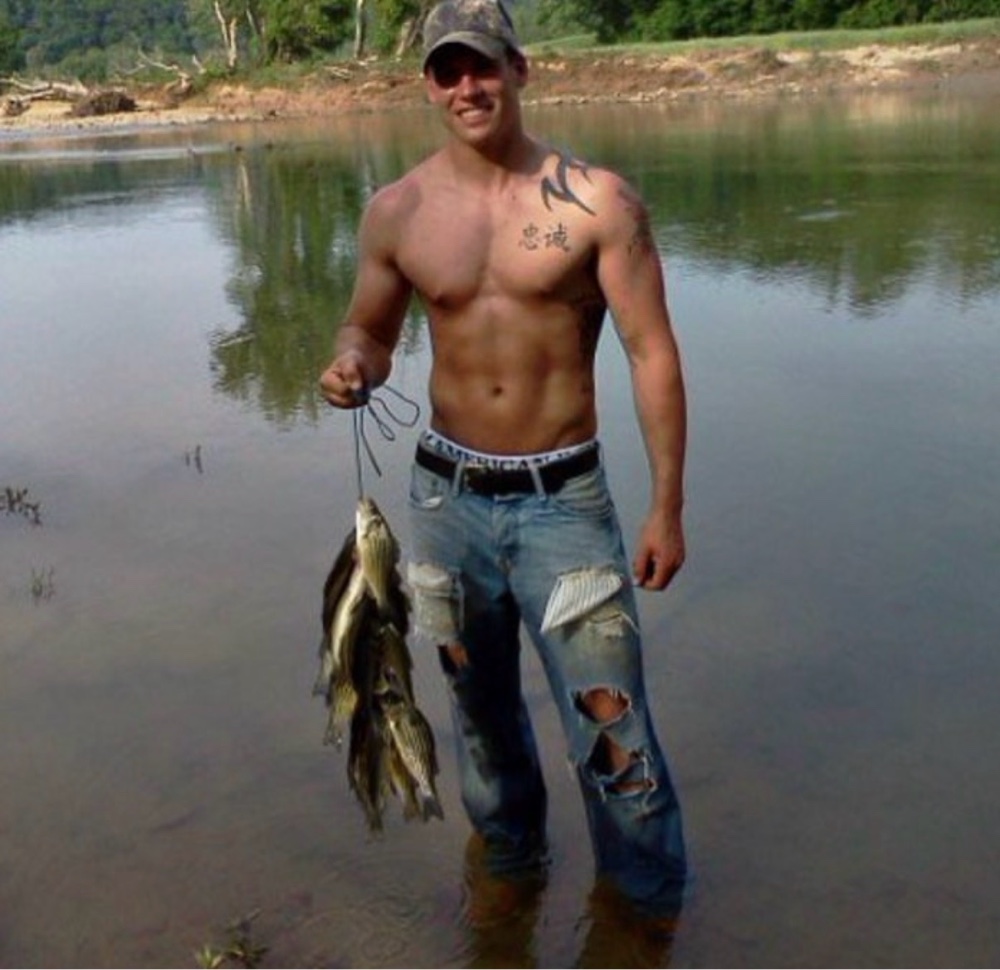
Now there's a handful, with a great catch.
William
NS
Post a Comment