 |
Monday, August 31, 2026

Interrupted Dreams
 |
Last night was a strange night. I’d had a migraine for most of the afternoon and evening, and it was bad enough that I took a late-afternoon nap. The nap didn’t help the migraine, but eventually it eased enough that I could read. I got really into my book and finally had to make myself put it down around 10:30 and turn out the lights. Unfortunately, turning out the lights did not mean falling asleep. So, I resorted to a time-honored tradition that many guys have used to help themselves fall asleep. It worked, and sometime after 11, I finally drifted off to sleep.
Isabella had been trying to get me to go to bed since around 9 pm. Apparently, she knew perfectly well that regardless of how late I stayed up, she wasn’t changing her schedule. Sure enough, at 4 am, she woke me up to feed her.
She also woke me from a rather odd dream. I didn’t appear to be in the dream at all, and all I’ll say about the subject matter is that it had the plot of some fairly kinky porn. I seemed to be watching everything from above, almost as if I were watching a movie rather than participating in the dream. After Isabella roused me and I fed her, I went back to bed.
That’s when something even more unusual happened: I went back to dreaming, and the new dream seemed to continue the previous one. Somewhere along the way, though, the kinky porn plot began turning into a love story that appeared to be heading toward a throuple. Eventually, that dream ended and another began. This time I was actually in the dream, but it was much more romantic than erotic.
I’ve mentioned before that remembering dreams has never happened very often for me. You might remember Saturday’s “Moment of Zen: Sweet Dreams,” and I’m guessing some of you figured out that it was inspired by waking from an erotic dream. Strangely enough, I wasn’t in that dream either. Again, it was more like watching a movie. Judging by the state of certain parts of my anatomy when I woke up, however, apparently I’d found the movie pretty sexy.
I didn’t remember that dream nearly as clearly as I remember this morning’s dreams. Then, another morning last week, I woke remembering a dream that wasn’t erotic at all but much more mundane. So, for whatever reason, I seem to be going through a period of unusually vivid and memorable dreams. I’m not sure why. If I’d started a new medication, I might blame that, but nothing has really changed.
Sadly, all those dreams did nothing for my migraine. I still have it this morning, but I’m going to work. If I called out sick today, it would mean I’d missed three of the last four Mondays because of a migraine. They’ve all been legitimate migraines, but I also know how people can gossip when someone seems to miss work on a regular schedule. I don’t want it to start looking like I’ve developed a convenient case of the Mondays.
If the migraine gets worse—or simply doesn’t get any better as the day goes on—I may come back home. For now, though, I’m going to give Monday a try.
Needless to say, between too little sleep, bizarre dreams, and a lingering migraine, I’m looking forward to this Monday even less than usual.
Sunday, August 30, 2026
When Giving Is Not About Us
 |
“But when you give alms, do not let your left hand know what your right hand is doing, so that your alms may be done in secret; and your Father who sees in secret will reward you.”
— Matthew 6:3–4
In the Sermon on the Mount, Jesus speaks about something that is as relevant today as it was two thousand years ago: the temptation to turn goodness into a performance.
Jesus tells His followers, “Beware of practicing your piety before others in order to be seen by them” (Matthew 6:1). He specifically speaks about giving to those in need, warning His listeners not to “sound a trumpet” when they give so that others will praise them. Instead, He tells us not to let our left hand know what our right hand is doing. Our generosity should come from a desire to help, not from a desire to be admired.
The same principle appears immediately afterward when Jesus talks about prayer. He warns against praying publicly simply so that others will notice how devout we are. Instead, He tells us to go into a private room, close the door, and pray to God in secret (Matthew 6:5–6). Later, He says much the same thing about fasting. In each case, the problem is not the act itself. The problem is making our faith into a performance.
I have been thinking about these verses in light of the life of Dolly Parton.
Dolly supported an extraordinary number of charitable causes throughout her life. Some were very public. Through her Imagination Library, millions of books have been given to children. She contributed to medical research, helped communities devastated by disaster, supported education, and used her fame to draw attention to people who needed help.
Yet there were also acts of generosity that received little attention, and there may well have been others that we will never know about. That seems appropriate. When Dolly did speak publicly about a cause, the purpose was often not simply to announce what she had done. She used the attention already focused on her to turn people’s eyes toward something that mattered. She encouraged others to care, to give, and to help.
There is an important difference between drawing attention to ourselves because we give and drawing attention to a need so that others will give.
Jesus makes that distinction clearer when we consider another passage from the Sermon on the Mount. In Matthew 5:16, He says, “Let your light shine before others, so that they may see your good works and give glory to your Father in heaven.”
Few people had a light that shone brighter than Dolly Parton’s. Her talent made that light visible to the world, but her compassion showed us what she chose to do with it. She could use the attention that came with being Dolly Parton to make herself seem more important, or she could turn that attention toward someone who needed it. Again and again, she chose the latter. Her light did not become dimmer when she used it to illuminate the needs of others. It became brighter.
At first, Matthew 5:16 might seem to contradict Jesus’ warning just a few verses later about doing good deeds where others can see them. But the difference is found in who receives the glory.
Matthew 5 tells us to live in such a way that our goodness points beyond ourselves. Matthew 6 warns us against doing good so that people will praise us. One says, “Look at the good that can be done.” The other says, “Look at how good I am.”
That is a distinction worth remembering.
Jesus returns to the importance of caring for others in Matthew 25:31–46. In the parable of the sheep and the goats, He describes people who fed the hungry, gave drink to the thirsty, welcomed the stranger, clothed those who needed clothing, cared for the sick, and visited those in prison. What is striking is that the righteous do not even seem to realize the significance of what they have done. They ask Jesus when they ever did these things for Him.
His answer is one of the most powerful teachings in the Gospel: “Just as you did it to one of the least of these… you did it to me” (Matthew 25:40).
They did not help because they expected recognition. They helped because someone was hungry. Someone was thirsty. Someone needed clothing. Someone was sick, lonely, imprisoned, or a stranger in need of welcome. They saw someone who needed help, and they helped.
That is what Christian charity should look like.
Most of us will never have Dolly Parton’s wealth or enormous public platform, but all of us have something we can give. It may be money. It may be our time. It may be a meal, a ride, a listening ear, an encouraging word, or simply noticing someone whom everyone else seems to overlook.
And sometimes no one else needs to know.
There is something beautiful about doing something kind that can never be repaid and may never even be acknowledged. There is no applause, no recognition, and no opportunity to tell everyone what a wonderful person we are. There is simply someone who needed help and someone who chose to help them.
God sees those moments.
And when circumstances give us an opportunity to speak publicly about something we have done, perhaps the question we should ask ourselves is not simply, Should I tell people? Instead, we might ask, Why am I telling them?
Am I pointing toward myself, or am I pointing toward the need?
Am I hoping people will admire my generosity, or am I hoping my example might inspire someone else to be generous?
Jesus never tells us to stop doing good because someone might see us. He tells us to examine why we are doing it in the first place.
And doing good does not always require money, a grand gesture, or even much of our time. Sometimes the smallest kindness can matter more than we realize. A genuine smile offered to someone who seems to be having a difficult day may be exactly the encouragement that person needs. A kind word, holding a door, asking someone how they are and actually listening to the answer—these things cost us nothing, yet we may never know how much they mean to the person who receives them. We do not have to change the whole world. Sometimes we are simply called to make one person’s world a little brighter.
Our generosity does not need a trumpet.
Sometimes the quietest acts of kindness speak the loudest—especially to the One who sees what is done in secret.
Saturday, August 29, 2026

Moment of Zen: Sweet Dreams
 |
There’s something especially nice about waking from a sweet dream and realizing that, apparently, part of you wasn’t quite ready for it to end. Those mornings may come a little less frequently as the years go by, which just makes them all the more worth savoring.
 |
 |
 |
 |
 |
 |
 |
 |
 |
Friday, August 28, 2026
Hanging in There
 |
It’s Friday, and I’m hanging in there for just one more day. I just have to make it through today, and then the weekend can finally begin.
It’s been one of those weeks where I’m more than ready for a couple of days to relax, recharge, and not think too much about work. Thankfully, the finish line is in sight.
So, I’m hanging on and counting down the hours. TGIF! I hope everyone has a great Friday and an even better weekend!
Thursday, August 27, 2026
Hello, Hello, Hello
 |
I have a doctor’s appointment this morning. I had planned to take the whole day off, but something came up at work, so I’ll have to go in for part of the day.
I was also off yesterday for my Botox appointment. I always take the whole day off when I have Botox treatments for my migraines because my head is almost always sore afterward. I’m sure anyone’s would be after 37 injections in the head, neck, and shoulders. Sometimes the soreness itself causes a headache, which was the case yesterday, so I was very glad I didn’t have to go back to work after the procedure.
Today’s appointment should be much easier. It’s just my regular checkup. I know some people hate going to the doctor, but I actually enjoy seeing mine. I really like him, and I can already hear him knocking on the exam room door and saying, “Hello, hello, hello,” as he walks in.
He’s a really nice guy, and he has been incredibly supportive of my health over the years. He’s been there for me through so much during the past ten years, through good times and bad, and I’ve always felt like he genuinely cares about how I’m doing. At this point, going for a checkup feels a little like seeing a friend you haven’t seen in a while.
Hopefully, everything will be good at my appointment, and then it’s off to work for the rest of the day. Not quite the day off I had planned, but at least tomorrow is Friday!
Wednesday, August 26, 2026

I Will Always Love You, Dolly
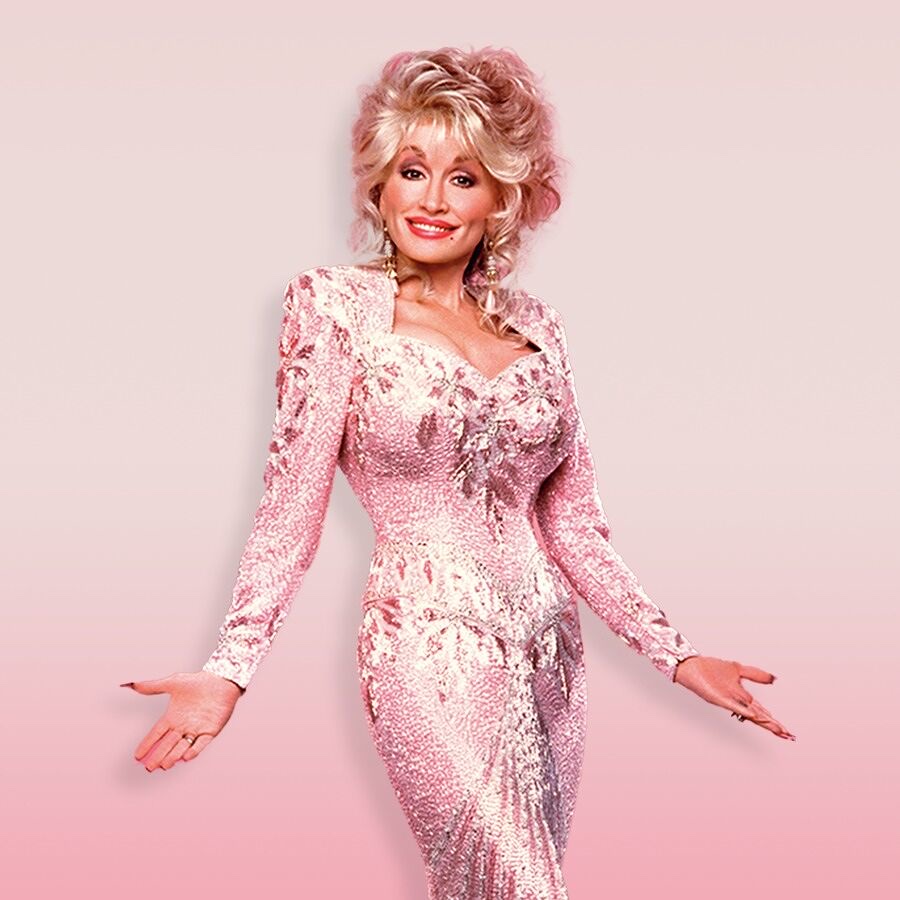 |
| 🩷 Dolly Parton 🦋 1946-2026 🩷 |
Yesterday, the world lost one of its brightest stars.
Dolly Parton died at the age of 80, and while there have been celebrity deaths that have saddened me over the years, this one has hit me particularly hard. I have cried a lot since hearing the news. It feels strange to grieve someone I never knew personally, but I suspect millions of people around the world are feeling much the same way.
Most people knew Dolly as a singer, songwriter, actress, and entertainer. She gave us “Jolene,” “Coat of Many Colors,” “9 to 5,” and, of course, “I Will Always Love You.” She was one of the greatest songwriters country music ever produced, with an unmistakable voice, an unmistakable appearance, and that wonderful laugh that I think I will always hear whenever I picture her.
But Dolly Parton was so much more than an entertainer.
She founded the Imagination Library in 1995 because her father could not read or write. What began as an effort to provide books to children in her home county in Tennessee grew into an international program that has given hundreds of millions of books to children. She gave money to families who lost their homes in the devastating 2016 wildfires in East Tennessee. She supported hospitals, education, disaster relief, and countless other causes. During the COVID-19 pandemic, her $1 million donation to Vanderbilt University Medical Center helped fund research that contributed to the development of the Moderna COVID-19 vaccine.
She didn’t just sing about making the world a better place. She put her money, her time, and her name behind actually doing it.
And now we know something that makes one of her final acts of generosity even more remarkable.
After Dolly’s death, it was revealed that she had been privately battling cancer. In January, to celebrate her 80th birthday, Dolly released a new version of “Light of a Clear Blue Morning,” joined by Lainey Wilson, Miley Cyrus, Queen Latifah, and Reba McEntire. The proceeds were designated for pediatric cancer research at Monroe Carell Jr. Children’s Hospital at Vanderbilt.
Dolly was fighting cancer herself, and she released a song to help children fighting cancer.
Someone writing about the song after her death put it perfectly: “Even while she was sick she was still thinking about others.”
That may be one of the best summaries of Dolly Parton I’ve heard.
Dolly promoted plenty of things during her long career. She was a brilliant entertainer and an equally brilliant businesswoman, and she certainly knew how to generate publicity. But some of the things that seemed to matter most to her—the things she did simply to help other people—were often done with surprisingly little fanfare.
Because the point wasn’t that Dolly Parton was helping.
The point was that someone needed help.
She didn’t announce that she was battling cancer when she released “Light of a Clear Blue Morning.” She didn’t make herself part of the story. She could easily have revealed her diagnosis and made the release about her own struggle with the disease. Instead, she directed the attention toward children with cancer and the doctors and researchers trying to save them.
Even at the end, when she had every reason to think about herself, Dolly was thinking about somebody else.
There is something almost unbearably beautiful about the song she chose, too. Dolly originally wrote “Light of a Clear Blue Morning” nearly fifty years ago as a song about emerging from darkness and believing that something brighter lies ahead. At 80 years old, while privately facing cancer, she returned to that message of hope—not to ask the world to hope for her, but to offer hope to others.
That was Dolly.
And for LGBTQ+ people, Dolly was something even more special.
Gay men have adored Dolly for generations. She knew it, joked about it, and embraced it. But underneath the rhinestones and jokes was something important: she embraced us.
Long before supporting LGBTQ+ people became commonplace among entertainers, Dolly made it clear that she wasn’t interested in judging people for whom they loved or who they were. After the horrific attack at Pulse nightclub in Orlando, she said something that, to me, sums up her attitude toward faith and other people better than almost anything else she ever said: “I am not God, I am no judge, I just know that God loves us all.”
Those are words a lot more Christians could stand to remember.
Dolly became one of our great heroes, one of our biggest divas, and one of the truest straight allies the LGBTQ+ community has ever had. I think part of the reason gay people loved her so fiercely was because Dolly understood something about being yourself in a world that constantly tells you how you’re supposed to be.
One of my favorite Dolly stories illustrates that perfectly. She used to tell about secretly entering a Dolly Parton look-alike contest at a gay club in Los Angeles. She exaggerated the Dolly look even further and entered alongside drag queens impersonating her.
And Dolly lost.
Nobody recognized that the real Dolly Parton was among them, and apparently the judges didn’t think Dolly made a particularly convincing Dolly. Instead of being offended, she thought the whole thing was hilarious. There is something wonderfully Dolly about losing a Dolly Parton look-alike contest to drag queens and turning it into one of your favorite stories to tell.
That sense of humor was such an important part of who she was. Dolly could laugh at herself endlessly, but I cannot remember ever hearing her publicly humiliate someone else for a laugh. She understood the difference between being funny and being cruel.
And nobody was more willing to make Dolly Parton the punchline than Dolly Parton.
She created an image that was deliberately over-the-top: the enormous blond wigs, the makeup, the rhinestones, the high heels, the famously exaggerated figure. She joked about all of it, usually at her own expense. She famously said that it cost a lot of money to look this cheap.
Yet underneath all that artifice was someone remarkably genuine.
Maybe that is one of the great lessons Dolly gave us. Authenticity doesn’t mean stripping away everything colorful or flamboyant about yourself. You can dress up. You can put on the wig. You can wear too much makeup and cover yourself in rhinestones. You can be outrageous and glamorous and larger than life—and still be completely, unapologetically yourself.
For someone whose public image was so carefully constructed, Dolly Parton may have been one of the most real celebrities we ever had.
And then there was Dolly’s faith.
Dolly grew up in the Church of God and spoke throughout her life about God, prayer, and the Christian faith that shaped her childhood. But as she grew older, her understanding of faith became broader and less tied to organized religion. In a 2024 interview, she even said, “I wouldn’t even say I’m religious, though I grew up with that background.” She spoke instead about a universal spiritual force that could be understood as God, Mother Nature, Father Time, or a higher wisdom.
And yet, for someone who hesitated to call herself religious, Dolly was one of the most Christ-like public figures I can think of.
She loved people. She accepted people. She gave generously. She helped those who were hurting. She encouraged children to learn. She treated people with dignity. And rather than appointing herself judge of people whose lives or beliefs differed from her own, she reminded us that God loves us all.
There are people who loudly proclaim their Christianity while devoting an extraordinary amount of energy to deciding whom God condemns. Dolly seemed far more interested in making sure people knew they were loved.
Perhaps Dolly’s faith didn’t fit neatly inside a particular religious box. I don’t think it needed to. When I think about Christ’s command to love our neighbors, care for those in need, and refrain from judging others, I can think of few people who lived those principles more publicly or more consistently than Dolly Parton.
She may not have called herself particularly religious.
But she certainly showed us what love looks like.
There is also one place where I know I will always think of Dolly. Anyone who has traveled I-65 into or out of Mobile, Alabama, probably knows the twin spans I’m talking about. I’ve never heard anyone call them anything but the “Dolly Parton Bridge”—or, more often, simply “the Dolly Partons.”
 |
I’ve crossed the Dolly Partons hundreds of times in my life. They are one of those landmarks that have always just been there, part of the familiar landscape of home. The nickname is affectionate, a little irreverent, and very Alabama—and somehow Dolly seemed exactly the kind of person who could appreciate having a pair of bridges nicknamed for her cleavage.
Millions of people have crossed those bridges over the years, and millions more will cross them in the years to come. I suspect I’m not the only one who will think of Dolly when those great arches come into view.
I always have.
But from now on, I think I’ll smile a little differently when I see the Dolly Partons rising ahead of me. They’ll remind me of the wigs and rhinestones, the music, the generosity, that wonderful laugh, and most of all, the remarkable woman underneath it all.
Maybe that’s why this loss hurts as much as it does.
The world can feel increasingly cruel, angry, judgmental, and divided. Dolly somehow remained Dolly through all of it. She could walk into a room looking like she’d been dipped in a vat of rhinestones and still somehow make everything feel a little warmer.
She was funny without being cruel. She was glamorous without taking herself too seriously. She was enormously successful without forgetting people who had less. She had deeply held beliefs without needing to force them onto everyone else. And she understood that loving people was far more important than judging them.
She was truly one of a kind.
I know ending a remembrance of Dolly Parton with “I Will Always Love You” is probably the biggest cliché imaginable. I’m sure those words have been repeated millions of times since the news broke.
But sometimes something becomes a cliché because nothing else says it quite as well.
I will always love you, Dolly.
And somehow, despite the fact that you didn’t know most of us personally, I genuinely believe you loved us too. You certainly spent a lifetime showing us that you did.
Rest in peace, Dolly.
The world is a little less bright without you in it, but because of you, there will always be a light in the clear blue morning.
Tuesday, August 25, 2026

I Am Much Too Alone in This World, Yet Not Alone
 |
I Am Much Too Alone in This World, Yet Not Alone
By Rainer Maria Rilke
I am much too alone in this world, yet not alone
enough
to truly consecrate the hour.
I am much too small in this world, yet not small
enough
to be to you just object and thing,
dark and smart.
I want my free will and want it accompanying
the path which leads to action;
and want during times that beg questions,
where something is up,
to be among those in the know,
or else be alone.
I want to mirror your image to its fullest perfection,
never be blind or too old
to uphold your weighty wavering reflection.
I want to unfold.
Nowhere I wish to stay crooked, bent;
for there I would be dishonest, untrue.
I want my conscience to be
true before you;
want to describe myself like a picture I observed
for a long time, one close up,
like a new word I learned and embraced,
like the everday jug,
like my mother’s face,
like a ship that carried me along
through the deadliest storm.
About the Poem
There is a particular kind of loneliness that comes not from having no one around us, but from never quite feeling that we are completely known. Rainer Maria Rilke captures that contradiction in the very first line: “I am much too alone in this world, yet not alone enough.” We can feel isolated while simultaneously longing for the solitude necessary to understand ourselves.
That tension runs throughout the poem. Rilke wants independence—“my free will”—but he also wants connection. He wants to be involved in the world, to be “among those in the know,” yet he is willing to choose solitude rather than belong somewhere at the cost of himself. There is something powerful in that distinction. Being alone can hurt, but being surrounded by people while unable to be who we truly are can sometimes feel even lonelier.
Perhaps that is why the second half of the poem speaks to me most strongly. Rilke writes, “I want to unfold.” It is such a simple phrase, yet it says so much. We spend much of our lives unfolding, slowly discovering who we are beneath the expectations placed upon us by family, society, religion, work, and even ourselves. Sometimes we bend ourselves into shapes we think others will find acceptable. Rilke rejects that: “Nowhere I wish to stay crooked, bent; / for there I would be dishonest, untrue.”
There comes a point when we have to stop contorting ourselves merely to fit into the spaces others have made for us. That does not mean refusing to grow or change. Quite the opposite. Rilke wants to unfold, to become more fully himself. There is a difference between changing because we are growing and changing because we are afraid that our authentic selves will not be accepted.
The poem ends with the desire to know and describe oneself as intimately as the familiar things that become almost inseparable from our lives: an everyday jug, a mother’s face, a ship that carried us safely through a terrible storm. Self-knowledge does not arrive all at once. We learn ourselves slowly, through observation and experience, through mistakes and questions, through love and loss, and sometimes through loneliness.
Maybe we are all, in one way or another, still unfolding. We may never understand ourselves perfectly, but perhaps the important thing is that we continue trying to live with a conscience that is true—to others, certainly, but also to ourselves.
“I Am Much Too Alone in This World, Yet Not Alone” explores several themes that recur throughout Rainer Maria Rilke’s poetry: solitude, identity, self-knowledge, freedom, and the complicated relationship between the individual and the larger world.
The poem is built around contradictions. The speaker is too alone, but not alone enough; too small, but not small enough. He wants freedom but also participation. He wants to remain himself while reflecting something greater than himself. Rather than resolving these tensions, Rilke allows them to coexist, suggesting that becoming fully ourselves often requires learning to live within such contradictions.
The poem changes noticeably with the declaration, “I want to unfold.” From that point forward, the speaker’s concern becomes authenticity. He does not want to remain “crooked” or “bent,” because doing so would make him dishonest. Instead, he seeks a clear understanding of himself, something familiar and recognizable even amid uncertainty.
The final image of a ship surviving “the deadliest storm” gives the poem a quiet sense of endurance. Identity is not merely something we discover by looking inward; it is also shaped by everything that has carried us through the storms of our lives.
About the Poet
Rainer Maria Rilke was born René Karl Wilhelm Johann Josef Maria Rilke in Prague on December 4, 1875, when the city was part of the Austro-Hungarian Empire. The name by which we know him came later. In 1897, he met the writer and intellectual Lou Andreas-Salomé, who became his lover, mentor, and eventually lifelong confidante. She disliked René, considering it too affected and insufficiently masculine, and encouraged him to adopt the more distinctly German Rainer. The change was part of a larger transformation under her influence: Rilke altered his handwriting, simplified his poetic style, and began developing the voice that would define his mature work. From his collection of given names, he retained Maria, becoming Rainer Maria Rilke.
Rilke traveled extensively throughout Europe and spent significant periods in places including Russia, Paris, Germany, Italy, and Switzerland. His encounters with artists, writers, landscapes, and different cultures profoundly influenced his work. In Paris, he worked for a time as secretary to the sculptor Auguste Rodin, whose intense attention to physical objects helped influence Rilke’s own approach to observation and poetry.
Among Rilke’s best-known works are The Book of Hours, The Notebooks of Malte Laurids Brigge, Duino Elegies, and Sonnets to Orpheus. His Letters to a Young Poet, a collection of letters written to aspiring poet Franz Xaver Kappus, has also become one of his most widely read works. In those letters, as in much of his poetry, Rilke returned repeatedly to solitude—not simply as loneliness, but as a space in which a person can learn, create, question, and become.
Rilke died of leukemia in Switzerland on December 29, 1926, at the age of fifty-one. A century later, his poetry continues to resonate because the questions he asked remain familiar: Who am I? How do I remain true to myself? How do I love others without losing myself? And how do I learn to be alone without being consumed by loneliness?
Subscribe to:
Posts (Atom)