 |
Friday, July 31, 2026

When My Heart Kept Changing the Story
 |
Yesterday, I mentioned that while catalogs, department store underwear sections, and advertisements for men’s underwear fueled many of my earliest fantasies, there was one boy who seemed to dominate my imagination. I thought I’d take a stroll down memory lane today because those memories aren’t really about teenage lust. They’re about a young man trying to understand feelings he didn’t yet have the words to describe.
I remember the first day of seventh grade. Some of the boys in my class were picking on me. I don’t remember exactly what they said, but it was probably about my voice, the way I moved, or simply because I was different. There was a new boy in our class that year, and he stepped in and put a stop to it.
We were never best friends, but I always admired him. He was handsome, athletic, blond-haired, blue-eyed, and seemed to have the effortless confidence I wished I possessed. Looking back, I like to think he admired something about me too. I certainly wasn’t athletic, but I was smart, and I hope he respected that. Whether that’s true or simply the way memory softens over time, I don’t know. What I do know is that people didn’t seem to bother me when he was around, and he was one of the genuinely kind people I remember from those years.
For a long time, I didn’t understand why he occupied so much of my imagination.
My fantasies almost always started the way I thought they were supposed to. I’d try to imagine being attracted to a girl, because that’s what I believed normal teenage boys were supposed to do. Somehow, though, those daydreams always drifted back to him. Every single time.
The strange thing is that I knew almost nothing about being gay. Everything I had heard came from playground insults, whispered jokes, and the cruel stereotypes that were common in the South during the 1980s and early 1990s. I didn’t have positive role models. I didn’t know any openly gay people. I certainly didn’t have anyone telling me that it was okay if I happened to be one of them.
Instead, every fantasy ended with shame.
I’d lie awake afterward feeling guilty, wondering what was wrong with me and why I couldn’t make my mind work the way I thought it should. I may have been a good student, but when it came to understanding my own heart, I was completely lost. Looking back, I wish someone had simply told me that it was okay to like other boys. It wouldn’t have erased every struggle, but it might have spared me years of believing there was something broken inside me.
It wasn’t until college that someone finally gave me a different way to think about it.
One of my psychology professors, who was also a clinical psychologist, allowed us to submit anonymous questions for class discussion. One student asked, “How do you know if you’re really gay?”
His answer was simple. He asked us to think about our romantic and erotic dreams. When we dreamed about someone we desired, was it a man or a woman?
I don’t know that there’s any single question that can define a person’s sexual orientation, and I wouldn’t claim that his answer applies to everyone. But it applied to me.
In that moment, I realized something that had been true for years. No matter how hard I tried to imagine girls, my thoughts always found their way back to boys. More specifically, they had almost always found their way back to one particular boy.
That realization didn’t magically erase years of guilt or fear, especially after growing up in a conservative religious environment where being gay was presented as sinful and where the AIDS epidemic was often spoken about with more condemnation than compassion. But it did give me permission to admit something to myself that I’d been trying very hard not to see.
Sometimes the hardest person to come out to is yourself.
Looking back now, I don’t remember those fantasies with embarrassment. I remember them with compassion for that confused thirteen-year-old who was simply trying to understand himself with almost no guidance at all. He wasn’t broken. He wasn’t choosing to feel the way he did. He was just beginning the long journey toward understanding the person he had been all along.
Thursday, July 30, 2026
Some Memories Deserve Their Own Post
 |
Yesterday, I wrote about catalogs, department store underwear sections, and the advertisements that gave many of us our earliest glimpses of the male body before the internet existed. Judging by the comments, I wasn’t the only one who remembers those innocent little moments that weren’t quite so innocent.
As I was thinking about yesterday’s post, my mind started wandering a little farther down memory lane. Those catalogs and advertisements certainly caught my attention, but they weren’t the only things that occupied the imagination of a very horny teenage boy. Looking back, I can remember a few guys who found their way into my fantasies, but there was one in particular who seemed to appear again and again. He dominated my teenage imagination in a way no one else ever did.
But those memories are about more than teenage hormones. They’re also about a young man trying to understand feelings he didn’t yet have the language to describe. I knew I was different long before I admitted it to myself, and those fantasies were part of how I slowly came to recognize what my heart had been trying to tell me all along. Looking back now, I can smile at that confused, curious teenager who was simply trying to make sense of desires that felt both exciting and frightening.
I think that’s a post of its own.
Not because it’s some dramatic story, but because it’s one of those memories that deserves a little reflection. So many of us who grew up before the internet pieced together our understanding of attraction from fleeting glimpses, innocent crushes, and private fantasies that we never dared tell another soul. Looking back now, those memories are amusing, a little embarrassing, and, perhaps most of all, an important part of discovering who we were.
Unfortunately, this morning isn’t the best time to take that stroll down memory lane. I woke up with a bit of a headache. Thankfully, it doesn’t seem to be anything serious—certainly not serious enough to call in sick—but it’s enough that I’m moving a little slower than usual. Coffee is doing its best to help.
So, I’ll save those memories for another morning when I can do them justice. After all, some walks down memory lane are worth taking slowly.
I hope everyone has a wonderful Thursday.
Wednesday, July 29, 2026

First Crushes in Plain Sight
 |
For those of us who grew up before the internet, shopping catalogs were about much more than shopping.
The Sears and Roebuck catalog and the JCPenney catalog arrived at our homes several times a year, filled with everything from tools and appliances to school clothes and Christmas gifts. They were meant to help families decide what to buy.
For some of us, however, they offered something we didn’t fully understand at the time.
The men’s underwear section.
I suspect I’m far from the only gay man who spent a little longer flipping through those pages than was strictly necessary. There they were: page after page of handsome men modeling briefs, boxers, tank tops, and undershirts. They smiled confidently into the camera, athletic and fit, showing just enough skin to capture a teenage boy’s attention.
At the time, I probably told myself I admired their physiques because I wanted to look like them.
Looking back, I know that wasn’t the whole story.
I wasn’t really interested in whether the underwear was made by Hanes, Jockey, Fruit of the Loom, or BVD.
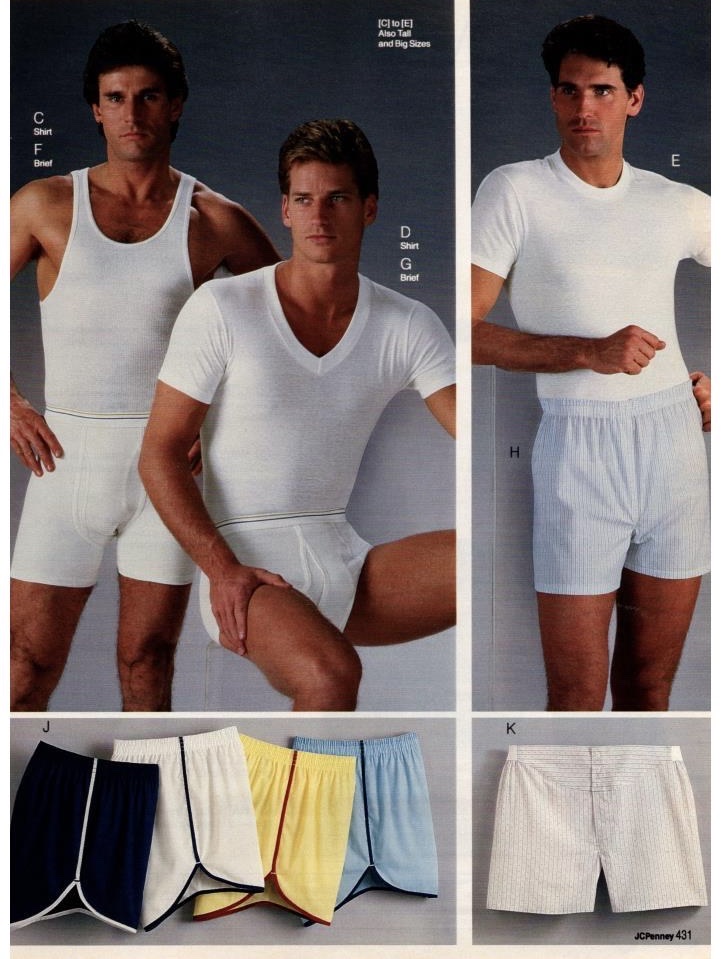 |
| 1986 JCPenney Spring Summer Catalog, Page 431 |
I was interested in the men wearing it.
The experience didn’t end when the catalogs were put away.
Trips to the department store offered another opportunity. Growing up in Alabama, that usually meant Gayfers or Parisians. Walking through the men’s department almost inevitably meant passing the underwear aisle. Boxes lined the shelves with photographs of smiling models wearing the latest briefs or boxer briefs. Hanging displays featured larger promotional photographs, and every brand seemed determined to convince shoppers that buying their underwear was somehow the key to looking like the handsome man on the package.
I never lingered very long.
 |
| Rusty Joiner* |
I was terrified someone might notice me looking too closely and somehow think I was gay. So my glances were brief—a quick look at one box, then another, before pretending to be interested in something else. Looking back, it’s funny to think I believed anyone was paying that much attention to me, but when you’re a closeted teenager, that’s how fear works.
I almost always shopped with Mama, never with both of my parents. As I got older, she trusted me enough to wander off into the boys’ or men’s department while she shopped elsewhere. Those few minutes alone felt like a small freedom. I could spend just a little more time in the underwear aisle, picking up one package and then another, pretending to compare brands when I was really getting a closer look at the model on the front.
Of course, I couldn’t have explained why.
I wasn’t consciously searching for attractive men.
Or perhaps I was—I just didn’t have the words to admit it, even to myself.
As I got older, the catalogs evolved along with me.
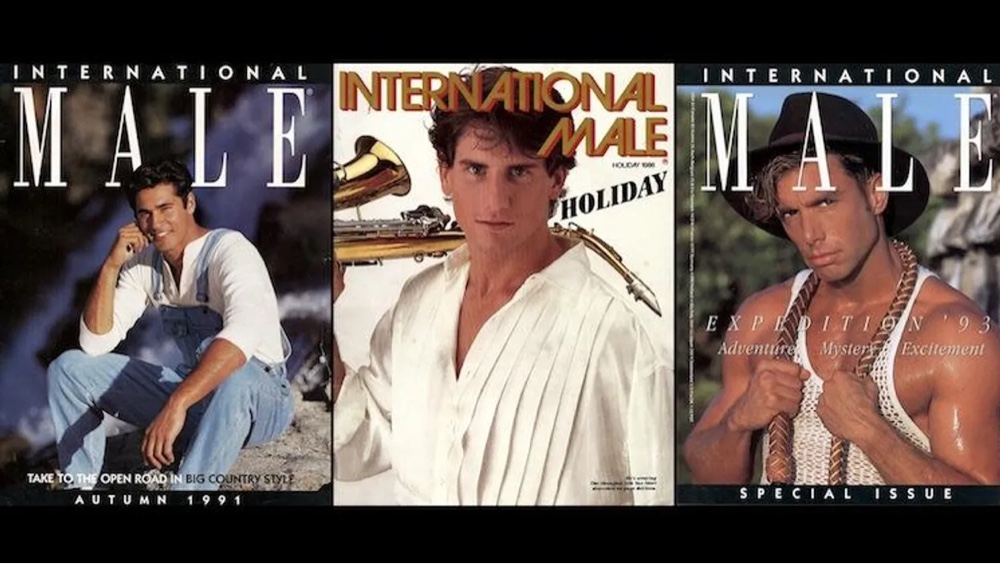
Eventually I discovered International Male.
 |
| International Male |
Unlike Sears or JCPenney, International Male wasn’t trying to sell everyday basics to the average American family. It specialized in fashion that was bold, stylish, and unapologetically sexy. The models were more glamorous, the photography more dramatic, and the clothing… well, sometimes there wasn’t much of it.
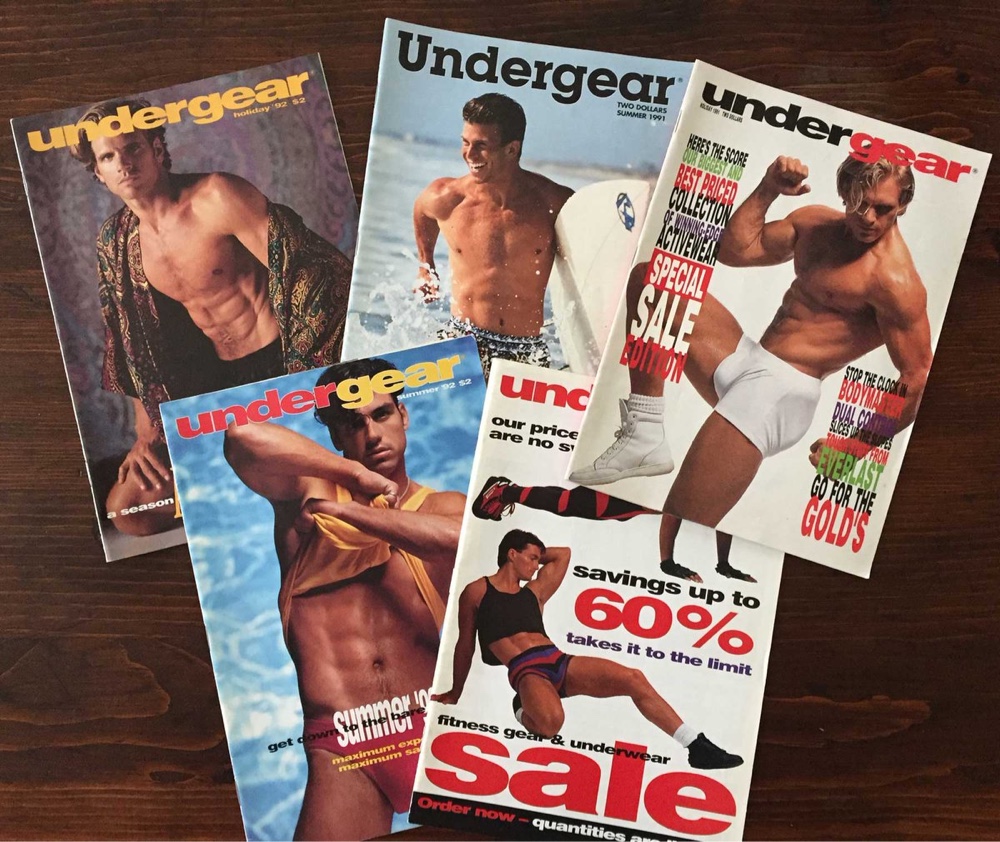
Then came Undergear.
 |
| Undergear |
Although it marketed underwear, swimwear, athletic clothing, and casual wear, everyone knew the models were just as much a part of the appeal as the products themselves. The photography celebrated the male physique in ways that mainstream department store catalogs rarely did. It still wasn’t pornography, but it certainly wasn’t pretending the models were incidental either.
By the late 1980s and into the 1990s, even mainstream advertising had changed.
 |
| Tom Hintnaus for Calvin Klein |
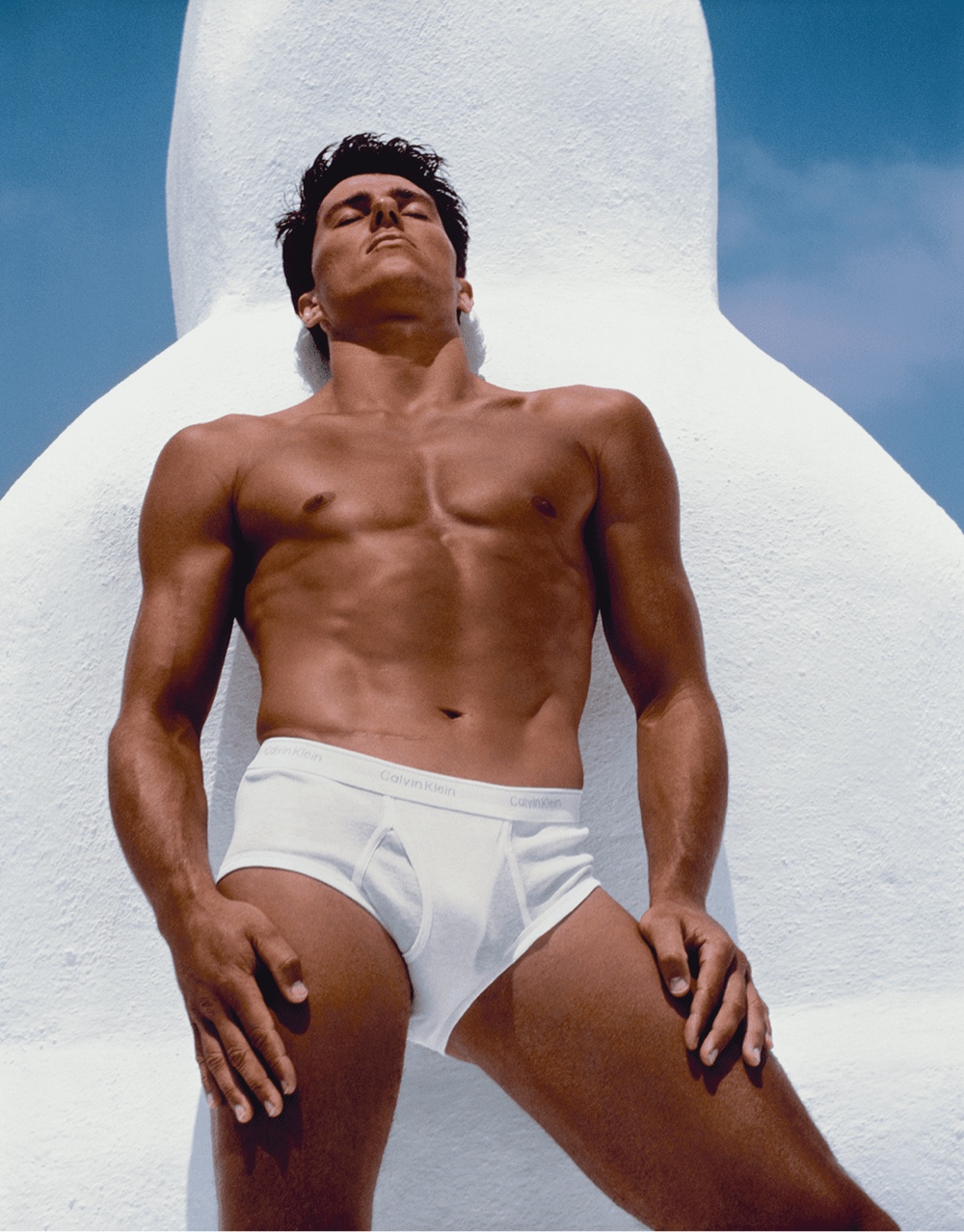
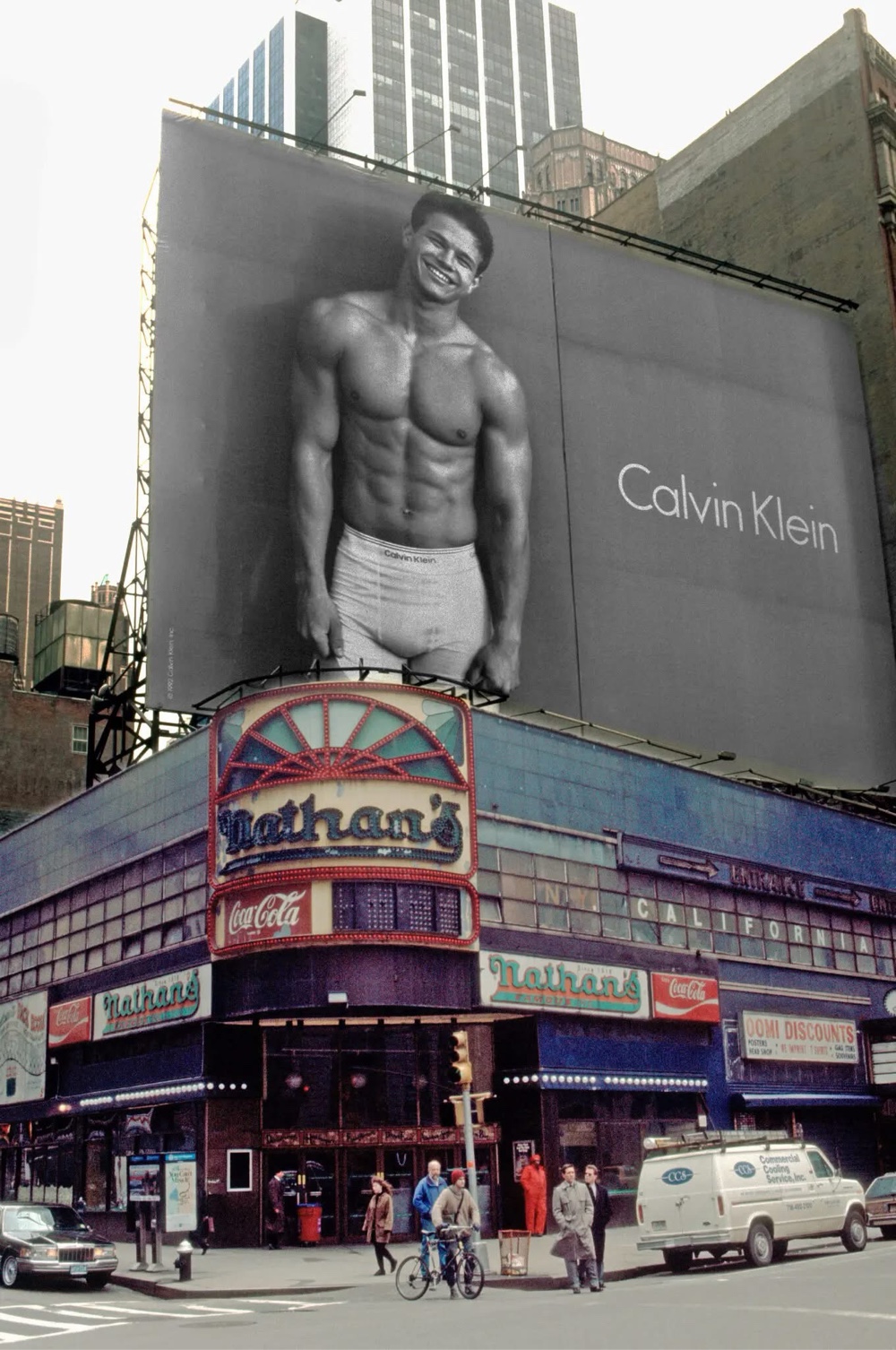
Calvin Klein transformed men’s underwear advertising into something far more than product photography. Athletic young men became the centerpiece of campaigns that celebrated confidence, sexuality, and the male physique. Tom Hintnaus posed atop a rooftop overlooking Santorini, and a few years later Mark Wahlberg’s famous campaigns became nearly impossible to escape. Imagine walking through Times Square and looking up to see a larger-than-life Mark Wahlberg towering above the street in nothing but a pair of Calvin Klein briefs. Underwear advertising had become a cultural phenomenon, and department stores suddenly displayed enormous posters of impossibly fit men, making the underwear aisle even more difficult for a young gay man to walk through without lingering a little longer than he intended.
 |
| Marky Mark (Mark Wahlberg) in Times Square |
Then there was A&F Quarterly.
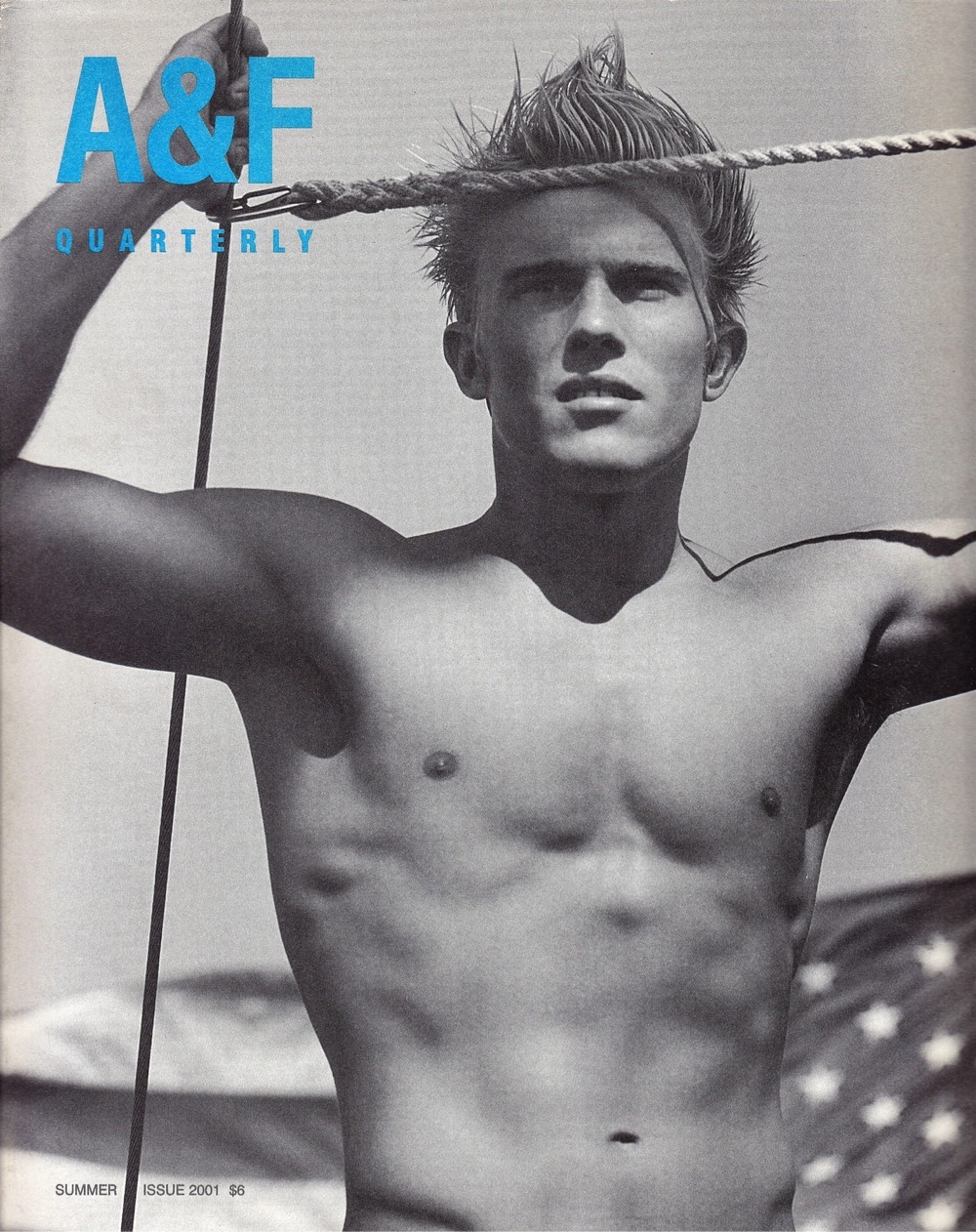
Published by Abercrombie & Fitch beginning in the late 1990s, it hardly resembled a traditional catalog at all. Part fashion magazine, part travel journal, and part photography book, it was filled with Bruce Weber’s evocative images of beautiful young men and women. Officially, it existed to sell clothing. Unofficially, many people looked forward to each new issue as much for the photography as for the merchandise. Like so much of what had come before, it celebrated youthful beauty while carefully remaining on the respectable side of what mainstream retailers considered acceptable.
Looking back, it’s fascinating to see how the presentation of the male body evolved. The wholesome Sears and JCPenney underwear models of my childhood gradually gave way to fashion photography that was increasingly artistic, increasingly sensual, and increasingly aware that beautiful men could sell just about anything. The catalogs evolved, but so did the culture.
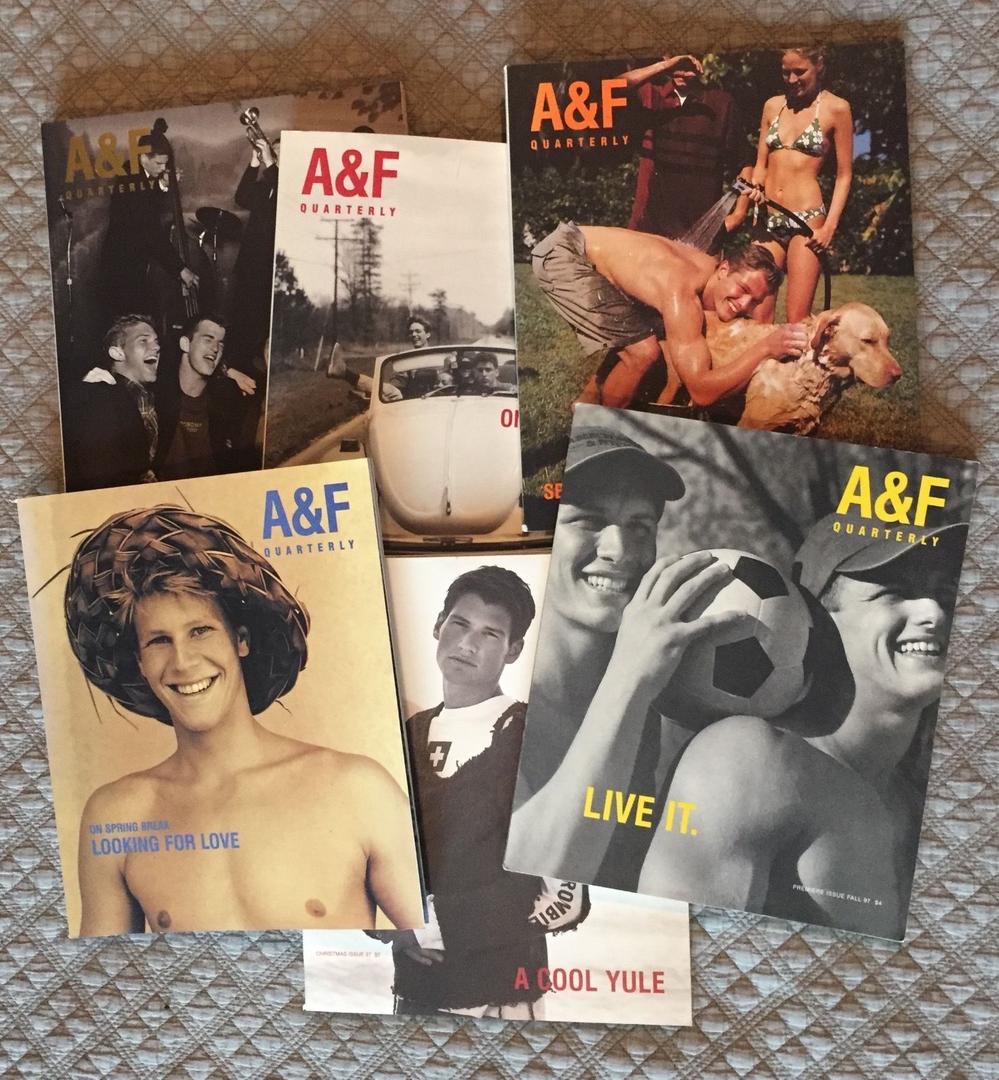 |
| A&F Quarterly, “The catalog that launched a thousand modeling careers.” |
Today, if a teenager wants to see handsome men in their underwear, he can find thousands of images within seconds on his phone.
My generation had to wait for the mail.
 |
| Rusty Joiner for Undergear* |
Or hope that Mama needed to stop by Gayfers.
Those catalogs were never intended to become part of anyone’s coming-out story.
Yet I suspect they played that role for far more gay men than anyone ever realized.
Sometimes our first crushes weren’t classmates, movie stars, or musicians.
Sometimes they were the smiling guy modeling briefs on page 487 of the Sears catalog.
And somehow, that was enough to make us turn the page just a little more slowly.
I also can’t help but smile at the irony.
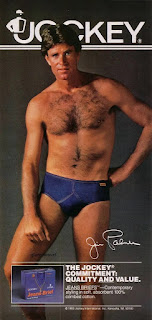 |
| Jim Palmer for Jockey Does anybody else remember Jim Palmer? |
As a teenager, I was convinced that if I looked at those underwear boxes for even a few seconds too long, someone would somehow know my secret. I was so careful to keep my glances brief, convinced that my eyes would betray me.
Today, I’m writing an entire blog post about it.
Maybe that’s the greatest difference of all—not that the catalogs have disappeared, but that I no longer have to pretend I was only looking at the underwear.
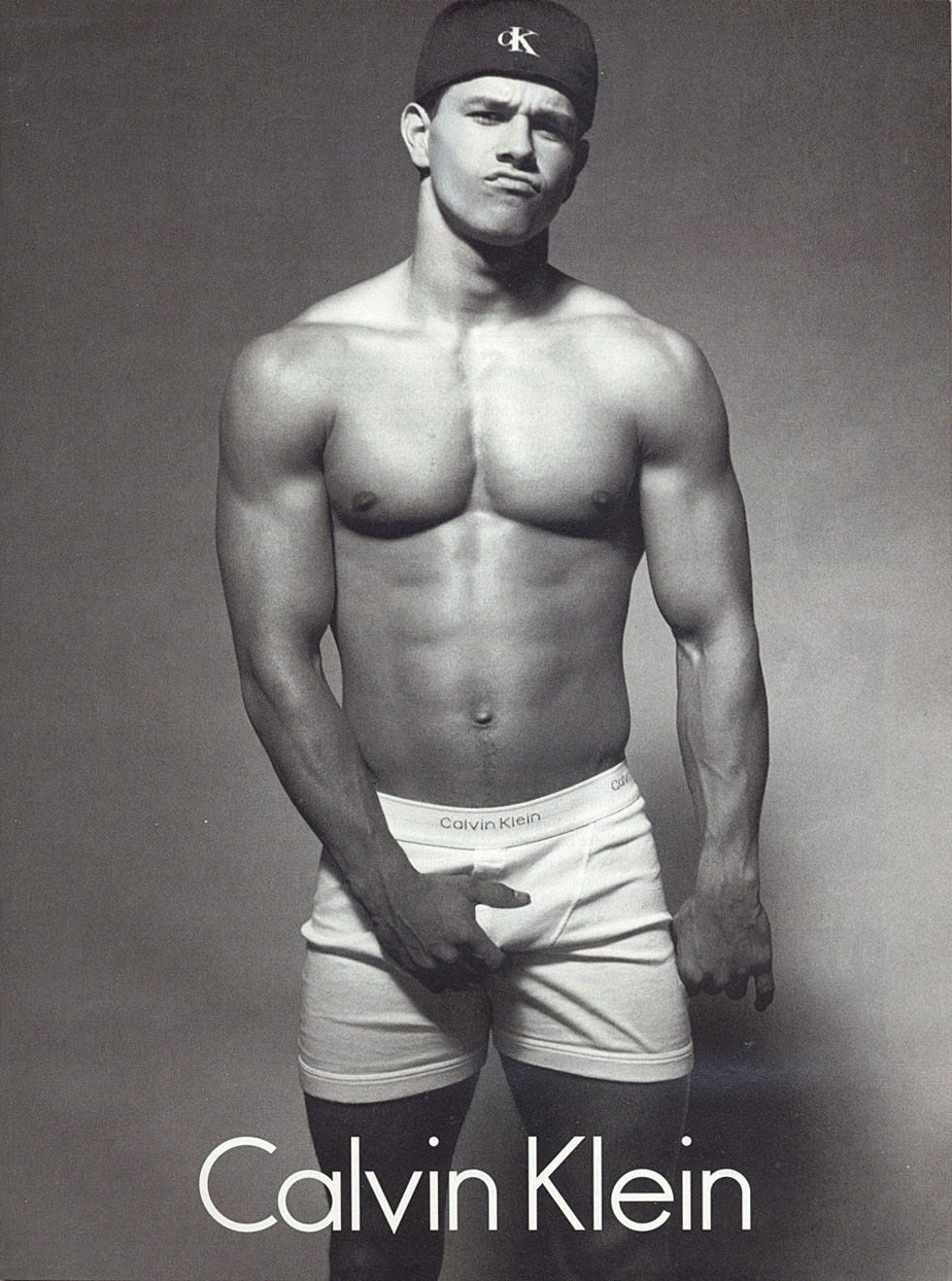 |
| Mark Wahlberg’s infamous “Crotch Grab” in a 1992 Calvin Klein advertisement photographed by Herb Ritts |
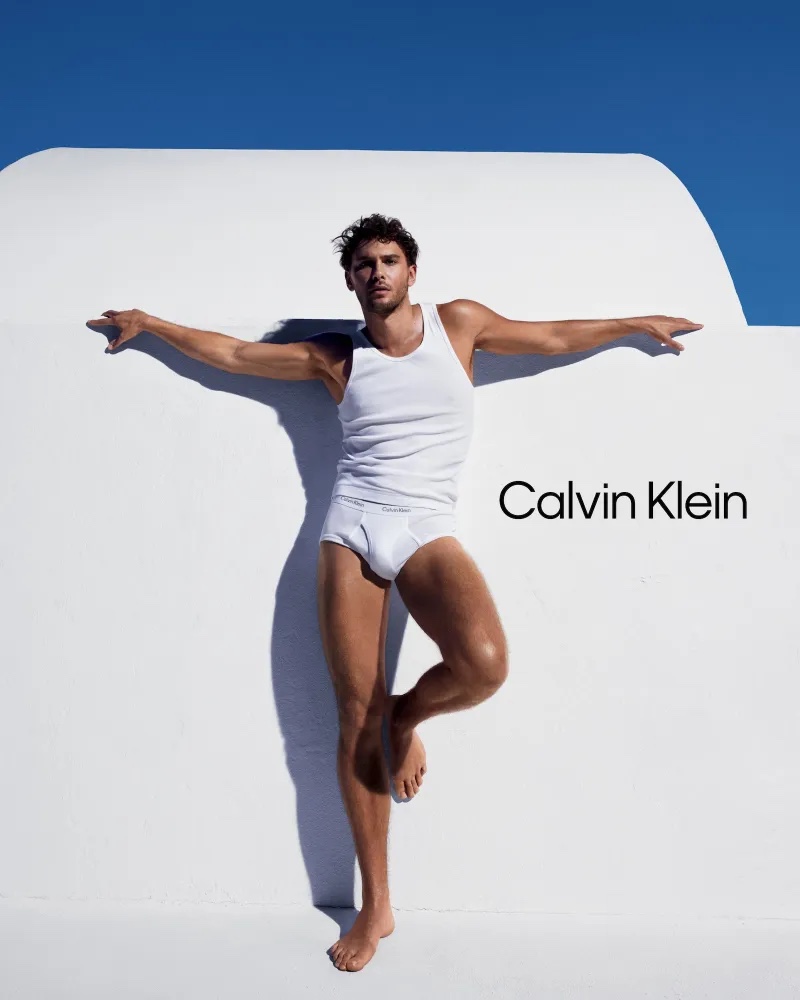 |
| Cooper Koch, one of the sexiest men alive (IMO) for Calvin Klein, he’s also an out and proud gay man |
Tuesday, July 28, 2026

Shall I Compare Thee to a Summer’s Day?
 |
Shall I compare thee to a summer’s day? (Sonnet 18)
By William Shakespeare
Shall I compare thee to a summer’s day?
Thou art more lovely and more temperate:
Rough winds do shake the darling buds of May,
And summer’s lease hath all too short a date:
Sometime too hot the eye of heaven shines,
And often is his gold complexion dimm’d;
And every fair from fair sometime declines,
By chance or nature’s changing course untrimm’d;
But thy eternal summer shall not fade,
Nor lose possession of that fair thou owest;
Nor shall Death brag thou wander’st in his shade,
When in eternal lines to time thou growest:
So long as men can breathe or eyes can see,
So long lives this, and this gives life to thee.
About the Poem
One of the things I genuinely loved teaching back when I was in high school education (or, as I sometimes jokingly say, “back when I worked in Hell”) was poetry—especially sonnets. There was something satisfying about helping students discover that poetry wasn’t just old words on a page but something living and surprisingly relatable.
Whenever we reached Shakespeare’s Sonnet 18, I would take my students outside on one of Alabama’s hot, bright spring days. Standing in the sunshine, they could immediately understand why Shakespeare says a summer’s day is “too short,” why “the eye of heaven” sometimes shines too fiercely, and why every beautiful thing eventually fades. The poem became much more than an assignment. The weather itself became part of the lesson.
At first glance, this appears to be a simple love poem. The speaker considers comparing his beloved to a beautiful summer day, only to reject the comparison almost immediately. Summer, after all, is imperfect. It can be windy. It can be unbearably hot. Clouds hide the sun. The season is brief, and eventually it gives way to autumn.
The beloved, however, is presented as surpassing all of those imperfections.
Of course, Shakespeare knew that human beauty is just as temporary as summer. None of us escape aging, illness, or death. The remarkable twist comes in the final couplet. The beloved’s beauty becomes eternal—not because the body remains young forever, but because the poem itself preserves it. Every time someone reads these fourteen lines, the beloved lives again.
There’s something wonderfully hopeful in that idea. We all want to leave something behind that outlasts us. For Shakespeare, poetry was a way to defy time itself. More than four hundred years later, we’re still reading these lines. In a sense, he proved his own point.
As someone who has always loved literature, I find that comforting. Words have an incredible ability to preserve moments, memories, and even people long after they’re gone. Whether through poetry, letters, journals, or even a daily blog, writing can become its own kind of immortality.
Sonnet 18 is one of the 154 sonnets written by William Shakespeare and was first published in 1609. It is perhaps the best-known sonnet in the English language and is often the first Shakespearean poem students encounter.
The poem follows the structure of a Shakespearean (or English) sonnet: three quatrains followed by a concluding couplet. Its rhyme scheme is ABAB CDCD EFEF GG, and it is written in iambic pentameter, giving it the steady, musical rhythm that makes Shakespeare’s verse so memorable.
The poem explores themes of beauty, love, mortality, and the enduring power of art. While many love poems celebrate physical beauty, Shakespeare ultimately argues that beauty can survive through poetry long after nature has taken its inevitable course.
Although the identity of the poem’s subject remains uncertain, the sonnet continues to resonate because its message is universal. We all long for beauty, cherish those we love, and hope that something of us will remain after we’re gone.
About the Poet
William Shakespeare (1564–1616) is widely regarded as the greatest writer in the English language. Born in Stratford-upon-Avon, England, he became an actor, playwright, and poet whose influence continues to shape literature, theater, and popular culture around the world.
Shakespeare wrote approximately thirty-nine plays, 154 sonnets, and several longer narrative poems. His works span tragedy, comedy, history, and romance, producing unforgettable plays such as Hamlet, Macbeth, Romeo and Juliet, King Lear, and A Midsummer Night’s Dream.
His sonnets explore themes of love, friendship, beauty, jealousy, time, mortality, and the power of poetry. Sonnet 18 remains his most celebrated because it captures, in just fourteen lines, one of humanity’s deepest hopes—that love and beauty might somehow endure beyond the limits of time.
More than four centuries after his death, Shakespeare’s works continue to be read, performed, quoted, and taught. Few writers have ever demonstrated more convincingly that words can outlive the people who write them.
Monday, July 27, 2026

Monday Came Too Soon
 |
Monday came a little too soon this week.
I actually slept later than usual this morning. I just wasn’t ready for Monday to arrive. Normally, Isabella doesn’t let me sleep past 5:00 a.m., but I must have been especially stubborn today because, after her third or fourth attempt to wake me up, she finally gave up. I was drifting in and out of sleep, so I don’t remember exactly how many times she tried, but I do know I didn’t actually wake up until my alarm went off at 5:30.
Now I feel like I’m running behind—late getting up, late writing this post, and hopefully not late getting to work. At the moment, I’m still waiting for my coffee to do its job and convince me that it’s actually Monday.
I hope everyone has a great week!
Sunday, July 26, 2026

Promise Divine
 |
“So do not fear, for I am with you; do not be dismayed, for I am your God. I will strengthen you and help you; I will uphold you with my righteous right hand.”
—Isaiah 41:10
There are moments in all of our lives when we wonder where God is. We pray, we wait, and we search for some sign that He is near. Instead, we often find ourselves facing uncertainty, grief, rejection, or fear. For many LGBTQ+ Christians, those moments can feel especially isolating. We may question whether we truly belong in the Church, whether God still has a place for us, or whether we have somehow wandered beyond His reach.
Most of us have experienced seasons when we looked back and wondered how we made it through. At the time, it may have felt as though we were walking alone, carrying burdens too heavy for us to bear. Only later do we begin to recognize that our strength was never entirely our own. Somehow, God sustained us through each difficult step, even when we could not see His hand at work.
Isaiah speaks directly into those moments: “Do not fear, for I am with you.” It is one of Scripture’s most reassuring promises. God does not promise that we will never experience rejection or heartbreak. He does not promise that our path will always be easy or that every prayer will be answered in the way we expect. Instead, He promises something even greater—His presence. “I will strengthen you and help you; I will uphold you with my righteous right hand.”
As I’ve been reflecting on Isaiah 41:10, I keep finding myself thinking about the hymn “Heavenly Sunlight.” It was a hymn we sang often while I was growing up. As a teenage song leader, it became one of my favorite hymns to lead because its message was both simple and reassuring. Even now, years later, it is the opening verse—not the chorus—that keeps running through my mind:
“Walking in sunlight, all of my journey,
Over the mountains, through the deep vale;
Jesus has said, ‘I’ll never forsake thee,’
Promise divine that never can fail.”
The older I become, the more I appreciate those words. Life is not lived only on mountaintops. We all travel through deep valleys as well. There are seasons of joy and seasons of grief, moments when our faith feels strong and moments when we struggle to see the road ahead. As LGBTQ+ Christians, some of those valleys include rejection, misunderstanding, and wondering if there is truly a place for us in God’s family. Yet Christ’s promise remains unchanged. He will never forsake us. That promise echoes the words God spoke through Isaiah centuries earlier: “Do not fear, for I am with you.”
Later in life, another reminder of God’s presence became connected with that same promise. My grandmama kept a framed copy of Footprints hanging on the wall of her bedroom. It was her favorite poem, and I can still picture it there whenever I think about visiting her house. As a child, I simply saw it as a comforting poem. As an adult, I have come to appreciate the deeper truth behind its familiar imagery. Like Heavenly Sunlight, it points us back to the same biblical assurance that Isaiah proclaimed long before either the hymn or the poem was written: God does not abandon His people.
Many of us can look back now and see moments when we nearly gave up. We may not have recognized God’s presence then because our vision was clouded by sorrow, fear, or doubt. Some of us wondered if we could reconcile our faith with who we are. Others questioned whether God had forgotten us altogether. Yet He never stopped strengthening us. He never loosened His grip. Even when our faith was fragile, His faithfulness remained steadfast.
Perhaps that is why both the hymn and the poem have remained so meaningful through the years. One reminds us that Christ walks with us over the mountains and through the valleys. The other reminds us that, when our strength is gone, He carries us. Together they echo the enduring promise of Isaiah 41:10: “Do not fear, for I am with you.” God does not simply point us toward the path and wish us well. He strengthens us, helps us, and upholds us every step of the way.
So today, if your journey feels lonely, remember Isaiah’s words: “Do not fear, for I am with you.” Whether your path leads over mountaintops or through deep valleys, whether your steps are steady or uncertain, you never walk it alone. The God who has carried us through yesterday walks beside us today and will remain faithful tomorrow. His promise is divine, and it never fails.
May we walk forward with confidence—not because the road will always be easy, but because the One who walks beside us has promised never to leave us. And when we look back over the path we have traveled, may we discover that even in the moments we felt most alone, we were always held securely in the loving hands of God.
Subscribe to:
Posts (Atom)