 |
Tuesday, June 30, 2026

A Nation’s Strength
 |
A Nation’s Strength
By William Ralph Emerson
What makes a nation’s pillars high
And its foundations strong?
What makes it mighty to defy
The foes that round it throng?
It is not gold. Its kingdoms grand
Go down in battle shock;
Its shafts are laid on sinking sand,
Not on abiding rock.
Is it the sword? Ask the red dust
Of empires passed away;
The blood has turned their stones to rust,
Their glory to decay.
And is it pride? Ah, that bright crown
Has seemed to nations sweet;
But God has struck its luster down
In ashes at his feet.
Not gold but only men can make
A people great and strong;
Men who for truth and honor’s sake
Stand fast and suffer long.
Brave men who work while others sleep,
Who dare while others fly…
They build a nation’s pillars deep
And lift them to the sky.
About the Poem
As we prepare to celebrate the 250th anniversary of the Declaration of Independence, I’ve been looking back at American poetry that asks not simply what America is, but what America ought to be.
William Ralph Emerson’s A Nation’s Strength stood out to me because it asks a question that remains just as important today as it was when the poem was written: What makes a nation great?
The United States has never been perfect. The Declaration proclaimed equality as a self-evident truth, but equality was never fully realized at the nation’s founding. Enslaved people remained enslaved. Women were denied the vote. Property requirements limited political participation in many places. Native peoples were displaced. LGBTQ+ people were forced to live in silence, criminalized, pathologized, and denied basic recognition under the law. Throughout our history, every expansion of liberty has been met by resistance, and nearly every step forward has been followed by attempts to roll it back.
Yet the American story is also the story of people insisting that the nation live up to its own ideals.
American poetry tells that story remarkably well. Walt Whitman’s I Hear America Singing celebrated the dignity of workers and the promise of representative government, while We Two Boys Together Clinging quietly insisted that same-sex love also belonged in America. Langston Hughes answered Whitman with I, Too, claiming a place at America’s table for Black Americans. Maya Angelou’s Still I Rise proclaimed resilience against oppression. Emma Lazarus’s The New Colossus reimagined America as a refuge for immigrants. Joy Harjo’s Perhaps the World Ends Here reminds us that Indigenous voices have always been part of the American story. Audre Lorde’s A Litany for Survival reminds us that speaking—even when we are afraid—is itself an act of courage.
Together, these poets expand the meaning of America. Each asks us to widen the circle of who belongs. Each insists that the ideals expressed in 1776 belong to everyone.
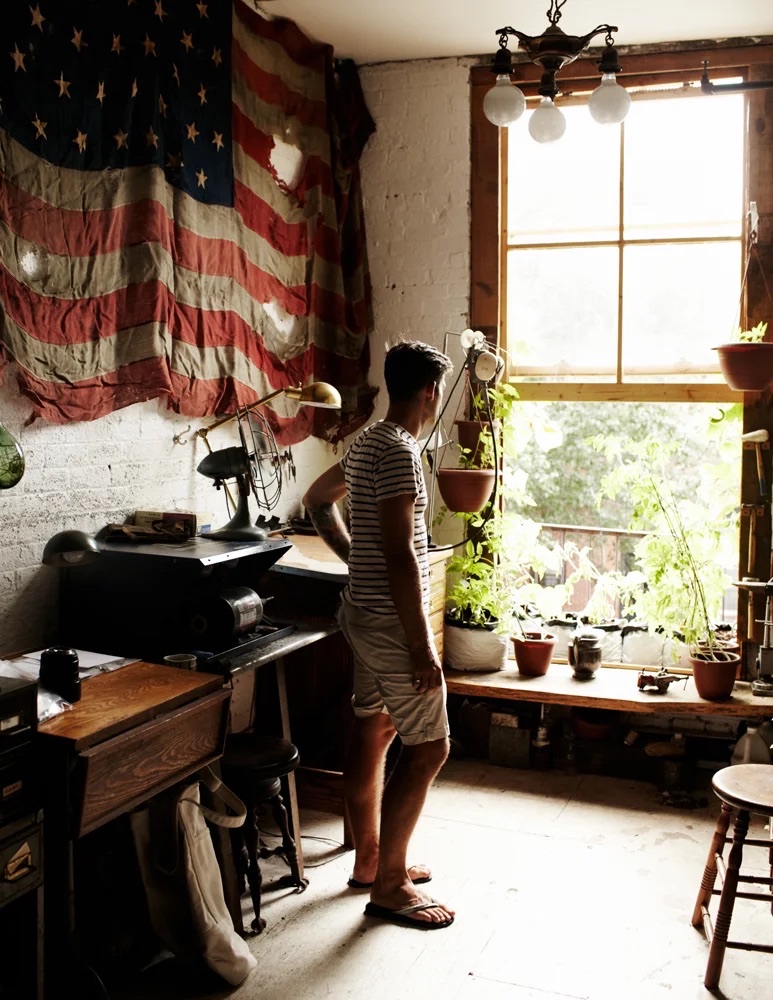
That is why I chose William Ralph Emerson’s poem for this Independence Day. At a time when patriotism is too often confused with slogans, flags, or political loyalty, A Nation’s Strength reminds us that the true measure of a nation is something far less visible. It is found in people who value truth over convenience, justice over privilege, courage over fear, and hope over cynicism.
The United States has often fallen short of its own ideals. We still do. But those ideals are worth celebrating precisely because they continue to challenge us. America’s strength has never rested in its wealth or its military. Its greatest strength has always been its people—especially those who have dared to make the nation more faithful to its promise.
Perhaps that is the enduring lesson of Emerson’s poem. A nation is not made great by what it possesses, but by what its people choose to become.
A Nation’s Strength asks a deceptively simple question: What makes a nation great? Rather than pointing to wealth, military might, or national pride, William Ralph Emerson argues that a nation’s true foundation is the character of its people. Gold can be lost, armies can be defeated, and empires can crumble, but a people committed to truth, honor, courage, and perseverance provide a foundation that endures.
Although William Ralph Emerson was not himself a transcendentalist philosopher, the poem reflects several ideals associated with transcendentalism. Like his second cousin Ralph Waldo Emerson, he emphasizes that lasting greatness comes from moral character rather than material success or political power. In that sense, A Nation’s Strength is both a patriotic poem and a timeless meditation on civic virtue.
More than a century after it was written, its central question remains relevant. Every generation must decide whether a nation’s greatness is measured by what it owns, what it conquers, or how faithfully its people pursue justice, truth, and the common good.
About the Poet
William Ralph Emerson (1833–1917) was an American architect, writer, and poet. Although he is less well known than his famous second cousin, Ralph Waldo Emerson, he wrote a number of poems reflecting on civic life, character, and patriotism. His best-known poem, A Nation’s Strength, has been widely anthologized because of its enduring message that the true strength of a nation lies not in its wealth or military power but in the integrity and perseverance of its people.
While his poetry is rooted in the ideals of the nineteenth century, its message continues to resonate whenever Americans reflect on the meaning of citizenship, liberty, and the ongoing work of building a more perfect union.
Monday, June 29, 2026

Rough Morning
 |
When Isabella woke me up this morning, I was not ready to start the day. I got up long enough to feed her, then crawled right back into bed for a little while. Now I feel like I’m running behind and trying to catch up.
I’ve had a migraine since Wednesday night. At times it seems to ease up enough that I think it’s finally breaking, but then it comes right back. I’m heading to work today, but if I’m honest, I’d much rather turn off the alarm, pull the covers back over my head, and sleep for the rest of the morning. I’m hoping today is the day this migraine finally lets go.
Sunday, June 28, 2026

Soaring on Wings Like Eagles
 |
Have you know known, Have you not heard? The Lord is the everlasting God, the Creator of the ends of the earth. He does not faint or grow weary; His understanding is unsearchable.
He gives power to the faint and strength to the powerless. Even youths will faint and be weary, and the young will fall exhausted, but those who wait for the Lord shall renew their strengths; they shall mount up with wings like eagles; they shall run and not be weary; they shall walk and not faint.
—Isaiah 40:28-31
Isaiah’s words speak directly to weary hearts. The prophet was writing to people who knew hardship and uncertainty. They longed for deliverance and wondered if God had forgotten them. Into that weariness, God offered a promise: those who place their hope in the Lord will find renewed strength.
Notice that Isaiah does not promise that the journey will be easy. He does not say that God’s people will never grow tired or face challenges. Instead, he promises that God will sustain them through those difficulties. Strength is renewed not because the road disappears, but because God walks beside us on it.
For LGBTQ+ Christians, this promise can be especially meaningful. Many of us have spent years hearing voices that told us we were not enough, that we did not belong, or that God could not love us as we are. Yet Scripture tells a different story. The psalmist reminds us, “I praise you, for I am fearfully and wonderfully made” (Psalm 139:14). Our worth is not determined by the opinions of others but by the God who created us.
When we grow weary from defending our dignity or seeking acceptance, we can remember Jesus’ invitation: “Come to me, all you that are weary and are carrying heavy burdens, and I will give you rest” (Matthew 11:28). Christ does not place additional burdens upon us; he offers rest, grace, and belonging.
The Apostle Paul also reminds us that God’s power is revealed through human weakness: “My grace is sufficient for you, for power is made perfect in weakness” (2 Corinthians 12:9). The struggles we face do not separate us from God. Instead, they can become places where God’s sustaining presence is most clearly experienced.
Pride Month is a celebration of authenticity, courage, and resilience. It is a testimony to generations of LGBTQ+ people who kept moving forward despite opposition and fear. Like Isaiah’s vision of soaring eagles, we are reminded that God gives us the strength to rise above the forces that seek to diminish us.
And as we journey together, we remember Paul’s assurance that “there is no longer Jew or Greek, there is no longer slave or free, there is no longer male and female; for all of you are one in Christ Jesus” (Galatians 3:28). In God’s family, our differences do not divide us; they enrich the beautiful diversity of creation.
Wherever you find yourself today—celebrating, struggling, healing, or simply trying to keep moving forward—know that God has not abandoned you. The same God who strengthened the weary exiles, welcomed the outcast, and raised Christ from the dead continues to renew and sustain God’s people.
You may be tired. You may be discouraged. But you are not alone. God is with you, renewing your strength for the journey ahead.
Saturday, June 27, 2026



Friday, June 26, 2026
A Long Friday
 |
It’s finally Friday, but instead of my usual work-from-home Friday, I’ll be at the museum today. I have a tour to give this morning. Normally, I look forward to giving tours, but I’m not particularly looking forward to this one. Part of the reason is that I’m still dealing with a migraine. The other reason is that it’s a long tour. Earlier this week, on Tuesday evening, I gave three tours back-to-back over a two-hour period. Today it’s just one group, but it will still be two hours—an hour in the museum followed by another hour in the basement collections.
The one advantage is that it’s a small group, so I won’t have to project my voice the way I do for larger tours. I can speak in a normal conversational tone, which should make things a little easier. I probably shouldn’t admit this, but I’m also not the biggest fan of the teacher bringing the group. Hopefully, the students will make up for that.
One thing I’ve learned over the years is that when I’m actively giving a tour, I can usually set the migraine aside for a while. Focusing on the visitors, the artifacts, and the stories helps me push through the pain. The downside is that once the tour is over, I usually crash, and the migraine comes back even stronger. If that happens today, I should be able to head home afterward, which is something I’m definitely looking forward to.
I don’t have any real plans for the weekend, and honestly, that sounds perfect. I need the chance to rest and hopefully get this migraine under control. If I’m feeling well enough, I may drive up to Burlington to see Grogu and the Mandalorian, but that will depend entirely on how I’m feeling.
I hope everyone has a wonderful weekend. Sunday marks the anniversary of the Stonewall Riots, and there will be Pride celebrations and parades taking place across the country this weekend. If you attend one, have fun, celebrate safely, and take a moment to remember those who came before us—the LGBTQ+ people who were forced to hide who they were, who risked everything to live authentically, and whose courage made it possible for so many of us to celebrate openly today. We owe them a debt of gratitude that should never be forgotten.
Thursday, June 25, 2026
Migraine Morning
 |
This will be short because I woke up with a migraine and am heading back to bed as soon as I finish writing. I got up long enough to feed Isabella, send a text to my boss, and put together this post.
Some mornings are just like that. The best thing I can do is listen to my body, take my medication, and rest. Hopefully, a few more hours of sleep will help, and I’ll be feeling better later today. Until then, Isabella has been fed, work has been notified, and I’ve done the one thing I wanted to accomplish this morning.
Now, it’s back to bed.
Wednesday, June 24, 2026

A Half Day
 |
I worked late last night giving tours to kids attending a camp on campus this week. It was after 9:00 p.m. by the time I got home, which meant it took me a while to wind down for the night. Even Isabella seemed to notice. She let me sleep a little later than usual this morning, a rare gift from a cat who normally believes that breakfast should be served at precisely the same time every day.
I’d really like to go back to sleep for a while, but I know that’s probably not going to happen. Once I’m awake enough to feed Isabella, my day has effectively begun. She may return to one of her favorite napping spots, but she has made it very clear that I should remain awake and available. Instead of trying to go back to sleep, I’ll make a cup of coffee and something for breakfast before it’s time for me to stop eating and drinking because of the ultrasound.
The good news is that I’m working from home today, even though I’ll be back at the museum tomorrow and again on Friday, which is usually my work-from-home day. Today will only be a half day, though, since this afternoon I’ll make the trip up to Burlington for my biannual liver ultrasound.
Fortunately, my recent bloodwork showed that my liver has remained stable and has not gotten any worse. That’s always encouraging news. Even so, my doctor continues to order an ultrasound every six months to screen for liver cancer or any other signs that my condition may be progressing. It’s one of those appointments I never particularly look forward to, but I’m grateful that we keep a close eye on things. Catching a problem early is always better than discovering it too late.
For now, though, I’m going to enjoy a quiet morning at home, get some work done, and spend a little time with Isabella before heading north. Some days are busy, some days are routine, and some days are simply about being thankful for good test results and another ordinary day.
Tuesday, June 23, 2026

Love and Death
 |
Love and Death
By Lord Byron (George Gordon Byron)
I watched thee when the foe was at our side,
Ready to strike at him—or thee and me,
Were safety hopeless—rather than divide
Aught with one loved save love and liberty.
I watched thee on the breakers, when the rock
Received our prow, and all was storm and fear,
And bade thee cling to me through every shock;
This arm would be thy bark, or breast thy bier.
I watched thee when the fever glazed thine eyes,
Yielding my couch and stretched me on the ground
When overworn with watching, ne’er to rise
From thence if thou an early grave hadst found.
The earthquake came, and rocked the quivering wall,
And men and nature reeled as if with wine.
Whom did I seek around the tottering hall?
For thee. Whose safety first provide for? Thine.
5.
And when convulsive throes denied my breath
The faintest utterance to my fading thought,
To thee—to thee—e’en in the gasp of death
My spirit turned, oh! oftener than it ought.
Thus much and more; and yet thou lov’st me not,
And never wilt! Love dwells not in our will.
Nor can I blame thee, though it be my lot
To strongly, wrongly, vainly love thee still.
About the Poem
There is something profoundly moving about Byron’s portrayal of unrequited love in this poem. The speaker recalls moments of danger, illness, disaster, and even death itself, and in every circumstance his thoughts turn toward the beloved. Love is revealed not as a fleeting emotion but as a steadfast devotion that persists through fear, sacrifice, and suffering.
What strikes me most is the poem’s ending. After all that devotion, the beloved does not return the speaker’s feelings. Yet there is no bitterness here. Instead, there is a painful acceptance: “Love dwells not in our will.” We do not choose whom we love, nor can we force another person to love us in return. The speaker recognizes this truth even as he continues to love “strongly, wrongly, vainly.”
During Pride Month, this poem resonates in a particular way. Many LGBTQ+ people know what it means to love without certainty of being loved back, whether because of social expectations, fear, distance, or circumstance. Byron’s poem reminds us that love itself is not shameful, even when it is unreturned. The courage to love honestly remains a beautiful thing, regardless of the outcome.
“Love and Death” was written by Lord Byron, one of the leading figures of the Romantic movement. The poem explores themes of devotion, sacrifice, mortality, and unrequited love. Through a series of dramatic scenes—war, shipwreck, illness, earthquake, and death—the speaker demonstrates the depth of his attachment to another person. The final stanza shifts from heroic devotion to heartbreak, revealing that the beloved does not share the speaker’s feelings.
The poem is often included in discussions of Byron’s love poetry because of its emotional intensity and its recognition that love exists beyond conscious choice or control.
About the Poet
Lord Byron (1788–1824), born George Gordon Byron, was one of the most influential poets of the Romantic era. Known for works such as Don Juan, Childe Harold’s Pilgrimage, and numerous lyric poems, Byron cultivated a reputation as both a literary genius and a scandalous public figure.
Modern readers often recognize Byron as a significant queer historical figure. His letters and journals reveal romantic and sexual relationships with both men and women, though such aspects of his life had to remain largely hidden in the society of his time. His poetry frequently explores themes of longing, desire, passion, and emotional conflict, making his work particularly resonant during Pride Month and in conversations about the history of LGBTQ+ lives and literature.
Monday, June 22, 2026
Summer, Vermont Style
 |
It’s Monday again, and a new work week begins.
Yesterday was the first day of summer, but you’d never know it here in Vermont. Once again, rain is in the forecast, although at the moment it looks like most of it will hold off until overnight. Even so, we’re expecting a cloudy day with a high of only 71 degrees.
Back in Alabama, it’s a very different story. In Montgomery, today’s low is 73 degrees, which is actually warmer than our expected high here in Vermont, and temperatures are forecast to reach 91 degrees. I’m very glad I’m not in Alabama. I’ve never enjoyed hot weather, and getting overheated and sweaty outdoors is one of the things that can trigger a migraine for me.
Curiously, exercise doesn’t seem to have the same effect. If I get hot and sweaty during a workout or spend time in a sauna, I’m usually fine. There’s just something about oppressive summer heat and humidity that my body doesn’t appreciate.
So while Vermont may not offer an abundance of sunshine, especially compared to other parts of the country, I’ll happily take cool temperatures, cloudy skies, and the occasional rainy day over Alabama’s summer heat. For me, it’s one of the many reasons I’m grateful to call Vermont home.
Sunday, June 21, 2026
More Than Blood
 |
“So then you are no longer strangers and aliens, but you are citizens with the saints and also members of the household of God.”
— Ephesians 2:19
“But Ruth said, ‘Do not press me to leave you or to turn back from following you! Where you go, I will go; where you lodge, I will lodge; your people shall be my people, and your God my God. Where you die, I will die—there will I be buried.’”
— Ruth 1:16-17
“And he replied, ‘Who are my mother and my brothers?’ And looking at those who sat around him, he said, ‘Here are my mother and my brothers! Whoever does the will of God is my brother and sister and mother.”
—Mark 3:33-35
Today is Father’s Day, a day that brings joy to many and complicated emotions to others. Some people celebrate fathers who loved and supported them unconditionally. Others carry grief, distance, disappointment, or loss. Family relationships are often beautiful, but they can also be difficult.
For many LGBTQ+ people, the idea of family extends beyond blood relations. Some of us have been blessed with accepting parents, siblings, and relatives. Others have had to seek love and support elsewhere. Along the way, we find friends who become siblings, mentors who become parental figures, and communities that become home. We build what is often called a chosen family.
The beautiful truth is that chosen family is not a modern invention. It is woven throughout Scripture.
When Ruth pledged herself to Naomi, she was choosing a relationship that went beyond obligation. Her words remain some of the most moving expressions of devotion ever written: “Where you go, I will go; where you lodge, I will lodge.” It is no surprise that many couples, including LGBTQ+ couples, have found these words meaningful enough to include in their wedding vows. Ruth’s promise reminds us that family can be formed through love, commitment, and faithfulness.
Jesus expanded this understanding even further. When told that his biological family was looking for him, he pointed to those gathered around him and declared that whoever does the will of God is his family. He was not rejecting his relatives; he was enlarging the definition of family itself. In God’s kingdom, belonging is not determined by bloodlines but by love and relationship.
Paul echoes this in Ephesians, reminding us that we are all members of God’s household. We are not strangers. We are not outsiders. We belong.
During Pride Month, this message carries special significance. Many LGBTQ+ people know what it means to search for belonging. Yet the Gospel tells us that God has already claimed us as members of the divine family. We are welcomed into a household where there is room for everyone, where love is stronger than exclusion, and where no one is left standing outside the door.
Whether your family is the one you were born into, the one you found along the way, or some combination of both, give thanks today for those people who have loved you, supported you, and walked beside you. They are reminders of the family God creates—a family built not merely on blood, but on grace, faith, and love.
Subscribe to:
Posts (Atom)