
Saturday, February 5, 2022






Friday, February 4, 2022

Winter Hazards

I’m embarrassed to admit this, but I slipped and fell on the ice again yesterday. This time it wasn’t down my stairs. At least when I fell down the stairs, I landed in snow, and while going down the stairs was still painful, especially hitting my arms trying to grab the railing, the steps were covered in snow and somewhat cushioned my fall. Yesterday, I hit a solid sheet of ice that was on top of our parking area.
I have a set of spikes that fit into he bottom of my shoes, which I thought were in my apartment but when I went to look for them as I was leaving, they weren’t where they should have been, so I knew they were in my car. I was doing my best to be very careful, but all it takes is one misstep and as slippery as the ice was yesterday (it was lightly raining which added to the slipperiness), it was way too easy to misstep.
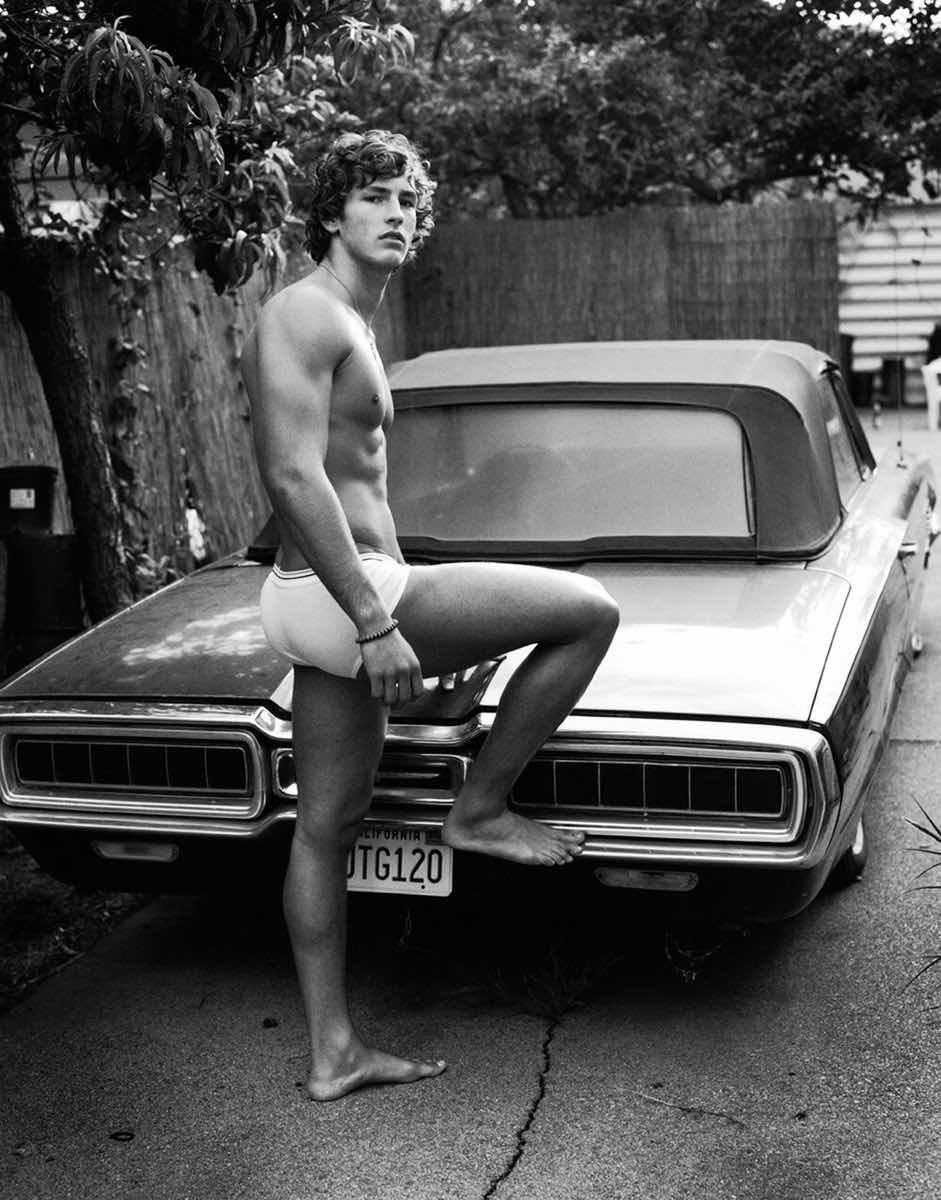
I’m not in as bad a shape as the guy in the picture above (nothing seemed to be broken), but one butt cheek is pretty sore, since that’s what I landed on. I also hurt my shoulder and neck as I was going down. I’m either going to have to be much more careful or learn how to fall correctly. My poor body just can’t take this crappy winter weather.
Thursday, February 3, 2022

Odds and Ends

The Winter Olympics begin today, and like the code in yesterday’s picture of a 1900 Ivory Soap advertisement, the American luger Chris Mazdzer always displays his own secret message for why we should watch the Winter Olympics, particularly the luge. Chris actually lives about 75 miles west of me in Saranac Lake, NY, which always seems to be the coldest place on our weather maps here. I like Mazdzer and he seems like a pretty nice guy. I’ll probably also watch some of the figure skating, but I’ve never found the Winter Olympics to be as interesting as the Summer Olympics. The athletes wear too many clothes, although if they all wore skintight body suits like Mazdzer, who needs to see someone in a Speedo!
In other news, I’ve viewed four different apartments in the last week. None of them were suitable. One was rented just before I saw it but the landlord showed it to me anyway. I viewed two different ones on Tuesday. One was in a terrible neighborhood and the other was in a seemingly better neighborhood, but the rooms were so tiny. Neither of those two apartments were in great shape either. Although I was told they’d look better with a fresh coat of paint and a deep cleaning, you just can’t put lipstick on a pig and expect it to win the Miss America Pageant. The one I viewed yesterday was on the third floor of a house that had been split into apartments (most apartments in Vermont are like this). The outside stairs leading to the apartment were not in great condition; they did not feel completely safe. The apartment itself was huge: two bedrooms, two baths, a nice sized kitchen, and living room. However, there were just too many issues to make me want to pay the rent they were asking. So, the search continues.
In better news, it looks like the installation of the new exhibit is running ahead of schedule. I suspect we will largely be finished today and ready for our soft opening tomorrow, that is if the 6-18 inches of snow (I know that a wide range but we are on the border of the line between 12-18 inches and 6-12 inches) we are expecting today and tomorrow don’t derail us from finishing it in time for the official opening. Because of COVID, we will not be having our usual opening reception, though I’m hoping we will have one in the summer for the local community. I’ve had a vision for this exhibit in my mind for months, and it’s so gratifying to see it in reality almost exactly as I pictured it. I know the saying goes, “Pride goeth before the fall,” but I am very proud of this exhibit. I think it looks good and is very calming and soothing, which not many of our exhibits are. In fact, we’ve never had one quite like this one, and I am proud of it. I hope our visitors will enjoy it and learn from it.
Wednesday, February 2, 2022

Coded
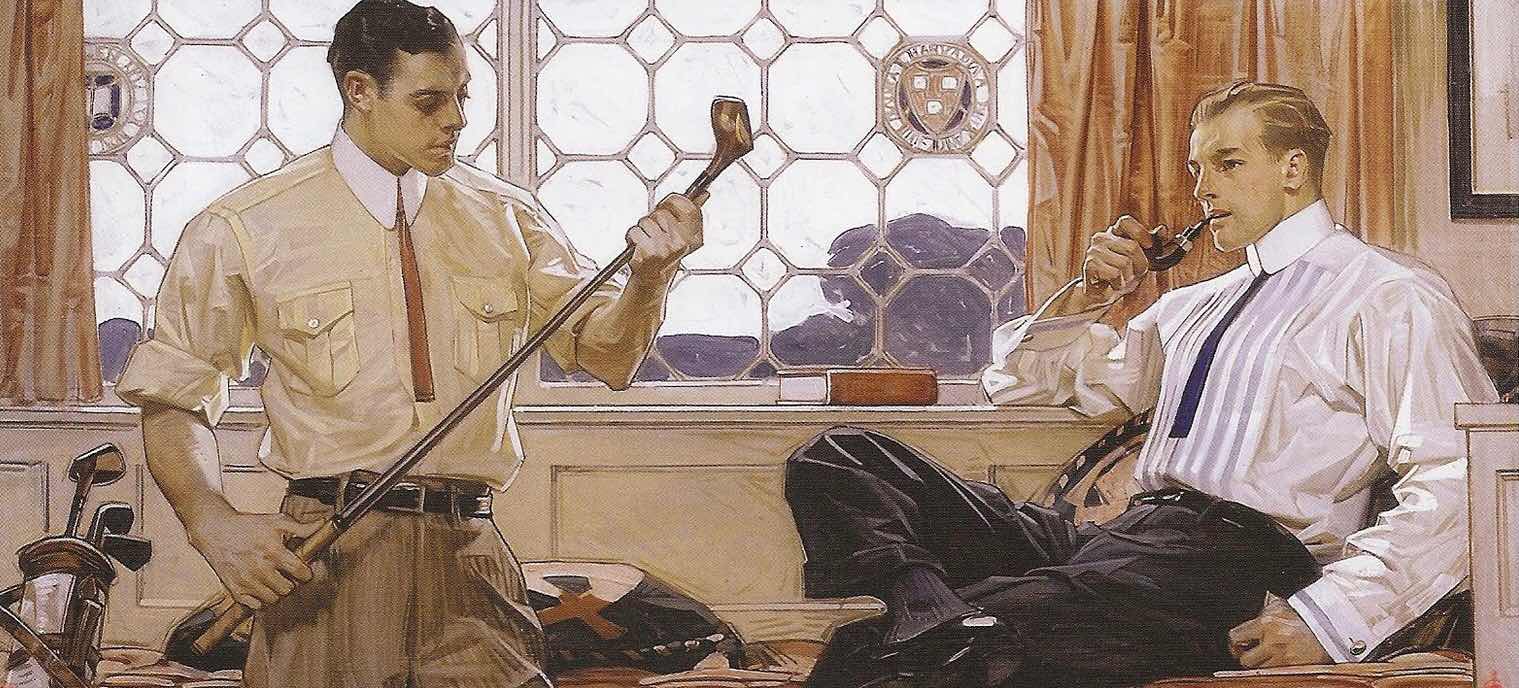
“Gentlemen with Golf Clubs,” 1909, by J.C. Leyendecker
Joseph Christian Leyendecker's life, career, and love is captured in a new film, Coded: The Hidden Love of J.C. Leyendecker, which I watched the other day on Paramount+. The documentary shows Leyendecker's enduring influence on American culture and LGBTQ+ representation in advertising, as well as the relationship with his partner, Charles Beach, the muse for Leyendecker's "Arrow Collar Man."
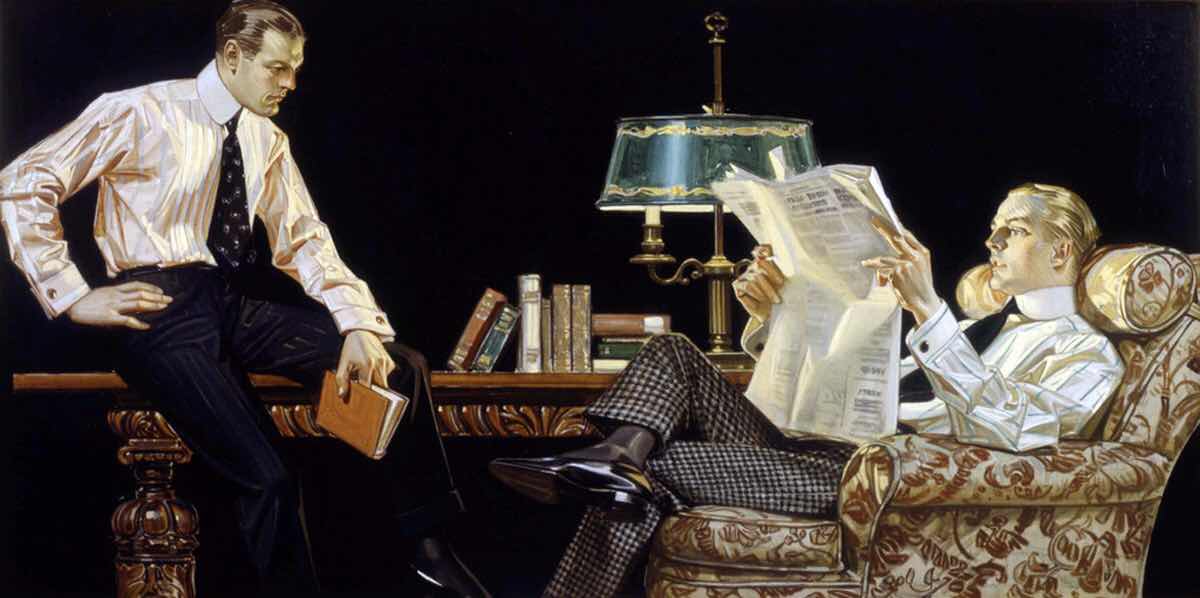
Arrow Short Collars, American Advertisement, 1914, by J.C. Leyendecker
The use of men as sexy symbols in advertising would not have existed without the influence of Leyendecker’s art. The German-American artist received training in Paris under the French Art Nouveau movement and imported some of this “Modern Style” to United States. His ad illustrations, which leaned into sexualizing his handsome male subjects, made brands like Arrow shirts fly off the shelves while also defining the image of the early 20th-century American man. Many of his illustrations featured intimate gazes between two gentlemen. Often, if there were two gentlemen and a lady, the two men would be focused on each other and not the woman.
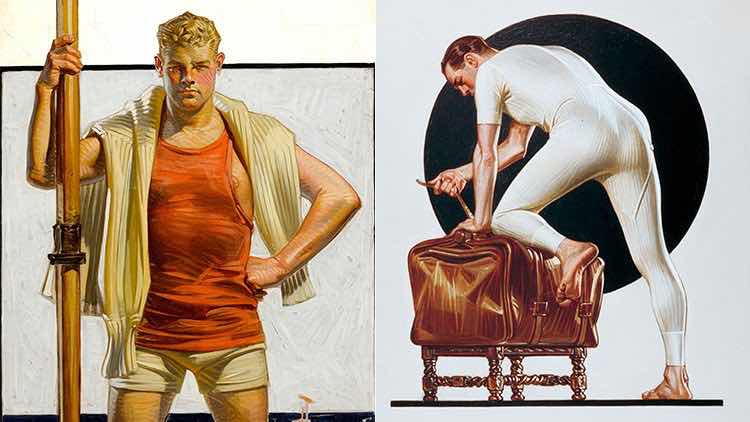
"The Oarsman,” 1916, (Left) and “Man on the Bag,” 1912, (Right) by J. C. Leyendecker
Additionally, Leyendecker painted over 400 magazine covers in his career — over 300 alone for The Saturday Evening Post — essentially creating the design template still in use today. His stock took a plunge along with Wall Street following the Great Depression, when shrinking wallets also meant a return to social conservatism. The public turned away from Leyendecker's eroticized male forms toward Norman Rockwell, a more traditional illustrator who was mentored by Leyendecker.
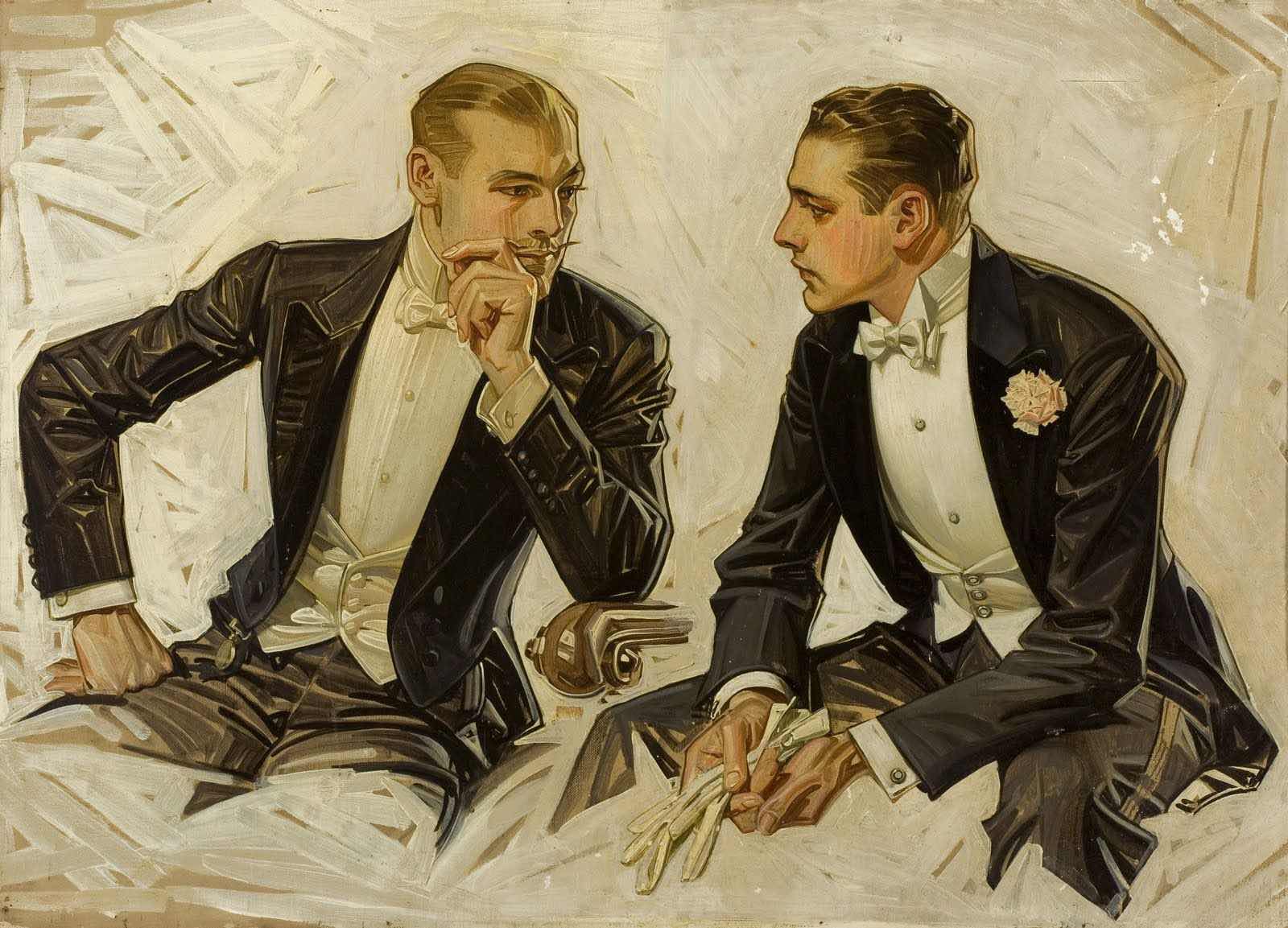
Advertisement for Cluett Dress Shirts, 1911, by J.C. Leyendecker
The image below of an Ivory Soap advertisement from 1900 is one of his early pieces before he met Charles Beach; however, it is a great example of the coded messages in many of his works. Can you spot the “code” in this image? Once you see it, you’ll probably never not see it.

“Ivory Soap It Floats,” Ivory Magazine, 1900, by J.C. Leyendecker
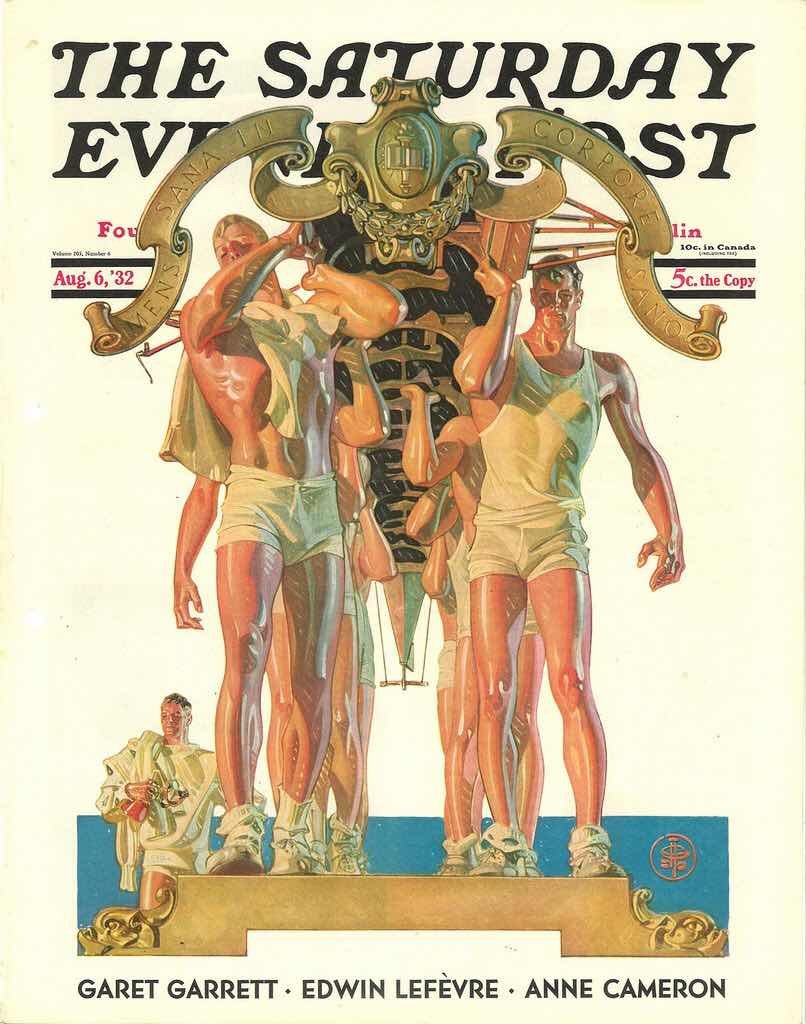
In honor of the (Winter) Olympics beginning this week, I’ll end with this 1932 edition of The Saturday Evening Post. Strangely, the conservative, anti-New Deal, and middle class family orientated publication had what is (to most modern eyes at least) a sexualized ‘gay’ image of the U.S. Olympic Eight on its cover, painted by Leyendecker. This was not the only time that Leyendecker put semi-naked men on a pedestal as you’ve seen in some of his other illustrations.
Tuesday, February 1, 2022
Stopping by Woods on a Snowy Evening

Stopping by Woods on a Snowy Evening
By Robert Frost - 1874-1963
Whose woods these are I think I know.
His house is in the village though;
He will not see me stopping here
To watch his woods fill up with snow.
My little horse must think it queer
To stop without a farmhouse near
Between the woods and frozen lake
The darkest evening of the year.
He gives his harness bells a shake
To ask if there is some mistake.
The only other sound's the sweep
Of easy wind and downy flake.
The woods are lovely, dark and deep.
But I have promises to keep,
And miles to go before I sleep,
And miles to go before I sleep.
“Stopping by Woods on a Snowy Evening” s one of Robert Frost’s most known poems. It was written in 1922, and published in 1923 in his New Hampshire volume. In a letter to the poet Louis Untermeyer, Frost called it "my best bid for remembrance."
The poem is simple and straightforward and reflects the thoughts of a lone wagon driver (the narrator), pausing at night in his travel to watch snow falling in the woods. It ends with some of the most memorable lines of any Frost poem, that of the narrator reminding himself that, despite the loveliness of the view, "I have promises to keep, / And miles to go before I sleep."
Frost wrote the poem in June 1922 at his house in Shaftsbury, Vermont. He had been up the entire night writing the long poem "New Hampshire" and had finally finished when he realized morning had come. He went out to view the sunrise and suddenly got the idea for "Stopping by Woods on a Snowy Evening.” He wrote the new poem "about the snowy evening and the little horse as if I'd had a hallucination" in just "a few minutes without strain."
In the early morning of November 23, 1963, Sid Davis of Westinghouse Broadcasting reported the arrival of President John F. Kennedy's casket at the White House. Since Frost was one of the President's favorite poets, Davis concluded his report with a passage from this poem but was overcome with emotion as he signed off.
At the funeral of former Canadian prime minister Pierre Trudeau, on October 3, 2000, his eldest son Justin, who is the current Prime Minister of Canada, rephrased the last stanza of this poem in his eulogy: "The woods are lovely, dark and deep. He has kept his promises and earned his sleep."
Subscribe to:
Posts (Atom)