 |
I had a fantastic time in Montreal—truly one of those trips that leaves you feeling both refreshed and a little wistful when it’s over.
As I always do, I spent some time in the Village, which never disappoints, but I made sure this trip wasn’t only about nightlife. One of my favorite stops was the Montreal Museum of Fine Arts, where I saw The Torlonia Collection, a remarkable exhibition of Roman sculpture.
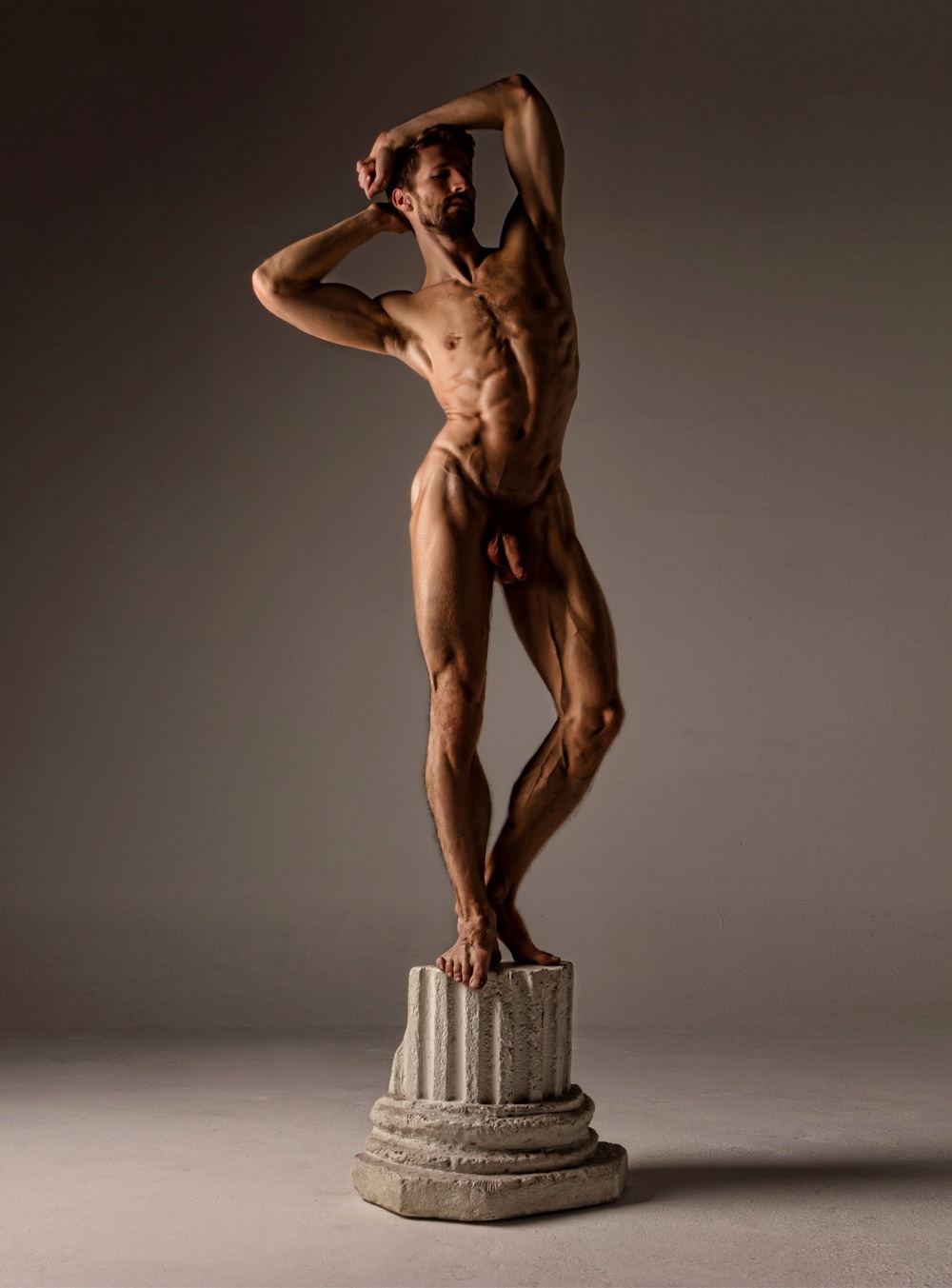
Of all art forms, sculpture has always been the one that speaks to me most, and this exhibit did not disappoint. What fascinated me most was not just the ancient works themselves, but the visible history layered onto them. Many of the sculptures had been damaged over time—arms missing, hands broken, features worn away—and then “repaired” during the Renaissance.
These restorations were not neutral. Renaissance artists interpreted what should have been there, and in doing so, they left their own mark on antiquity. One statue in particular stood out: an athlete whose original form had lost several parts, including an arm, a hand, and his penis. When these were restored, the additions reflected Renaissance ideals more than Roman ones—especially the rather substantial size of the newly added anatomy.
That detail might sound amusing, but it actually reveals something deeper about cultural values. In ancient Greco-Roman art, the ideal male nude was typically depicted with relatively modest proportions. A large penis was often associated with foolishness or lack of restraint, not heroic virtue. Bodies were idealized after gods—balanced, controlled, harmonious.
By contrast, the Renaissance reinterpretation leaned into a different aesthetic, and the difference was striking—especially when this restored athlete stood beside an intact Roman sculpture. The contrast was immediate and, honestly, a bit jarring once you understood the symbolism behind it.
It was also a reminder of how art is never entirely fixed. Even ancient works continue to be shaped—physically and intellectually—by the cultures that encounter them later.
I’ve visited the museum before, but this exhibition made the trip especially worthwhile. If you ever have the chance to see it, I highly recommend it.
I also stopped by a temporary exhibit on M. C. Escher near Place des Arts. His work is endlessly fascinating—those impossible staircases and mind-bending tessellations never really lose their charm.
That said, I found myself less impressed with the exhibit itself than with the art. The lighting felt off in several areas, and the layout didn’t always serve the pieces as well as it could have. It’s funny—I don’t think I would have noticed these things as much before working in a museum. Once you’ve been involved in installing exhibits yourself, you start to see all the little decisions that shape how visitors experience a space… and when those decisions don’t quite land.
Beyond the museums, I did a little shopping, wandered the city, and simply enjoyed being somewhere that feels vibrant and alive. Montreal has a way of offering just enough of everything—art, culture, nightlife, and quiet moments when you need them.
All in all, it was a wonderful trip. I just hope it won’t be another seven years before I make it back—and next time, I’d like to stay a bit longer than three nights.

1 comment:
Montreal is a wonderful city, Expo 67, was my first visit & first time out of my province. Was an eye opener!
William NS
Post a Comment