 |
There’s a particular stillness to Good Friday. Not the kind that feels peaceful, exactly—but the kind that feels held. Suspended. Waiting.
It’s the kind of quiet that lingers in your chest a little longer than usual, the kind that doesn’t rush you forward. It simply asks you to remain where you are.
Growing up, Good Friday meant something a little different in our house.
My father worked constantly—long hours for the telephone company, weekends included. Days off were rare, and even when he had them, they were usually filled with something that needed doing. But every year, without fail, he made sure he had Good Friday free.
That was the day he planted the garden.
It wasn’t arbitrary. It wasn’t just a convenient day off. It was something deeper than that—a quiet, inherited knowing.
In the South, Good Friday has long been considered the right time to plant. It’s that moment when winter has finally loosened its grip, when the ground is soft enough to receive what’s placed in it, when spring has arrived even if it hasn’t fully revealed itself yet. The air still carries a chill, but something underneath has already begun to change.
So while others marked the day in church pews or hushed reflection, my father marked it with his hands in the soil. And there’s something quietly profound about that. On a day that remembers death—he chose to plant something meant to live.
While the world recalls the crucifixion of Jesus Christ, he was participating in something older, something just as sacred: the trust that what is placed in the ground will rise again.
Good Friday is not a day of answers.
It doesn’t rush ahead to resurrection. It doesn’t skip past the hard part to get to joy. It lingers instead in that difficult, in-between space where loss is still real, where grief has not yet lifted, where hope exists but feels fragile—too small, too uncertain to fully grasp.
And maybe that’s why planting belongs here. Because planting is, at its core, an act of quiet faith.
You take something small—something that looks like almost nothing—and you place it into darkness. You cover it, knowing you won’t see it again for some time. And yet you do it anyway, not as an act of ending, but because you believe in what comes next.
For many of us—especially those of us who have had to carve out space for ourselves within faith—that rhythm feels deeply familiar.
There have been parts of ourselves we buried just to survive. Dreams we set aside because they weren’t safe to live out yet. Love we kept hidden, waiting for a place where it could breathe and grow.
And yet, even in those moments, something in us kept planting. Kept believing, however quietly, that what was placed in the ground was not gone.
Good Friday reminds us that not everything buried is lost. Some things are planted. Maybe that’s what my father understood, even if he never would have said it that way.
That this day, of all days, was the right time to trust the unseen. That the season itself was already turning. That the earth knew something was changing, even if nothing visible had broken through the surface yet.
So wherever you find yourself this Good Friday—in grief, in waiting, in uncertainty—hold onto this:
What is planted in love is never wasted.
Even in the dark.
Even in the silence.
Especially there.
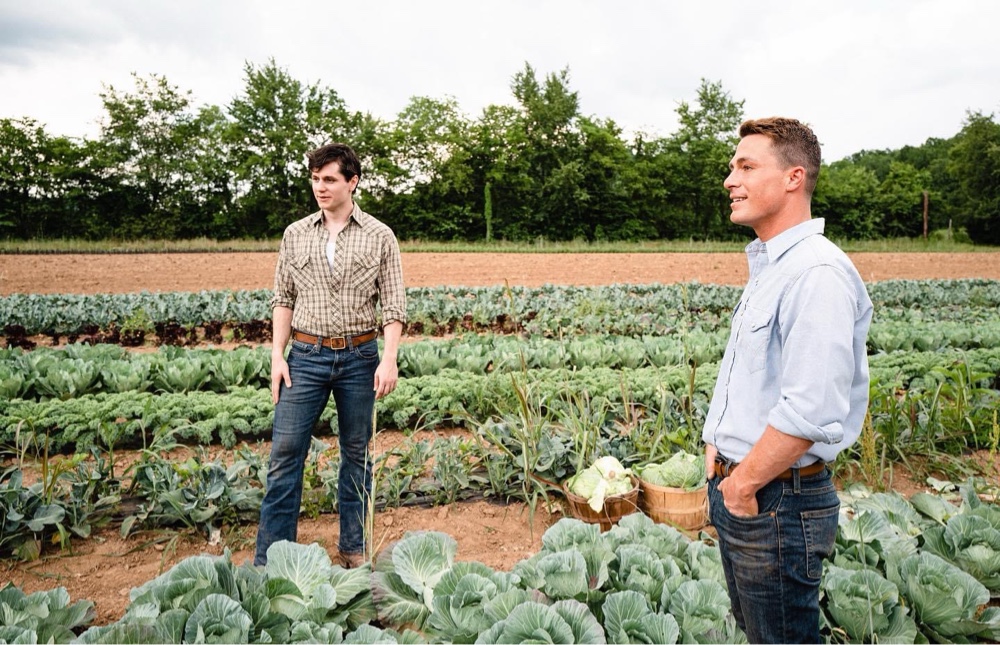
At the end of this post, I’ve included “In Your Love” by Tyler Childers. It’s a story of love, loss, and the work that continues afterward—set against fields and soil much like the ones my father turned over each Good Friday. There’s something in it that echoes this day: the quiet persistence of love in the face of death, and the way life keeps moving forward, even when something—or someone—is gone.

3 comments:
What a Heartfelt song, Thanks Joe
William NS
Hermoso mensaje, hermoso video, hermosa canción y hermosos hombres en el campo a los que amo.
Ángel
Le vidéo musicale incroyable,
très poignant :)
Monsieur Dupuis 🇨🇦
Post a Comment