 |
| Cincinnati Reds at Florida Training Camp, 1939 |
For much of the twentieth century, Life magazine wasn’t just another magazine. It was America’s photo album.
Through its pages, readers witnessed wars and weddings, presidential campaigns and baseball championships, scientific discoveries and everyday life. Its photographers documented the world with an honesty that made readers feel as though they were standing in the middle of history rather than merely reading about it. Long before television became the dominant medium, Life brought Americans behind the scenes of history through photographs that were often as memorable as the events themselves.
Life magazine was largely before my time. By the time I was growing up in Alabama, its golden age had already passed. But as someone who has always loved history, I eventually found myself exploring old issues in libraries, museum collections, and, years later, in digital archives. I was fascinated by the stories and the photography, but every now and then I would come across something unexpected.
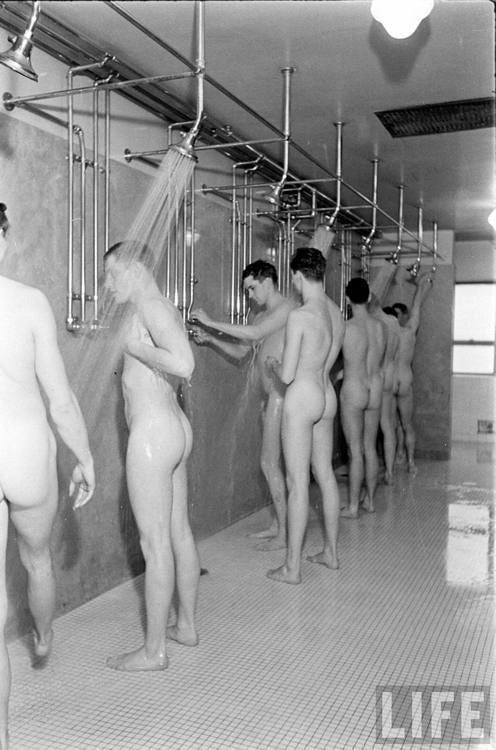 |
| Yale student athletes share a communal shower |
Unlike fitness magazines or bodybuilding publications, Life never set out to celebrate the male physique. It wasn’t selling an ideal body or encouraging readers to spend hours in the gym. If a photograph included a shirtless or nude man, it wasn’t because the editors were trying to be provocative. It was because that was the story unfolding before the camera.
That distinction made all the difference.
One of the places Life most frequently presented the male body was through sports. Before television routinely took viewers into locker rooms and behind the scenes, Life photographers did exactly that. They followed athletes beyond the playing field, documenting the moments before and after competition that most fans never saw.
One of my favorite examples is Life‘s coverage of athletes. Rather than stopping with the final out, the photographers captured the celebration in the clubhouse. Players laughed, embraced, showered, and celebrated exactly as victorious athletes do. The camera wasn’t creating glamour photographs. It was preserving history.
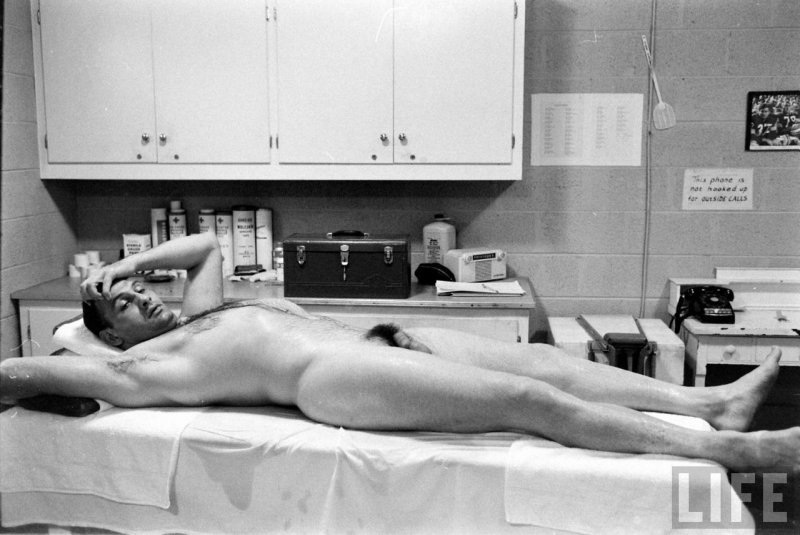 |
| Green Bay Packers Offensive End Ron Kramer |
The same approach appeared in the magazine’s coverage of the Yale swim team. Swimmers naturally spent much of their lives wearing very little, and Life photographed them without embarrassment or sensationalism. Coverage of the Cincinnati Reds during spring training in Florida in 1939, Purdue football players in their locker room in 1954, hockey star Bobby Hull, pitcher Karl Spooner, Red Sox player Joe Albanese, and jockey Raymond York after riding Determine to victory in the 1954 Kentucky Derby all reflected the same philosophy. The photographers followed the story wherever it led, even if that meant photographing athletes changing clothes, preparing for competition, or relaxing afterward.
To the editors, these were simply honest moments of athletic life.
To me, they became something more.
War photography offered another window into everyday masculinity. During World War II, Life published countless photographs of American servicemen. Soldiers bathed in rivers, shaved together, washed from steel helmets, changed uniforms, and tried to find moments of normalcy amid extraordinary circumstances. They were often shirtless, and sometimes completely nude, because that was simply the reality of military life.
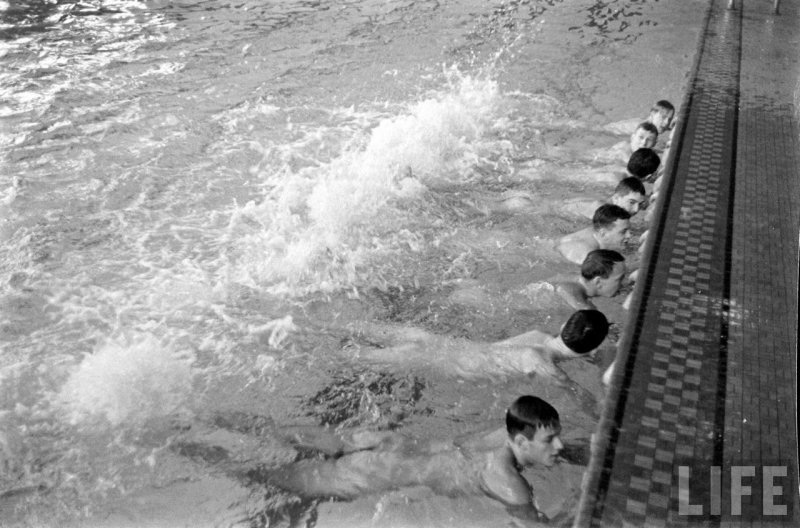 |
| Yale Swim Team |
These photographs weren’t intended to highlight the male body. They were meant to show the daily lives of ordinary men serving their country. Yet, in doing so, they also captured moments of vulnerability and camaraderie that rarely appeared elsewhere in mainstream American publications.
The same honesty extended beyond sports and war. One of Life‘s greatest strengths was documenting ordinary Americans. Farmers worked under the hot summer sun with their shirts off. Construction workers, fishermen, ranchers, and laborers appeared exactly as they were. The magazine wasn’t trying to create idealized images of masculinity. It simply recorded everyday life.
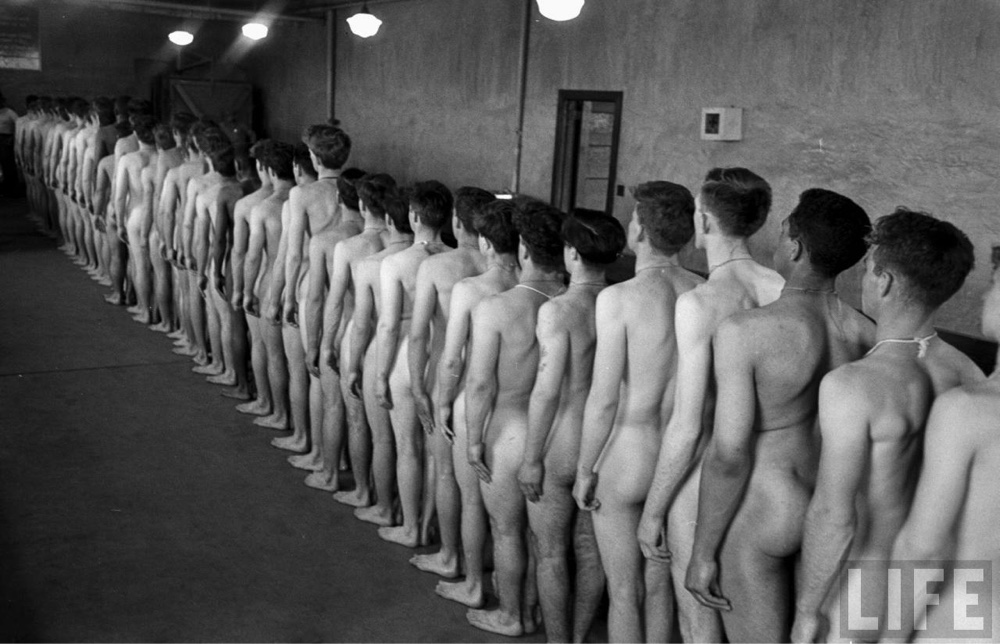 |
| U.S. Naval Training |
Looking back now, that’s what makes these photographs so remarkable.
The male body wasn’t hidden.
It wasn’t sensationalized.
It simply existed.
As I explored those old issues of Life, I began to notice something that had probably never crossed the minds of the magazine’s editors. Mixed among the stories of war, sports, politics, and everyday life were photographs that quietly celebrated the male body—not as fantasy or glamour, but simply as part of life itself.
I wasn’t reading Life hoping to find pictures of shirtless or nude men. Most issues contained nothing of the sort. But every so often, there would be a photograph that quietly caught my attention. At first, I probably would have said I admired the composition, the lighting, or the historical significance of the image.
The truth was more complicated than that.
What I was really looking for, though I didn’t yet fully understand it, wasn’t nudity.
It was recognition.
Growing up, there were very few openly gay people in my world. There were no gay characters on television that I identified with, no openly gay teachers or neighbors, and certainly no one talking openly about sexuality in the small Southern community where I was raised. I didn’t have the language to describe what I was feeling, much less anyone with whom I felt comfortable discussing it.
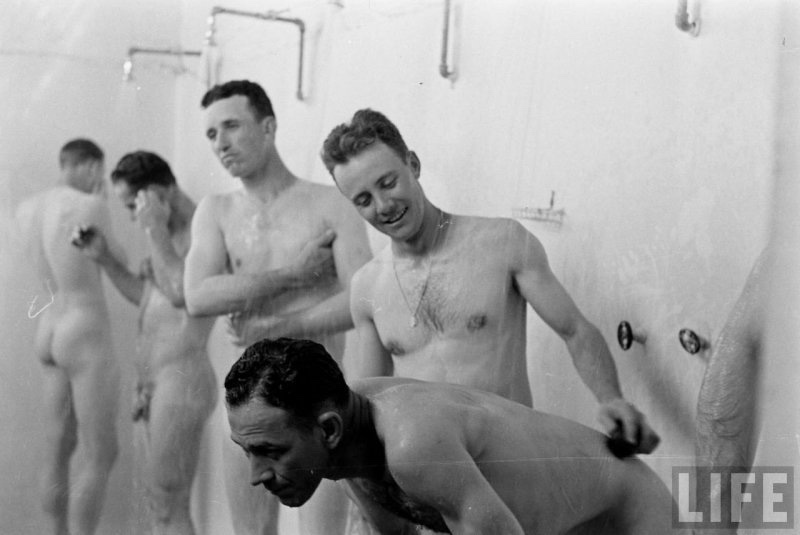 |
| Cincinnati Reds at Florida Training Camp, 1939 |
So I found reflections wherever they appeared.
Sometimes that reflection came from a photograph of a victorious baseball team celebrating in the clubhouse.
Sometimes it came from swimmers preparing for practice.
Sometimes it came from soldiers bathing in a river halfway around the world.
None of those photographs were intended for someone like me.
Yet they reminded me, quietly and without judgment, that the male body wasn’t something shameful. It could be strong, vulnerable, athletic, ordinary, and beautiful—all at the same time.
That was an important lesson, even if I didn’t recognize it at the time.
Today, images of the male body are everywhere. Social media, streaming services, advertising, and the internet have made them almost impossible to avoid. Young gay men have access to representations of masculinity that my generation could scarcely have imagined.
In many ways, that’s a wonderful thing.
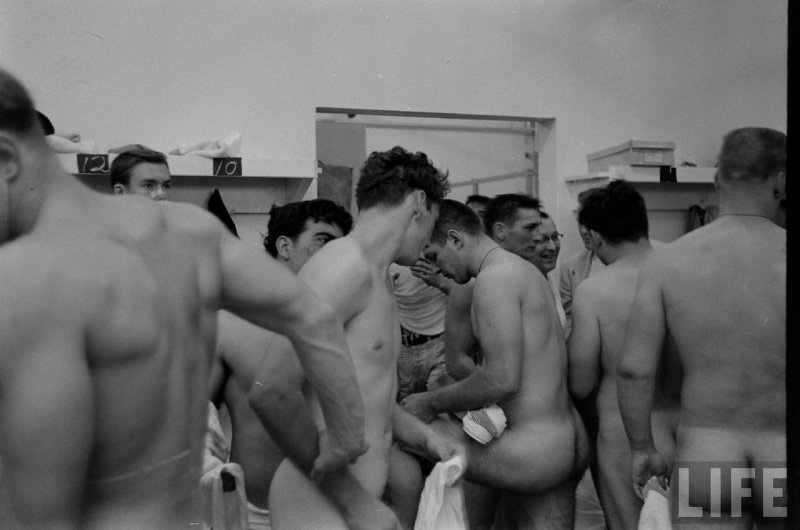 |
| 1954 Purdue Boilermakers football team in the locker room |
But I also think there was something uniquely powerful about discovering these images unexpectedly, tucked away in the pages of a magazine whose purpose was to document history rather than create fantasy.
The photographs in Life weren’t asking to be admired.
They weren’t selling underwear, gym memberships, or protein powder.
They weren’t trying to be erotic.
They simply documented life.
Ironically, that honesty made them even more meaningful.
I doubt the editors of Life ever imagined their magazine would become part of anyone’s journey toward understanding his sexuality—especially decades after many of those issues were first appeared on newsstands.
Yet I suspect it did.
Long after those photographs were taken, they continued to speak to new generations of readers who saw something the photographers never intended to capture. History has a way of doing that. Sometimes the meaning of an image changes with time—not because the image changes, but because we do.

No comments:
Post a Comment