 |
Still Life with Rose
By Richard Scott
Like a foreskin being pulled back, the damask
reveals – pelvic bowl of pink-fringed shadow,
dense sweet-meat bloom, coral’d cave, puce
empyrean with no vanishing point, planetary blush!
So let me in – where everything is new-born
and crystalline, paused and protected – into that other
world, that high-shine place of safety, arranged
and sparking up like a bower. Almost every day,
for some moments, I think about him – the black
stems, thorns that can prick so deeply, whorl
of serrated leaves, all just beneath, around – still
gorgeousness – your petal’d cumulus, your constancy –
helps me live. O rose keep on stunning for me –
for all us boys who have been ruined by men.
About the Poem
There are poems that ask to be understood, and there are poems that ask to be felt. Richard Scott’s “Still Life with Rose” is one of the latter. Its opening image is intentionally startling, forcing the reader to look beyond conventional ideas of beauty. Rather than presenting the rose as a delicate symbol of romance, Scott reveals it as something deeply physical, vulnerable, and alive.
As the poem unfolds, the rose becomes more than a flower. It becomes a place of refuge. The speaker longs to enter “that other world” where everything is “new-born and crystalline,” a sanctuary untouched by violence or betrayal. Yet the rose is not without danger. Its black stems and sharp thorns remind us that beauty and pain often grow from the same branch.
The final line transforms the entire poem: “O rose keep on stunning for me – for all us boys who have been ruined by men.” Suddenly, this is not simply a poem about a flower. It is about survival. It is about finding something beautiful that remains constant after trust has been broken. The rose cannot undo the wounds of the past, but it offers a reminder that beauty, tenderness, and hope still exist.
As a gay man, I find this ending especially moving. Many LGBTQ+ people carry scars left by rejection, abuse, shame, or relationships that wounded more than they healed. Scott does not pretend those experiences disappear. Instead, he offers the rose as an act of quiet resistance. To continue finding beauty in the world after being hurt is itself a form of courage.
The poem also reminds me that healing rarely happens all at once. We often return to the same sources of comfort day after day—a flower, a favorite place, a piece of music, a work of art, or the love of a trusted friend. These small moments of beauty become the things that help us live.
“Still Life with Rose” comes from Richard Scott’s acclaimed collection Soho (2018). Like many poems in the collection, it blends the sensual with the emotional, using vivid imagery to explore memory, desire, masculinity, trauma, and resilience. Scott frequently challenges traditional poetic representations of the male experience, offering instead an honest exploration of vulnerability and healing. The rose, one of poetry’s oldest symbols, is transformed here into something both deeply intimate and profoundly restorative.
About the Poet
Richard Scott is a British poet originally from London. His debut collection, Soho, received widespread critical acclaim and was shortlisted for several major literary awards, including the T. S. Eliot Prize. His poetry is known for its lush imagery, emotional honesty, and exploration of queer identity, love, grief, and the lasting effects of trauma. Scott’s work often reimagines familiar symbols and religious or artistic traditions through a contemporary LGBTQ+ perspective, creating poems that are both intellectually rich and deeply human.

2 comments:
Un poème à la fois audacieux et symbolique.
Des roses, délicate et pas si délicate, leur parfum est enivrant.
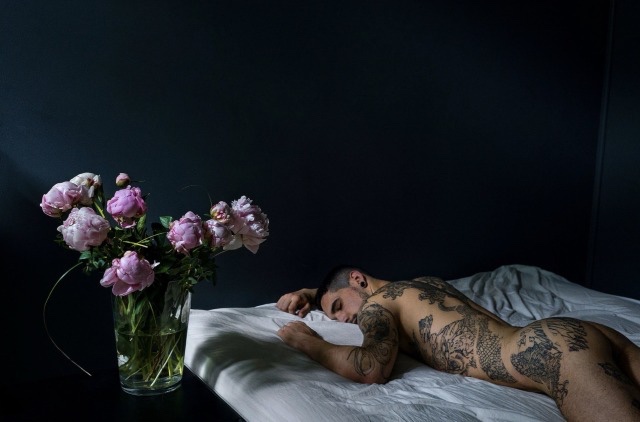
Touché ! La photo correspond parfaitement au poème :)
-Beau Mec à Deauville
Le veo un poco de cara y parece muy guapo, por lo demás no soy aficionado a los tatuajes, de todas formas no puedo dejar sin amor a este chico.
Ángel
Post a Comment